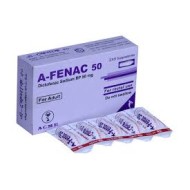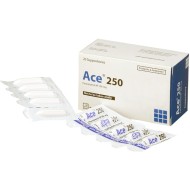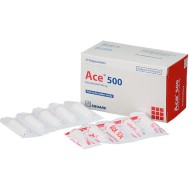
- Stock: Out Of Stock
- Brand: Acme Laboratories Limited
- Product ID: Diclofenac Sodium
🔒 100% Secure Payment | bKash | Nagad | SSLCommerz | COD
⭐ Become a FREE Member: 7% Extra Savings • Free Delivery • Refill Reminders • Priority Support
This Item is for pre order
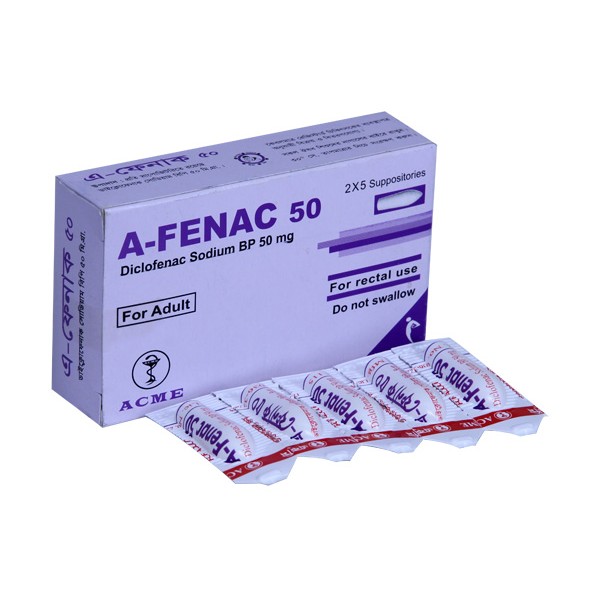
A-Fenac 50 mg Suppository (Diclofenac Sodium) — Product Overview
| Quick Reference | |
|---|---|
| Brand Name | A-Fenac 50 mg Suppository |
| Generic Name | Diclofenac Sodium 50 mg Rectal Suppository |
| Drug Class | NSAID — Rectal Formulation |
| Manufacturer | ACI Limited, Bangladesh |
| Route | Rectal (per rectum) — inserted into the rectum |
| Key Advantage | Bypasses oral route — suitable when patient is vomiting, nil by mouth, or cannot swallow |
| Available Suppository Strengths | A-Fenac 12.5 mg (paediatric), 50 mg (adult) |
| Prescription Status | Prescription Required |
What is A-Fenac 50 mg Suppository?
A-Fenac 50 mg Suppository delivers Diclofenac Sodium via the rectal route — the drug is absorbed through the rectal mucosa into the bloodstream, bypassing the gastrointestinal tract. This makes rectal diclofenac the preferred formulation when oral administration is not possible: post-operative patients (nil by mouth), those with severe nausea and vomiting, or patients with swallowing difficulties. Bioavailability of rectal diclofenac is comparable to oral tablets (~50–70%), with a slightly slower absorption rate but similar peak plasma levels. The rectal route also reduces direct gastric mucosal exposure to diclofenac, though systemic GI side effects (mediated through prostaglandin inhibition) still occur.
When is Rectal Diclofenac Used?
- Post-operative pain management — standard in many surgical protocols as part of multimodal analgesia when patient is NBM
- Severe nausea/vomiting — where oral tablets cannot be retained
- Acute migraine — when nausea prevents oral drug absorption
- Acute renal colic — effective and rapidly absorbed rectally
- Paediatric use (12.5 mg suppository) — children aged 1 year and above who cannot swallow tablets
- Palliative care — when swallowing is difficult
- Overnight dosing — some protocols use a 100 mg suppository at bedtime for overnight arthritis coverage
Dosage
Adults: 50–100 mg rectally once or twice daily. Maximum 150 mg/day from all diclofenac formulations combined (oral + rectal).
Children (12.5 mg suppository): 1–3 mg/kg/day in divided doses. A-Fenac 12.5 mg suppository is the appropriate paediatric strength.
Administration:
- Remove foil wrapping. Lie on one side with knees drawn toward the chest.
- Insert the suppository blunt end first, using a finger to push it fully past the anal sphincter.
- Remain lying for 15–20 minutes to allow absorption.
- If bowel motion occurs within 30 minutes of insertion, the dose may need to be repeated.
Storage: Store in a cool place (below 25°C). If too soft to insert, place in the refrigerator for 15 minutes before use.
Mechanism of Action
Identical to oral diclofenac: COX-1 and COX-2 inhibition reduces prostaglandin synthesis, decreasing pain sensitisation, inflammation, and fever. The rectal route avoids the gastric mucosa, reducing direct GI contact, but systemic prostaglandin inhibition still reduces gastric cytoprotective effects and can cause GI side effects in susceptible patients.
Contraindications
- NSAID hypersensitivity or aspirin-sensitive asthma
- Proctitis, anal fissure, recent anorectal surgery (rectal route contraindicated)
- Active peptic ulcer or GI bleeding
- Severe renal, hepatic, or cardiac impairment
- Third trimester of pregnancy
- Established ischaemic heart disease, stroke, peripheral arterial disease
Side Effects
Local (rectal): Rectal discomfort, burning, mucosal irritation, tenesmus (urge to defecate). Less common: rectal bleeding (especially with existing haemorrhoids or anal fissure). Rectal inflammation with prolonged use — rotate with oral administration for long-term therapy.
Systemic (same as oral): GI effects (nausea, dyspepsia, ulceration via systemic prostaglandin inhibition despite rectal route); renal (fluid retention, reduced eGFR); cardiovascular (elevated BP, increased MI/stroke risk); hepatic (raised transaminases).
Diclofenac Suppository in Diabetic Patients
Post-operative diabetic patients often receive rectal diclofenac as part of multimodal analgesia. Key considerations: check eGFR before use (avoid if <30); ensure adequate IV hydration peri-operatively (NSAIDs + dehydration = high AKI risk); monitor blood glucose (pain and surgery raise cortisol/glucose; diclofenac itself has minimal direct glycaemic effect but achieving good pain control reduces stress hyperglycaemia).
Frequently Asked Questions (FAQ)
Q: Does rectal diclofenac avoid stomach problems?
A: The rectal route avoids direct gastric mucosal contact, which reduces local GI irritation from the drug. However, systemic inhibition of gastric prostaglandins still occurs — meaning the risk of GI ulceration and bleeding is not completely eliminated, just reduced compared to oral administration in the stomach. Patients with high GI risk still benefit from PPI co-prescribing.
Q: Can I use A-Fenac suppository at the same time as oral A-Fenac tablets?
A: Only if the combined dose does not exceed 150 mg/day (or 200 mg/day in exceptional circumstances). Do not use 50 mg suppository + 50 mg tablets three times daily without medical guidance — total dose would exceed safe limits.
Q: How quickly does rectal diclofenac work?
A: Absorption begins within 15–30 minutes of insertion. Therapeutic blood levels are typically reached within 1 hour. Onset is slightly slower than IM injection but comparable to or faster than oral tablets (which must dissolve and pass through gastric emptying).
Q: Is the 50 mg suppository suitable for children?
A: No. For children, A-Fenac 12.5 mg suppository is the appropriate strength. 50 mg is an adult dose. Children require weight-based dosing (1–3 mg/kg/day) — use the 12.5 mg suppository for paediatric patients.
Medical Disclaimer
For educational purposes only. Not medical advice. Rectal diclofenac should be used under medical guidance. Avoid in patients with anorectal disease. Systemic NSAID risks (GI, renal, cardiovascular) apply even with the rectal route.