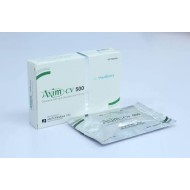
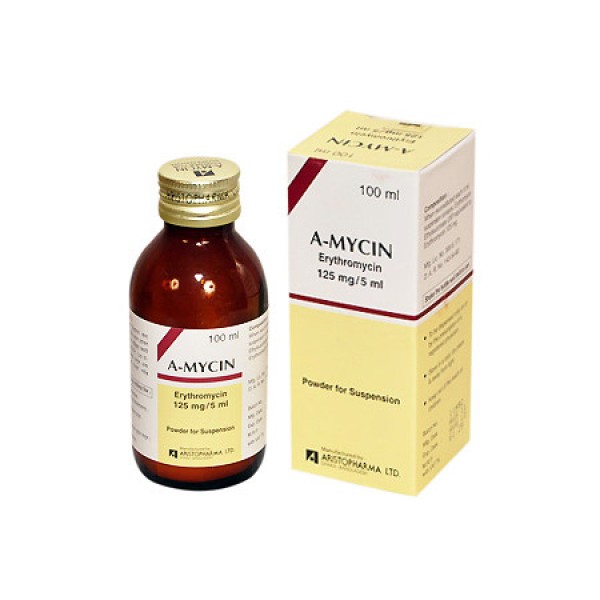
- Stock: In Stock
- Brand: Aristopharma
- Product ID: Erythromycin
🔒 100% Secure Payment | bKash | Nagad | SSLCommerz | COD
⭐ Become a FREE Member: 7% Extra Savings • Free Delivery • Refill Reminders • Priority Support
This Item is for pre order
A-Mycin (Erythromycin) — Product Overview
| Quick Reference | |
|---|---|
| Brand Name | A-Mycin |
| Generic Name | Erythromycin |
| Drug Class | Macrolide Antibiotic |
| Manufacturer | ACI Limited, Bangladesh |
| Dosage Form | Tablet / Capsule |
| Available Strengths | 250 mg, 500 mg |
| Storage | Below 25°C, in a dry place, protected from light |
| Prescription Status | Prescription Required |
What is A-Mycin (Erythromycin)?
A-Mycin contains Erythromycin, a broad-spectrum macrolide antibiotic that has been used for over 60 years. It is particularly valuable as a penicillin alternative for patients with penicillin allergy. Erythromycin works against a wide range of Gram-positive bacteria and some Gram-negative organisms, as well as atypical pathogens like Mycoplasma, Chlamydia, and Legionella. A-Mycin is manufactured by ACI Limited, one of Bangladesh's leading pharmaceutical companies.
Mechanism of Action
Erythromycin is a bacteriostatic antibiotic (bactericidal at high concentrations). It binds reversibly to the 50S ribosomal subunit of susceptible bacteria, blocking translocation of peptidyl-tRNA and thereby inhibiting bacterial protein synthesis. This prevents bacterial growth and replication, allowing the immune system to clear the infection.
Indications — What A-Mycin Treats
A-Mycin is prescribed for infections caused by erythromycin-susceptible organisms, including:
- Respiratory tract infections: Pneumonia (including atypical/walking pneumonia caused by Mycoplasma), bronchitis, whooping cough (pertussis), Legionnaire's disease
- Skin and soft tissue infections: Erysipelas, cellulitis, impetigo, acne vulgaris (moderate-to-severe)
- ENT infections: Tonsillitis, pharyngitis, sinusitis, otitis media
- Sexually transmitted infections: Chlamydia trachomatis (genital/urethral), non-gonococcal urethritis, syphilis (in penicillin-allergic patients)
- Gastrointestinal: Campylobacter enteritis, prophylaxis of rheumatic fever (in penicillin-allergic patients)
- Dental: Pre-procedural prophylaxis in penicillin-allergic cardiac patients
Dosage and Administration
Adults: 250–500 mg every 6 hours (4 times daily), or 500 mg–1 g every 12 hours depending on infection severity. Typical course is 5–14 days.
Children (under 8 years): 30–50 mg/kg/day in divided doses (use paediatric suspension).
Acne: 500 mg twice daily for at least 3 months, then taper.
Administration: Take on an empty stomach (30 minutes before or 2 hours after food) for maximum absorption, unless stomach upset occurs — then take with food. Swallow tablets whole with a full glass of water.
Contraindications
- Hypersensitivity to erythromycin or other macrolide antibiotics
- Concurrent use with astemizole, terfenadine, cisapride, or pimozide (risk of serious cardiac arrhythmia)
- Severe hepatic impairment (erythromycin estolate)
- Known QT prolongation or history of torsades de pointes
Side Effects
Very common (≥1/10): Nausea, vomiting, abdominal discomfort, diarrhoea (due to prokinetic effect on gut motility — erythromycin is a motilin agonist).
Common (≥1/100): Headache, rash, loss of appetite.
Rare but serious: Hepatotoxicity (cholestatic jaundice, especially with estolate form), QT prolongation and arrhythmia (at high doses), reversible hearing loss (with high doses), Clostridioides difficile-associated colitis.
Taking erythromycin with or after food may reduce GI side effects.
Drug Interactions
Erythromycin is a potent CYP3A4 inhibitor. Important interactions include:
- Statins (simvastatin, lovastatin): Increased risk of myopathy/rhabdomyolysis — avoid combination
- Warfarin: Enhanced anticoagulant effect — monitor INR closely
- Cyclosporin, tacrolimus: Increased plasma levels — risk of toxicity
- Theophylline: Increased theophylline levels — risk of toxicity
- Colchicine: Risk of colchicine toxicity — reduce dose or avoid
- Antacids: May reduce absorption; separate by 2 hours
Special Populations
Pregnancy: Category B — generally considered safe; avoid estolate formulation due to hepatotoxicity risk. Often used for Chlamydia treatment in pregnancy.
Breastfeeding: Excreted in breast milk in small amounts; generally compatible with breastfeeding but monitor infant for GI effects.
Hepatic impairment: Use with caution; reduce dose in severe impairment.
Renal impairment: No dose adjustment needed for mild-moderate impairment.
Frequently Asked Questions (FAQ)
Q: Is A-Mycin (Erythromycin) safe for penicillin-allergic patients?
A: Yes. Erythromycin is one of the most widely used alternatives for patients who are allergic to penicillin. There is no cross-reactivity between macrolides and penicillins, making A-Mycin a safe choice.
Q: Can I take A-Mycin with food?
A: For best absorption, take on an empty stomach. However, if you experience nausea or stomach upset, taking with food is acceptable and reduces GI side effects.
Q: How long should I take A-Mycin?
A: Complete the full prescribed course, even if you feel better. Most bacterial infections require 5–14 days of treatment. Stopping early can lead to treatment failure and antibiotic resistance.
Q: Can children take A-Mycin?
A: Yes, erythromycin is commonly used in children, typically as a suspension (syrup). The dose is weight-based: 30–50 mg/kg/day divided into 4 doses. Always follow the doctor's prescription.
Medical Disclaimer
The information provided is for educational purposes only. Antibiotics should only be taken as prescribed by a qualified healthcare professional. Do not self-medicate with antibiotics. Completing the full course is essential to prevent resistance.