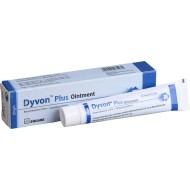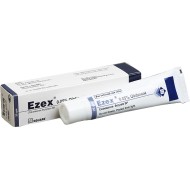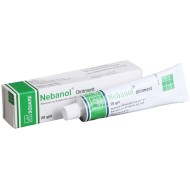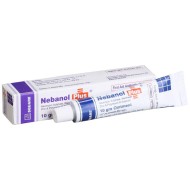
- Stock: Out Of Stock
- Brand: Acme Laboratories Limited
- Product ID: Tetracycline Hydrochloride
🔒 100% Secure Payment | bKash | Nagad | SSLCommerz | COD
⭐ Become a FREE Member: 7% Extra Savings • Free Delivery • Refill Reminders • Priority Support
This Item is for pre order
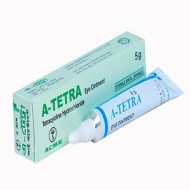
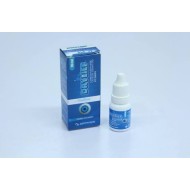
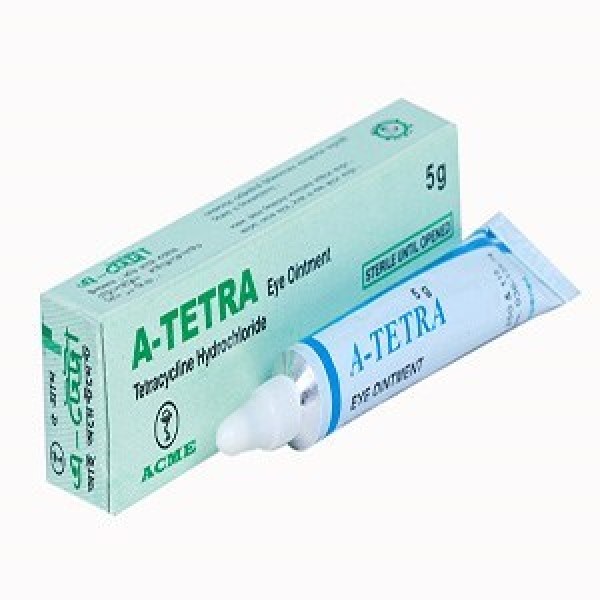
A-Tetra 1% Eye Ointment 5g — Tetracycline Hydrochloride | Beximco Pharmaceuticals
| Generic Name | Tetracycline Hydrochloride 1% w/w Ophthalmic Ointment |
| Drug Class | Tetracycline Antibiotic — Topical Ophthalmic |
| Manufacturer | Beximco Pharmaceuticals Ltd. |
| Route | Topical — Ophthalmic (eye ointment) |
| Pack Size | 5g Tube |
Overview
A-Tetra 1% Eye Ointment contains Tetracycline Hydrochloride 1% in an ophthalmic ointment base. Tetracycline eye ointment remains the WHO-recommended first-line treatment for trachoma — the world's leading infectious cause of blindness, caused by Chlamydia trachomatis — and is also used for bacterial conjunctivitis and blepharitis. It is particularly important in Bangladesh and other endemic regions where trachoma and chlamydial eye infections remain prevalent. For diabetic patients, who are more susceptible to ocular infections, tetracycline ointment is a key option when chlamydial infection is suspected or confirmed.
Mechanism of Action
Tetracycline binds to the 30S ribosomal subunit of bacteria, blocking aminoacyl-tRNA from binding to the ribosome A site, thereby inhibiting protein synthesis (bacteriostatic). Tetracycline is effective against both Gram-positive and Gram-negative organisms, and critically, against intracellular organisms such as Chlamydia trachomatis — the cause of trachoma and inclusion conjunctivitis. This intracellular activity distinguishes tetracycline and chloramphenicol eye ointments from beta-lactam antibiotics, which are inactive against Chlamydia.
Indications
- Trachoma — WHO first-line treatment (Chlamydia trachomatis)
- Inclusion conjunctivitis — adult and neonatal chlamydial conjunctivitis
- Bacterial conjunctivitis (broad-spectrum coverage)
- Blepharitis — bacterial or chlamydial
- Ophthalmia neonatorum prophylaxis (neonatal eye prophylaxis for chlamydial/gonococcal infection)
- Superficial corneal infections (mild bacterial keratitis)
How to Use
| Indication | Application | Frequency | Duration |
|---|---|---|---|
| Trachoma (active infection) | ~1cm ribbon in lower conjunctival sac | 2–4 times daily | 6 weeks (WHO protocol) |
| Trachoma (mass drug administration) | ~1cm ribbon | Once daily for 5 days | Per WHO MDA cycle |
| Bacterial conjunctivitis | ~1cm ribbon | 3–4 times daily | 5–7 days |
| Blepharitis | Apply to lid margins with clean fingertip | 2–3 times daily | 5–7 days |
| Neonatal prophylaxis | ~1cm ribbon each eye | Single application | At birth |
Wash hands before use. Pull down lower eyelid; apply ~1cm ribbon into the lower conjunctival sac. Close eye gently. Blurred vision is expected immediately after application. Do not touch tube tip to eye or skin. Discard 28 days after opening.
Important Notes for Diabetic Patients
- Trachoma risk in Bangladesh: Trachoma remains endemic in parts of Bangladesh. Diabetic patients with immune dysfunction may be at higher risk of more severe or persistent chlamydial eye infection. Completing the full 6-week WHO treatment course is essential to prevent repeated re-infection and potential vision loss
- Chlamydial vs. bacterial conjunctivitis: If discharge is predominantly mucoid/watery rather than purulent, and if there is follicular reaction of the conjunctiva on examination, chlamydial infection should be suspected — tetracycline ointment is the appropriate treatment. Chloramphenicol drops are less effective against Chlamydia
- Systemic chlamydial treatment: Ocular Chlamydia (trachoma, inclusion conjunctivitis) often coexists with genital chlamydial infection. Systemic azithromycin or doxycycline may be required alongside topical tetracycline — discuss with physician
- No systemic glucose effect: Tetracycline 1% ophthalmic ointment has negligible systemic absorption and does not affect blood glucose
Side Effects
| System | Side Effect | Severity |
|---|---|---|
| Local ocular | Transient blurring after application (expected from ointment base) | Common — Mild, resolves in minutes |
| Local ocular | Mild stinging or burning on application | Common — Mild |
| Local ocular | Yellow staining (from tetracycline colour) — washes out | Common — Cosmetic only |
| Hypersensitivity | Allergic conjunctivitis — itching, swelling | Uncommon — discontinue if develops |
| Systemic | Negligible at topical ophthalmic doses | Very rare |
Contraindications
- Known hypersensitivity to tetracyclines
- Contact lens wear during treatment
- Do not use for viral eye infections (herpes keratitis)
Storage
Store below 25°C. Protect from light. Discard 28 days after opening. Keep out of reach of children.
Frequently Asked Questions
Q: Why is tetracycline ointment used for trachoma when there are newer antibiotics?
A: Tetracycline 1% eye ointment remains WHO-recommended for trachoma because it is effective, cheap, and widely available in endemic regions. The WHO SAFE strategy for trachoma elimination includes mass drug administration with azithromycin (systemic) or tetracycline ointment.
Q: My eye is yellow after using A-Tetra — is this normal?
A: Yes — tetracycline has a natural yellow-orange colour that may temporarily tint discharge and the surrounding skin. This is harmless and washes out. The ointment itself is yellow for this reason.
Medical Disclaimer: A-Tetra 1% Eye Ointment (Tetracycline HCl) is for topical ophthalmic use only. For trachoma treatment, complete the full WHO-recommended course. Chlamydial eye infections often require concurrent systemic antibiotic treatment. Discard 28 days after opening. This information is for educational purposes only. Always follow your physician's instructions.