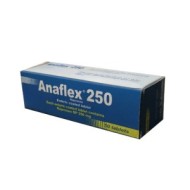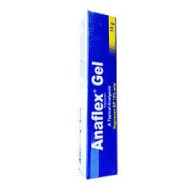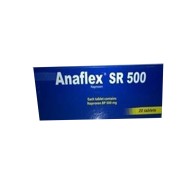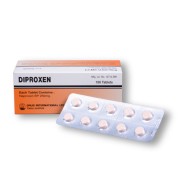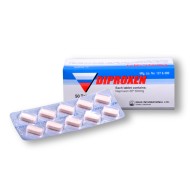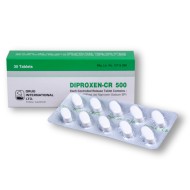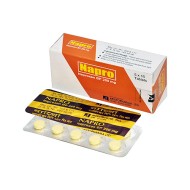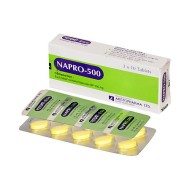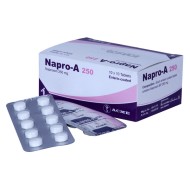
- Stock: Out Of Stock
- Brand: ACI Pharmaceuticals
- Product ID: Naproxen Sodium
🔒 100% Secure Payment | bKash | Nagad | SSLCommerz | COD
⭐ Become a FREE Member: 7% Extra Savings • Free Delivery • Refill Reminders • Priority Support
This Item is for pre order
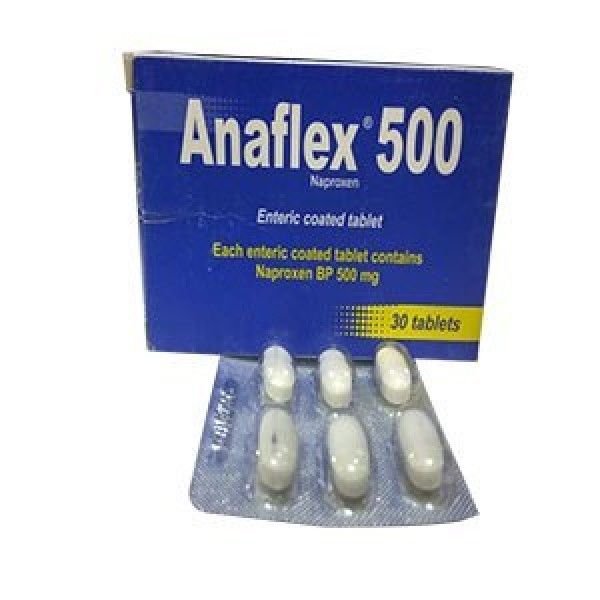
Anaflex 500 mg Tablet (Naproxen Sodium) – ACI Limited
| Brand Name | Anaflex 500 mg Tablet |
|---|---|
| Generic Name | Naproxen Sodium 500 mg |
| Strength | 500 mg |
| Dosage Form | Tablet |
| Manufacturer | ACI Limited, Bangladesh |
| Drug Class | Non-Steroidal Anti-Inflammatory Drug (NSAID) — Propionic Acid Derivative |
| Pack Size | 10 Tablets per Strip |
| Prescription Required | Yes (Rx) |
| Storage | Store below 30°C in a cool, dry place away from sunlight |
1. About Anaflex 500 mg (Naproxen Sodium)
Anaflex 500 mg Tablet contains Naproxen Sodium 500 mg, a long-acting Non-Steroidal Anti-Inflammatory Drug (NSAID) of the propionic acid class, manufactured by ACI Limited, Bangladesh. Naproxen sodium's key clinical advantage is its long plasma half-life of 12–17 hours, enabling twice-daily dosing for sustained 24-hour pain and inflammation control — superior compliance compared to 3–4 times daily NSAIDs.
ACI Limited's Anaflex 500 mg is used across clinical settings for rheumatoid and osteoarthritis, gout, dysmenorrhoea, musculoskeletal injuries, and acute pain. The sodium salt formulation provides faster dissolution and onset compared to naproxen base tablets, making it particularly effective for acute pain states.
2. Mechanism of Action
Naproxen sodium non-selectively inhibits both COX-1 and COX-2 enzymes, blocking arachidonic acid conversion to prostaglandins and thromboxanes:
- Analgesic: Reduces peripheral and central prostaglandin-mediated pain sensitisation at COX-1 and COX-2 levels
- Anti-inflammatory: Decreased PGE2 and PGI2 reduces vascular permeability, vasodilation, and neutrophil recruitment at inflammatory foci — reducing joint swelling and tissue inflammation
- Antipyretic: Inhibition of hypothalamic PGE2 resets the febrile thermoregulatory set point
- Faster onset via sodium salt: Better GI solubility than naproxen base — Tmax ~1 hour faster, beneficial for acute pain
3. Indications
- Rheumatoid Arthritis (RA): Long-term joint pain, stiffness, and swelling management with sustained twice-daily effect including overnight
- Osteoarthritis (OA): Degenerative joint disease of knee, hip, hands, spine
- Ankylosing Spondylitis
- Acute Gout: Effective NSAID for acute gouty arthritis episodes
- Primary Dysmenorrhoea: One of the most effective NSAIDs for menstrual pain due to rapid onset and long duration
- Acute Musculoskeletal Conditions: Sprains, strains, tendinitis, bursitis, sports injuries
- Post-Operative and Post-Traumatic Pain
- Dental Pain
- Migraine
4. Dosage and Administration
Arthritis (long-term): 500 mg twice daily; reduce to lowest effective maintenance dose. Maximum 1,000 mg/day for long-term use.
Acute Gout: 750 mg initially, then 250 mg every 8 hours until attack resolves.
Dysmenorrhoea / Acute Musculoskeletal Pain: 500 mg initially, then 250 mg every 6–8 hours. Max 1,375 mg on day 1, then 1,100 mg/day.
Elderly: Start at 250 mg twice daily. Use lowest effective dose. Monitor BP and renal function.
Administration: Take with food, milk, or antacid to reduce GI irritation. Drink a full glass of water.
5. Contraindications
- Active peptic ulcer or NSAID-related GI bleeding history
- Hypersensitivity to naproxen, aspirin, or any NSAID
- Aspirin-exacerbated respiratory disease (NSAID-sensitive asthma)
- Severe renal impairment (CrCl <30 ml/min)
- Severe hepatic impairment; Severe heart failure
- Third trimester of pregnancy
6. Warnings and Precautions
GI Risk: Serious GI ulceration, perforation, and bleeding can occur without warning at any time during NSAID treatment. Risk increases with dose, duration, age, concurrent steroids/anticoagulants, and prior GI history. Take with food; consider co-prescribing a PPI or use Anaflex Max (naproxen + esomeprazole) in high-GI-risk patients.
Cardiovascular Risk: NSAIDs may increase risk of serious CV thrombotic events (MI, stroke) with prolonged use or in high-CV-risk patients. Use lowest effective dose for shortest duration.
Renal Risk: NSAIDs reduce renal prostaglandin-mediated blood flow — acute renal failure risk in dehydrated patients, heart failure, diuretic use, or pre-existing renal impairment.
Diabetic patients — specific caution: NSAIDs can worsen diabetic nephropathy, oppose ACE inhibitor/ARB nephroprotection, elevate blood pressure, and cause fluid retention. Sulphonylurea interaction may enhance hypoglycaemia. Use cautiously, monitor renal function and BP. For mild pain, paracetamol is generally safer in diabetics with renal impairment.
7. Side Effects
Common: Nausea, dyspepsia, heartburn, abdominal pain, headache, dizziness, oedema, tinnitus.
Uncommon: Peptic ulcer, GI bleeding, raised liver enzymes, rash, elevated BP, renal impairment.
Rare/Serious: GI perforation, anaphylaxis, severe skin reactions (SJS/TEN), MI or stroke with prolonged use in high-CV-risk patients.
8. Drug Interactions
- Other NSAIDs/Aspirin: Avoid — increased GI and renal toxicity
- Warfarin: Increased bleeding risk — monitor INR
- ACE inhibitors/ARBs/diuretics: Reduced efficacy; acute kidney injury risk
- Sulphonylureas: Enhanced hypoglycaemia — monitor blood glucose
- Methotrexate: Reduced clearance — increased toxicity
- Lithium: Increased lithium levels
- Corticosteroids: Markedly increased GI ulceration risk
9. Pharmacokinetics
Oral bioavailability ~95%. Tmax ~1–2 hours (sodium salt). Highly protein-bound (~99%). Hepatic CYP2C9 metabolism to inactive metabolites. Primarily renal elimination. Terminal half-life 12–17 hours — basis for twice-daily dosing.
10. Naproxen vs. Other NSAIDs in Bangladesh
vs. Ibuprofen: Longer half-life means twice-daily vs 3–4 times daily dosing — better arthritis overnight control and compliance. vs. Diclofenac: Similar anti-inflammatory potency; naproxen may have lower CV risk profile. Lower hepatotoxicity risk than diclofenac. vs. COX-2 inhibitors: Naproxen + PPI (Anaflex Max) provides comparable GI safety to celecoxib with lower CV risk — a cost-effective alternative in Bangladesh.
11. NSAID Use in Diabetic Arthritis Patients
Diabetes does not protect against arthritis — in fact, hyperglycaemia accelerates cartilage degradation in osteoarthritis. When NSAIDs are needed in diabetic patients: (1) Prefer topical Anaflex Gel for localised joint pain — minimal systemic absorption; (2) For systemic NSAID need, use lowest effective dose for shortest duration; (3) Monitor eGFR before starting and at 2–4 weeks; (4) Monitor blood pressure — NSAID-induced BP rise can worsen diabetic vascular risk; (5) Ensure patient is adequately hydrated to protect against acute kidney injury.
12. ACI Limited — Anaflex Range
ACI Limited's comprehensive Anaflex range covers all clinical naproxen needs: Anaflex 250 mg (lower dose/elderly), Anaflex 500 mg (standard adult dose), Anaflex SR 500 mg (sustained-release), Anaflex Max 375/500 mg (with esomeprazole for gastroprotection), and Anaflex Gel 10% 15/30 gm (topical for localised pain).
13. Storage
- Store below 30°C, cool and dry, protected from sunlight
- Keep in original packaging. Keep out of reach of children.
- Do not use after expiry date.
Frequently Asked Questions (FAQ)
Q1: What is Anaflex 500 mg (Naproxen Sodium) used for?
Anaflex 500 mg treats arthritis (rheumatoid arthritis, osteoarthritis, ankylosing spondylitis), acute gout, primary dysmenorrhoea (period pain), musculoskeletal injuries (sprains, sports injuries, tendinitis), post-operative and dental pain, and migraine. Its long half-life (12–17 hours) enables twice-daily dosing for sustained day-and-night symptom control.
Q2: Can diabetic patients take Anaflex (Naproxen)?
With extra precautions — yes. NSAIDs can worsen diabetic kidney disease, oppose ACE inhibitors/ARBs used for renal protection, elevate blood pressure, and cause fluid retention. For mild arthritis pain in diabetic patients with kidney disease, paracetamol is generally safer. If naproxen is needed: use the lowest dose for the shortest time, monitor renal function and BP, ensure hydration, and inform your physician of all medications.
Q3: Why is Anaflex taken only twice daily while ibuprofen needs 3–4 times?
Naproxen has a half-life of 12–17 hours — much longer than ibuprofen (2 hours) or diclofenac (1–2 hours). This means effective analgesic and anti-inflammatory concentrations persist throughout the day and night with just twice-daily dosing. This is especially beneficial for arthritis patients with overnight pain and early morning stiffness — naproxen's overnight concentration controls night and morning symptoms without needing a midnight dose.
Q4: Must I take Anaflex with food?
Yes — always take Anaflex with food, milk, or antacid to reduce stomach irritation. NSAIDs directly irritate the gastric lining, causing dyspepsia, nausea, and with prolonged use, peptic ulcers and GI bleeding. Drink a full glass of water. If you develop black/tarry stools, vomit blood, or have severe stomach pain during treatment — stop and see a doctor urgently. Patients with a history of peptic ulcer should consider Anaflex Max (naproxen + esomeprazole) for added gastroprotection.