- Stock: Out Of Stock
- Brand: ACI Pharmaceuticals
- Product ID: Amoxicillin + Clavulanic Acid
🔒 100% Secure Payment | bKash | Nagad | SSLCommerz | COD
⭐ Become a FREE Member: 7% Extra Savings • Free Delivery • Refill Reminders • Priority Support
This Item is for pre order
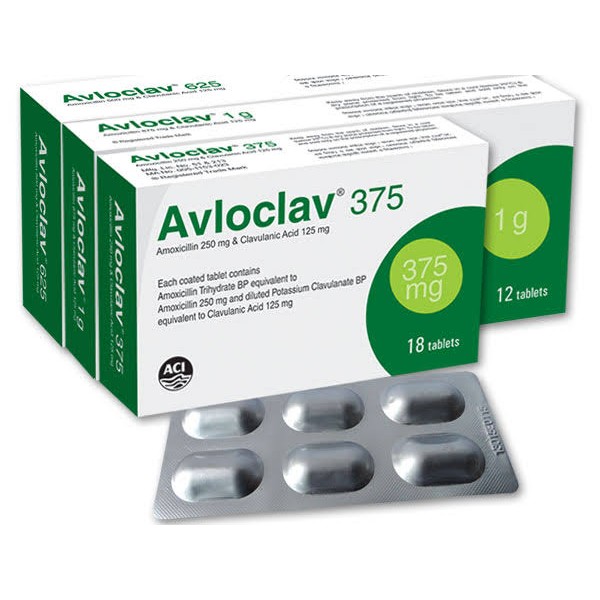
Avloclav 1.2g Vial – Co-amoxiclav IV (Amoxicillin 1000mg + Clavulanate 200mg)
| Brand Name | Avloclav 1.2g Vial |
|---|---|
| Generic Name | Amoxicillin 1000mg + Clavulanic Acid 200mg (Co-amoxiclav 1.2g) |
| Strength | Amoxicillin 1000mg + Clavulanic Acid 200mg per vial (1.2g total) |
| Dosage Form | Powder for Injection / IV Infusion |
| Manufacturer | ACI Limited, Bangladesh |
| Drug Class | Beta-Lactam Antibiotic + Beta-Lactamase Inhibitor (IV Co-amoxiclav) |
| Administration | Intravenous (IV bolus over 3–4 min, or infusion over 30 min) |
| Prescription Required | Yes (Hospital Rx / Specialist) |
| Storage | Below 25°C. Reconstituted: use within 20 minutes (bolus) or 4 hours (infusion). Protect from light. |
1. About Avloclav 1.2g IV Vial
Avloclav 1.2g Vial is the full-dose intravenous formulation of Co-amoxiclav (Amoxicillin 1000mg + Clavulanic Acid 200mg), manufactured by ACI Limited, Bangladesh. This is the standard adult IV dose — equivalent to one full vial given TDS (every 8 hours) or QDS (every 6 hours) in severe infections. Each dose delivers 1g amoxicillin + 200mg clavulanate directly into the bloodstream, achieving plasma concentrations within minutes and providing immediate broad-spectrum bactericidal activity against beta-lactamase-producing organisms. This formulation is the IV backbone of co-amoxiclav therapy in hospital settings across Bangladesh.
2. Clinical Indications
- Moderate-to-severe community-acquired pneumonia (CAP) — first-line IV beta-lactam component
- Severe acute exacerbation of COPD requiring IV antibiotics
- Severe complicated UTI and acute pyelonephritis
- Severe intra-abdominal infections — biliary sepsis, cholangitis, peritonitis (combination therapy)
- Severe diabetic foot infection (Grade 3 IDSA — deep/systemic infection) requiring IV hospitalisation
- Post-surgical wound infections with polymicrobial cover
- Sepsis empirical therapy (in combination, where co-amoxiclav is appropriate spectrum)
- Peri-operative prophylaxis — single 1.2g dose at induction for biliary, colorectal, gynaecological surgery
3. Dosage
Standard adult dosing: 1.2g IV every 8 hours (TDS) for moderate infections; 1.2g IV every 6 hours (QDS) for severe infections. Duration: typically 2–5 days IV until clinical improvement, then step-down to oral. Peri-operative prophylaxis: single 1.2g IV dose at induction of anaesthesia; may give further doses if procedure prolonged (>3 hours) or blood loss significant.
Paediatric dosing: 30mg/kg (co-amoxiclav combined weight) TDS to QDS IV. Maximum single dose: 1.2g regardless of weight.
Renal impairment: eGFR 30–60: standard 8-hourly dosing acceptable; eGFR 10–30: 1.2g loading then 600mg 8-hourly; eGFR <10: 1.2g loading then 600mg 12-hourly; haemodialysis: 1.2g loading, 600mg after each session.
Reconstitution: Add 20ml Water for Injection to 1.2g vial. Shake to dissolve. Administer by slow IV bolus over 3–4 minutes, or dilute into 50–100ml 0.9% NaCl/Hartmann's and infuse over 30 minutes. Use within 20 minutes (bolus) or 4 hours (infusion).
4. Co-amoxiclav 1.2g IV for Severe Diabetic Foot Infection
Severe DFI (systemic signs: fever, raised WBC, CRP >150, spreading infection, deep tissue/bone involvement) is a medical emergency requiring hospitalisation and prompt IV antibiotics. Co-amoxiclav 1.2g IV QDS provides: (1) Amoxicillin (beta-lactam): bactericidal against streptococci, staphylococci (MSSA), Enterococcus, anaerobes, and most gram-negatives including E. coli, Klebsiella, Proteus; (2) Clavulanate: inhibits beta-lactamases produced by S. aureus, H. influenzae, Bacteroides spp., E. coli, and Klebsiella — restoring amoxicillin's activity. Combined, co-amoxiclav IV covers virtually all organisms in polymicrobial DFI except MRSA and Pseudomonas aeruginosa. For severe DFI where Pseudomonas is suspected (chronic wound, water exposure, prior quinolone therapy, tropical foot): add piperacillin-tazobactam, ceftazidime, or meropenem. Consider adding metronidazole for significant anaerobic component in deep wound tracks or gangrene. Blood glucose optimisation (target 6–10 mmol/L) should be achieved concurrently — hyperglycaemia >12 mmol/L significantly impairs neutrophil function.
5. Drug Interactions
Warfarin: IV co-amoxiclav can enhance warfarin's anticoagulant effect — monitor INR closely in hospitalised patients on warfarin; dose adjustment may be needed. Aminoglycosides (gentamicin, amikacin): Do not mix in same IV line — chemical inactivation occurs. Give via separate line or flush line with saline between doses. Methotrexate: Amoxicillin reduces renal tubular secretion of methotrexate — avoid co-administration; if unavoidable, monitor methotrexate levels and toxicity carefully. Oral contraceptives: theoretical reduction in efficacy (low evidence — advise additional contraceptive precautions during IV antibiotic course).
Frequently Asked Questions (FAQ)
Q1: What is Avloclav 1.2g IV used for in hospital?
Avloclav 1.2g IV is used in hospitalised patients requiring intravenous antibiotics for serious infections. Common uses include: severe pneumonia (given with a macrolide or doxycycline for atypical cover), severe diabetic foot infections (Grade 3 with systemic signs), acute pyelonephritis or complicated UTI, intra-abdominal infections such as biliary sepsis, and as peri-operative prophylaxis for abdominal or gynaecological surgery. The IV route ensures immediate 100% bioavailability — critical in sepsis or patients who cannot absorb oral medications.
Q2: How often is Avloclav 1.2g IV given?
The standard dosing interval is every 8 hours (TDS) for moderate infections, or every 6 hours (QDS) for severe or life-threatening infections. This is determined by the infection severity and the prescribing clinician. Co-amoxiclav's amoxicillin component is time-dependent (efficacy depends on maintaining drug levels above the MIC for >50% of the dosing interval), so regular dosing at fixed intervals is important — delayed or missed doses reduce bactericidal efficacy. Duration of IV therapy is typically 2–5 days, after which step-down to oral co-amoxiclav 875+125mg BD is appropriate if the patient is improving.
Q3: Can Avloclav 1.2g IV be mixed with other drugs in the same infusion bag?
No — Avloclav 1.2g IV should not be mixed with other drugs in the same infusion bag or given through the same IV line simultaneously as another drug without flushing. Specific important incompatibilities: (1) Aminoglycosides (gentamicin, amikacin, tobramycin) — chemical inactivation of both drugs; (2) Metronidazole IV — physically incompatible; (3) Blood products — precipitation. Use a dedicated lumen or flush the line with 0.9% NaCl before and after administration. Compatible diluents for infusion: 0.9% Sodium Chloride (preferred), Ringer's Lactate/Hartmann's solution, Sterile Water for Injection.
Q4: What bacteria does Avloclav IV not cover?
Despite broad-spectrum coverage, Avloclav IV (co-amoxiclav) has notable gaps that clinicians must be aware of: (1) MRSA — no activity; use vancomycin, teicoplanin, linezolid, or daptomycin; (2) Pseudomonas aeruginosa — not reliably covered; use piperacillin-tazobactam, ceftazidime, ciprofloxacin (if sensitive), or meropenem; (3) Extended-spectrum beta-lactamase (ESBL) producers — most ESBL-producing E. coli and Klebsiella are co-amoxiclav resistant; use meropenem or ertapenem; (4) Stenotrophomonas maltophilia — intrinsically resistant; (5) Atypical organisms (Mycoplasma, Legionella, Chlamydia) — no activity; requires macrolide or doxycycline added for atypical pneumonia coverage. For severe hospital-acquired or healthcare-associated infections, broader empirical cover should be considered pending cultures.