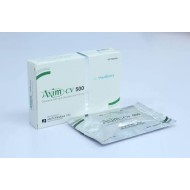

- Stock: Out Of Stock
- Brand: ACI Pharmaceuticals
- Product ID: Amoxicillin + Clavulanic Acid
🔒 100% Secure Payment | bKash | Nagad | SSLCommerz | COD
⭐ Become a FREE Member: 7% Extra Savings • Free Delivery • Refill Reminders • Priority Support
This Item is for pre order
Avloclav 500mg+125mg (Amoxicillin + Clavulanic Acid) – Co-amoxiclav 625
| Brand Name | Avloclav 500mg+125mg |
|---|---|
| Generic Name | Amoxicillin 500mg + Clavulanic Acid 125mg |
| Strength | Amoxicillin 500 mg + Clavulanic Acid 125 mg per tablet |
| Dosage Form | Film-coated Tablet |
| Manufacturer | ACI Limited, Bangladesh |
| Drug Class | Beta-Lactam Antibiotic + Beta-Lactamase Inhibitor (Co-amoxiclav) |
| Prescription Required | Yes (Rx) |
| Storage | Store below 25°C. Protect from moisture. Keep in original packaging. |
1. About Avloclav 625 (Amoxicillin 500mg + Clavulanic Acid 125mg)
Avloclav 625 tablets contain Amoxicillin 500 mg (as trihydrate) and Clavulanic Acid 125 mg (as potassium clavulanate), manufactured by ACI Limited, Bangladesh. The 625 mg formulation is the most widely prescribed Co-amoxiclav strength for adults in Bangladesh, providing optimal amoxicillin exposure for moderate bacterial infections while maintaining the same clavulanate dose as the 375 mg formulation. It is the standard choice for moderate respiratory infections, moderate UTI, and moderate diabetic foot infections.
2. Mechanism of Action
Amoxicillin inhibits bacterial cell wall synthesis via covalent binding to penicillin-binding proteins (PBPs 1a, 1b, 2, 3), blocking the transpeptidation of peptidoglycan strands. The resulting structural cell wall defect leads to osmotic imbalance and bacterial lysis. Clavulanic acid acts as a "suicide inhibitor" of beta-lactamase enzymes: it binds irreversibly to the active site of class A and some class C/D beta-lactamases produced by resistant bacteria, permanently inactivating the enzyme. The combination produces time-dependent bactericidal killing — efficacy depends on maintaining amoxicillin concentrations above the MIC for at least 40–50% of the dosing interval. The 500 mg amoxicillin dose achieves these pharmacodynamic targets against a broader range of susceptible gram-negative pathogens compared to 250 mg.
3. Spectrum and Indications
Gram-positive: MSSA (beta-lactamase producing), Streptococcus pyogenes, S. agalactiae, S. pneumoniae, Enterococcus faecalis, anaerobes (Bacteroides fragilis).
Gram-negative: H. influenzae, M. catarrhalis, E. coli, Klebsiella pneumoniae, Proteus spp., Pasteurella multocida.
- Community-acquired pneumonia (moderate severity)
- Acute exacerbations of chronic bronchitis and COPD
- Acute bacterial sinusitis (moderate — failed 72h observation or severe symptoms)
- Moderate UTI: cystitis and pyelonephritis (E. coli, K. pneumoniae)
- Moderate diabetic foot infection (skin, subcutaneous, fascia involvement without osteomyelitis)
- Skin and soft tissue infections: cellulitis, wound infections, abscesses post-drainage
- Hospital step-down from IV antibiotics
4. Dosage
Adults and children ≥12 years: One tablet (500+125mg) three times daily (TDS) for 5–14 days depending on infection. Take at the start of meals.
Renal impairment: Amoxicillin and clavulanate are both renally excreted. eGFR 10–30 mL/min: 500+125mg BD (not TDS); eGFR <10 mL/min: 250+125mg BD. Haemodialysis patients: additional dose after each session.
5. Contraindications
- Penicillin or amoxicillin hypersensitivity (anaphylaxis, urticaria, angioedema)
- Previous amoxicillin-clavulanate-associated liver injury or cholestatic jaundice
- Infectious mononucleosis (EBV infection — high risk of drug rash)
6. Co-amoxiclav in Moderate Diabetic Foot Infections
Moderate diabetic foot infections — those involving deep tissue (fascia, muscle) without bone or joint involvement — require broader antibiotic coverage than mild DFI. Avloclav 625 is appropriate for moderate DFI when the clinical picture suggests: aerobic gram-positive cocci (Staph aureus MSSA dominant), oral polymicrobial flora (anaerobes from inadequate wound toilet), or gram-negative enteric organisms in macerated chronic wounds. IDSA DFI guidelines support oral co-amoxiclav for moderate DFI when the patient can be safely managed as an outpatient. Combination with a fluoroquinolone or co-trimoxazole may be needed for suspected P. aeruginosa or MRSA. Mandatory concurrent management: aggressive wound debridement, pressure offloading, vascular assessment, glycaemic optimisation (target glucose 6–10 mmol/L during active infection). Culture and sensitivity results should guide therapy adjustment after 48–72 hours if available.
7. Side Effects
Common: Diarrhoea (15–20% — take with food, consider probiotic), nausea, abdominal bloating. Uncommon: Oral or vaginal candidiasis (higher risk in diabetic women), urticaria. Rare: Cholestatic hepatitis (clavulanate — typically 1–6 weeks post-treatment, mostly in older males; presents as jaundice, raised ALP/GGT — self-limiting but monitor), anaphylaxis (immediate — carry adrenaline if prior allergic reaction).
8. Monitoring in Diabetic Patients
Check eGFR/creatinine before prescribing in patients with diabetic nephropathy — dose adjustment is critical (see above). Monitor blood glucose during infection and antibiotic therapy — infection itself causes significant hyperglycaemia; antibiotic-related GI side effects may reduce oral intake and medication absorption. Candidal superinfection risk is elevated in diabetics (poorly controlled diabetes provides substrate for Candida) — monitor for oral thrush and vaginal candidiasis; add antifungal prophylaxis in high-risk women.
Frequently Asked Questions (FAQ)
Q1: Is Avloclav 625 stronger than Avloclav 375?
Yes, Avloclav 625 (500+125mg) contains twice the amoxicillin dose compared to Avloclav 375 (250+125mg) — the clavulanate dose (125mg) is the same in both. The higher amoxicillin dose (500mg) achieves better pharmacodynamic target attainment against gram-negative bacteria (E. coli, K. pneumoniae, H. influenzae) that have higher minimum inhibitory concentrations (MIC) for amoxicillin. Practically: Avloclav 375 is for mild infections caused by very susceptible organisms; Avloclav 625 is for moderate infections and for pathogens with higher MIC values. The clavulanate dose does not change because beta-lactamase inhibition is fully achieved at 125mg — doubling the clavulanate dose adds no benefit but significantly increases diarrhoea risk. The 625mg formulation is the standard adult prescription in Bangladesh for most co-amoxiclav indications.
Q2: Can Avloclav 625 be taken twice daily instead of three times daily?
Avloclav 625 (500+125mg) is designed for three-times-daily (TDS) dosing. Twice-daily (BD) dosing requires higher individual doses — the 875+125mg (Avloclav 1000) BD formulation achieves equivalent daily amoxicillin exposure to 625mg TDS. The BD dosing strategy: (1) Reduces total daily clavulanate exposure (2 × 125mg = 250mg/day vs 3 × 125mg = 375mg/day), significantly reducing diarrhoea; (2) Improves adherence — BD is simpler than TDS; (3) Is equally effective pharmacodynamically for most infections. For patients with significant diarrhoea on 625mg TDS or where adherence to TDS is difficult, ask your doctor about switching to Avloclav 1000 (875+125mg BD). For renal impairment (eGFR 10–30), BD dosing with 625mg is medically appropriate dose-reduction.
Q3: Can someone with penicillin allergy take Avloclav?
No — Avloclav contains amoxicillin, which is a penicillin. It is absolutely contraindicated in patients with confirmed IgE-mediated penicillin allergy (anaphylaxis, urticaria, angioedema). Cross-reactivity considerations: (1) True penicillin anaphylaxis: strict contraindication to all penicillins including amoxicillin; (2) Reported mild rash from amoxicillin (non-allergic maculopapular rash, especially in EBV/mononucleosis context): not a true allergy — clarify history before blanket labelling as "penicillin allergy"; (3) Cephalosporin cross-reactivity with penicillin is approximately 1–2% in true penicillin-allergic patients; (4) For patients with genuine penicillin allergy needing treatment for co-amoxiclav indications: alternatives depend on the specific infection — respiratory: azithromycin or levofloxacin; UTI: trimethoprim, nitrofurantoin (for cystitis), or fluoroquinolone; skin infection: clindamycin or TMP-SMX.
Q4: Why does Avloclav need to be taken with food?
Avloclav must be taken at the start of meals for two important reasons: (1) Clavulanate GI tolerability: Clavulanic acid at therapeutic concentrations alters gut motility and flora, causing diarrhoea and nausea. Taking with food slows gastric emptying and dilutes the clavulanate concentration reaching the intestinal mucosa, significantly reducing GI side effects — clinical studies show up to 50% reduction in diarrhoea incidence with food co-administration; (2) Pharmacokinetics: Food does not reduce amoxicillin bioavailability (amoxicillin absorption is not affected by food) but substantially improves clavulanate bioavailability and Tmax — the food effect is positive or neutral for the drug combination. Practical instruction: swallow Avloclav tablet(s) at the very first bite of a meal. Do not take on an empty stomach even for 10-minute snacks — a full meal or substantial food is required for maximum tolerability benefit.