
- Stock: Out Of Stock
- Brand: ACI Pharmaceuticals
- Product ID: Amoxicillin Trihydrate
🔒 100% Secure Payment | bKash | Nagad | SSLCommerz | COD
⭐ Become a FREE Member: 7% Extra Savings • Free Delivery • Refill Reminders • Priority Support
This Item is for pre order
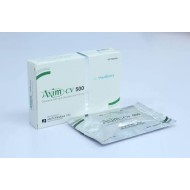
Avlomox 250 Capsule – Amoxicillin 250mg for Mild Infections
| Brand Name | Avlomox 250 |
|---|---|
| Generic Name | Amoxicillin Trihydrate 250mg |
| Strength | 250mg per capsule |
| Dosage Form | Hard Gelatin Capsule |
| Manufacturer | ACI Limited, Bangladesh |
| Drug Class | Aminopenicillin (Beta-Lactam Antibiotic) |
| Prescription Required | Yes (Rx) |
| Storage | Below 25°C. Protect from moisture. Keep in original blister until use. |
1. About Avlomox 250 (Amoxicillin 250mg)
Avlomox 250 Capsule contains Amoxicillin Trihydrate 250mg, manufactured by ACI Limited, Bangladesh. The 250mg dose is used for mild infections in adults and as the standard dose for children weighing 20–40kg where the oral capsule form is appropriate. Amoxicillin is an aminopenicillin antibiotic that kills bacteria by irreversibly binding to penicillin-binding proteins (PBPs), inhibiting cell wall synthesis. At 250mg TDS, a total daily dose of 750mg amoxicillin is delivered — adequate for mild susceptible infections but below the standard 1.5g/day (500mg TDS) recommended for most moderate adult infections. Understanding when 250mg is sufficient versus when 500mg or higher doses are required is clinically important.
2. When is the 250mg Dose Appropriate?
The 250mg capsule is appropriate in specific clinical situations: (1) Mild uncomplicated UTI in women — some guidelines permit 250mg TDS for uncomplicated lower UTI, though 500mg TDS is more commonly recommended; (2) Paediatric dosing (large capsule-swallowing children) — children weighing 20–40kg may be prescribed 250mg TDS; (3) Step-down therapy — after initial 500mg TDS, completing a course with 250mg in a patient showing good early response and low infection severity; (4) Mild dental/oral infections in adults as an adjunct; (5) Dose flexibility — some prescribers use two 250mg capsules to achieve a 500mg dose, though this is less convenient than a single 500mg capsule. Note: WHO Essential Medicines and most national formularies recommend 500mg as the standard adult dose for most infections. The 250mg dose should not be used for moderate or severe infections.
3. Indications
- Mild upper respiratory tract infections in adults (viral exclusion essential — bacterial pharyngitis, mild sinusitis)
- Mild urinary tract infections (uncomplicated cystitis)
- Mild dental and oral infections
- Paediatric infections (appropriate weight-based dosing)
- Mild skin infections (impetigo, mild superficial cellulitis)
- H. pylori eradication (as part of combination regimen — typically 1g BD component, so two 250mg capsules QDS or as prescribed)
4. Dosage
Mild infections in adults: 250mg three times daily (TDS) every 8 hours for 5–7 days. Moderate infections (standard adult dose): 500mg TDS — two Avlomox 250 capsules per dose, three times daily. Children 20–40kg: 250mg TDS; children <20kg use weight-based liquid suspension. Duration: 5–7 days for UTI and skin infections; 7–10 days for respiratory infections; 10 days for strep throat; duration per prescriber for dental infections. Take at evenly spaced intervals. Food does not significantly affect absorption but reduces nausea.
5. Spectrum of Activity
Amoxicillin 250mg covers the same organisms as 500mg but achieves lower peak plasma concentrations. Covered organisms include: Streptococcus pyogenes (Group A strep — strep throat, impetigo), Streptococcus pneumoniae (pneumococcal infections — respiratory), Enterococcus faecalis (UTI), E. coli (UTI — if amoxicillin-sensitive), H. influenzae (non-beta-lactamase-producing), Listeria monocytogenes, H. pylori (combination). Not covered: Beta-lactamase-producing organisms (S. aureus, most H. influenzae, Klebsiella, Bacteroides — require co-amoxiclav), Pseudomonas, MRSA, atypicals (Mycoplasma, Legionella, Chlamydia).
6. Amoxicillin and Antibiotic Stewardship
Amoxicillin is one of the most over-prescribed antibiotics in Bangladesh and globally — a significant proportion of prescriptions are for viral infections (common cold, viral pharyngitis, viral bronchitis) where antibiotics provide no benefit. Antibiotic stewardship principles: (1) Confirm bacterial aetiology before prescribing — viral URTI does not benefit from amoxicillin; (2) Use the right dose — underdosing (250mg when 500mg needed) is a significant driver of treatment failure and resistance; (3) Use the right duration — prolonged courses increase side effects and resistance without improving outcomes for most infections; (4) Reserve co-amoxiclav for situations where plain amoxicillin is likely to fail — unnecessary co-amoxiclav prescribing accelerates beta-lactamase gene spread. Patient education at dispensing is critical — explaining why the full course must be completed and that antibiotics do not work for colds or flu reduces antibiotic misuse.
Frequently Asked Questions (FAQ)
Q1: Can I use two Avlomox 250mg capsules instead of one Avlomox 500mg capsule?
Yes — pharmacologically, two 250mg capsules taken together are bioequivalent to one 500mg capsule. Both deliver 500mg amoxicillin and achieve the same blood levels. However, taking two capsules at once is less convenient than a single 500mg capsule, and the cost is approximately the same or slightly higher. From a clinical perspective, if your prescription says 500mg TDS and you only have 250mg capsules, taking two at each dose is acceptable. Confirm with your pharmacist or doctor if unsure. For the standard adult 500mg TDS dose, it is generally more convenient and cost-effective to purchase the 500mg capsule directly.
Q2: How is amoxicillin 250mg different from ampicillin 250mg?
Amoxicillin and ampicillin are both aminopenicillins with similar spectra, but amoxicillin has several important advantages: (1) Better oral bioavailability: amoxicillin ~85–90% vs ampicillin ~40–50% (less food-dependent); (2) Food effect: amoxicillin absorption is not significantly affected by food; ampicillin must be taken on an empty stomach for adequate absorption; (3) Tissue distribution: amoxicillin achieves better concentrations in lung tissue, sputum, and middle ear fluid than ampicillin; (4) Fewer GI side effects: lower unabsorbed fraction means less diarrhoea; (5) Clinical efficacy: better outcomes for respiratory infections due to higher bioavailability. For these reasons, amoxicillin has largely replaced ampicillin for oral use in international and Bangladesh guidelines. Ampicillin still has a role in IV therapy.
Q3: Is amoxicillin 250mg safe during pregnancy and breastfeeding?
Amoxicillin is classified as Pregnancy Category B — extensive data in pregnant women do not show increased risk of malformations or harm to the foetus, and it is considered one of the safest antibiotics in pregnancy. It is the recommended antibiotic for group B strep prophylaxis in labour and for UTI treatment in pregnancy. During breastfeeding: amoxicillin is excreted in breast milk in small amounts — considered compatible with breastfeeding. Infant exposure is low and no significant adverse effects have been reported. Monitor breastfed infant for diarrhoea, thrush, or skin rash. Use amoxicillin in pregnancy or breastfeeding only when clinically indicated and prescribed by a healthcare provider — the risk of untreated bacterial infection generally outweighs the very low risk from appropriate amoxicillin use.
Q4: What should I do if amoxicillin 250mg is not working after 2 days?
If you see no improvement after 48–72 hours of amoxicillin treatment, do not simply continue — seek medical review. Possible reasons for apparent treatment failure include: (1) Wrong dose: 250mg may be inadequate for your infection — 500mg TDS or higher may be needed; (2) Resistant organism: beta-lactamase-producing bacteria (common in skin infections, complicated sinusitis, bite wounds) require co-amoxiclav (amoxicillin + clavulanate); (3) Viral cause: if the infection is viral, no antibiotic will work — reassessment of diagnosis is needed; (4) Alternative pathogen: atypical organisms (Mycoplasma, Legionella) in pneumonia; MRSA in skin infections — require different antibiotics; (5) Non-infectious cause: inflammatory or structural conditions mimicking infection. Do not increase the dose without medical advice and do not self-prescribe co-amoxiclav without evaluation — appropriate de-escalation or escalation requires clinical assessment.