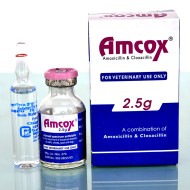

- Stock: Out Of Stock
- Brand: ACI Pharmaceuticals
- Product ID: Amoxicillin Trihydrate
🔒 100% Secure Payment | bKash | Nagad | SSLCommerz | COD
⭐ Become a FREE Member: 7% Extra Savings • Free Delivery • Refill Reminders • Priority Support
This Item is for pre order
Avlomox 500mg Injection – Amoxicillin IV/IM for Hospitalised Patients
| Brand Name | Avlomox 500mg Injection |
|---|---|
| Generic Name | Amoxicillin Sodium 500mg |
| Strength | 500mg per vial |
| Dosage Form | Powder for Injection (IV / IM) |
| Manufacturer | ACI Limited, Bangladesh |
| Drug Class | Aminopenicillin (Beta-Lactam Antibiotic) — Parenteral |
| Administration | Intravenous (IV bolus/infusion) or Intramuscular (IM) |
| Prescription Required | Yes (Hospital/Specialist Rx) |
| Storage | Dry powder: below 25°C. Reconstituted: use within 1 hour (IM) or 8 hours (IV infusion). Protect from light. |
1. About Avlomox 500mg Injection
Avlomox 500mg Injection contains Amoxicillin Sodium 500mg as a powder for reconstitution for intravenous (IV) or intramuscular (IM) injection, manufactured by ACI Limited, Bangladesh. The parenteral form is indicated when the oral route is unavailable or inadequate — in patients who are unconscious, vomiting, nil by mouth, or who require the immediate 100% bioavailability of IV administration in serious infections. IV amoxicillin achieves peak plasma concentrations within minutes, delivering immediate bactericidal concentrations to infected tissues. The 500mg vial provides a single dose for IM administration or is used as the base dose for IV bolus therapy, with multiple vials used for IV infusion regimens.
2. Clinical Indications
- Moderate-to-severe community-acquired pneumonia (with macrolide or doxycycline for atypical cover)
- Sepsis empirical therapy — when amoxicillin spectrum is appropriate (gram-positive, non-resistant gram-negative)
- Listeria monocytogenes infections — neonatal listeriosis, Listeria meningitis, Listeria septicaemia
- Infective endocarditis — amoxicillin-sensitive streptococcal/enterococcal endocarditis (combination therapy)
- Severe UTI / pyelonephritis — IV initiation before step-down to oral
- Neonatal infections — B-strep prophylaxis/treatment, E. coli sepsis (where sensitive)
- Peri-operative prophylaxis — as part of combination regimens
- Step-down from IV to oral when patient stabilises
3. Dosage
Adults: Standard dose 500mg IV/IM every 8 hours (TDS); severe infections: 1g (2 vials) IV every 6 hours (QDS). Endocarditis: 2g IV every 4 hours (with gentamicin per protocol). Children: 25–50mg/kg/day IV in 3–4 divided doses; neonates: 25mg/kg IV every 12 hours (0–7 days); 8–28 days: 25mg/kg every 8 hours. Renal impairment: Reduce dose or extend interval if eGFR <30 mL/min. Reconstitution (IV bolus): Add 5–10ml Water for Injection to 500mg vial. Inject over 3–4 minutes. IV infusion: Dissolve in WFI first, then add to 50–100ml 0.9% NaCl and infuse over 30–60 minutes. IM: Add 1.5ml Water for Injection; inject deep into large muscle. Use within 1 hour of reconstitution for IM; within 8 hours for IV infusion.
4. Amoxicillin IV in Listeria Infections
Amoxicillin IV is the drug of choice for Listeria monocytogenes — one of the few indications where it is definitively superior to most other antibiotics. Listeria is intrinsically resistant to all cephalosporins (including cefotaxime and ceftriaxone), making amoxicillin/ampicillin the backbone of empirical meningitis cover when Listeria is possible (elderly, immunocompromised, neonates). Standard Listeria therapy: amoxicillin/ampicillin 2g IV 4-hourly + gentamicin (synergy) for meningitis and severe infections. Duration: 3 weeks for meningitis, 6 weeks for endocarditis. For empirical meningitis cover in patients over 50 or immunocompromised, always include amoxicillin alongside a cephalosporin — never rely on cephalosporins alone.
5. IV-to-Oral Step-Down
Amoxicillin IV step-down to oral is appropriate when: temperature <37.5°C for >24 hours, CRP declining, tolerating oral intake, no mandatory IV-only indication (endocarditis, meningitis, immunosuppression). Oral amoxicillin achieves 85–90% bioavailability — clinically equivalent to IV for most infections once the patient is stable. Step-down reduces IV line infection risk, hospital stay duration, and cost. For most respiratory and urinary infections, step-down to oral at 48–72 hours is standard antimicrobial stewardship practice. Do not continue IV amoxicillin beyond 48–72 hours in a patient who is improving and tolerating oral — there is no clinical benefit and increased risk of IV line complications.
Frequently Asked Questions (FAQ)
Q1: When is IV amoxicillin injection used instead of oral amoxicillin capsules?
IV amoxicillin injection is used when the oral route is not suitable or when immediate high blood levels are needed. Specific indications: (1) Patient is nil by mouth (pre/post-surgery, vomiting, reduced consciousness); (2) Malabsorption making oral therapy unreliable; (3) Serious systemic infection (sepsis, meningitis, endocarditis) where peak concentrations must be achieved immediately; (4) Neonatal infections where IV is the standard of care; (5) Peri-operative antibiotic prophylaxis requiring blood levels at the time of incision. Once the patient is stable and tolerating oral intake, oral amoxicillin should replace the IV form — this is clinically equivalent for most infections and is standard antibiotic stewardship practice.
Q2: How is Avlomox 500mg injection different from co-amoxiclav (Avloclav) injection?
The key difference: Avlomox 500mg injection contains only amoxicillin — it has no activity against beta-lactamase-producing organisms (MRSA, most S. aureus, many E. coli and Klebsiella, anaerobes like Bacteroides). Avloclav IV (co-amoxiclav) contains amoxicillin + clavulanic acid — the clavulanate inhibits beta-lactamases, restoring activity against resistant organisms. For hospital-acquired infections, polymicrobial infections (DFI, intra-abdominal), or when resistant organisms are likely, co-amoxiclav IV (Avloclav 600mg or 1.2g vial) is preferred. Plain amoxicillin IV is used for infections with known or likely susceptible organisms — streptococcal/enterococcal endocarditis, Listeria, amoxicillin-sensitive gram-positive infections, and as part of directed therapy following sensitivity results.
Q3: Can amoxicillin injection be mixed with other drugs in the IV line?
Amoxicillin IV has important compatibility restrictions: (1) Aminoglycosides (gentamicin, amikacin): Do NOT mix in same IV bag or line — chemical inactivation. Give through separate line or flush with saline between doses; (2) Metronidazole IV: Incompatible — separate lines; (3) Blood products: Do not co-infuse; (4) Compatible with: 0.9% NaCl (preferred), Ringer's Lactate, 5% glucose for short-term admixture (note: less stable in glucose — use within 4 hours). Use a dedicated IV lumen when possible. Reconstituted solution should be colourless to pale yellow — discard if discoloured, particulate, or cloudy.
Q4: What infections does amoxicillin IV NOT cover that require a different antibiotic?
Critical gaps in amoxicillin's spectrum that hospital prescribers must know: (1) MRSA: requires vancomycin, teicoplanin, linezolid, or daptomycin; (2) Beta-lactamase-producing S. aureus (MSSA): use cloxacillin/flucloxacillin IV (not plain amoxicillin — beta-lactamase destroys it); (3) Pseudomonas aeruginosa: use piperacillin-tazobactam, ceftazidime, meropenem; (4) ESBL-producing E. coli and Klebsiella: use meropenem or ertapenem; (5) Atypical organisms (Mycoplasma, Legionella, Chlamydia): add macrolide or doxycycline for pneumonia; (6) Anaerobes in abdominal/pelvic infections: add metronidazole or use co-amoxiclav IV. Amoxicillin IV is most reliable for: streptococcal, enterococcal, Listeria, and amoxicillin-sensitive gram-positive/gram-negative infections confirmed by culture.