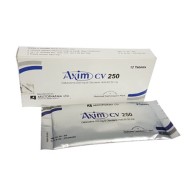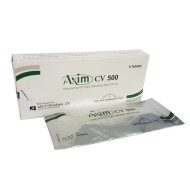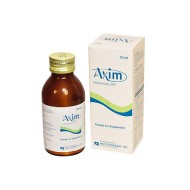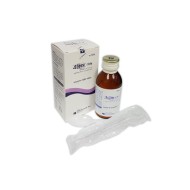
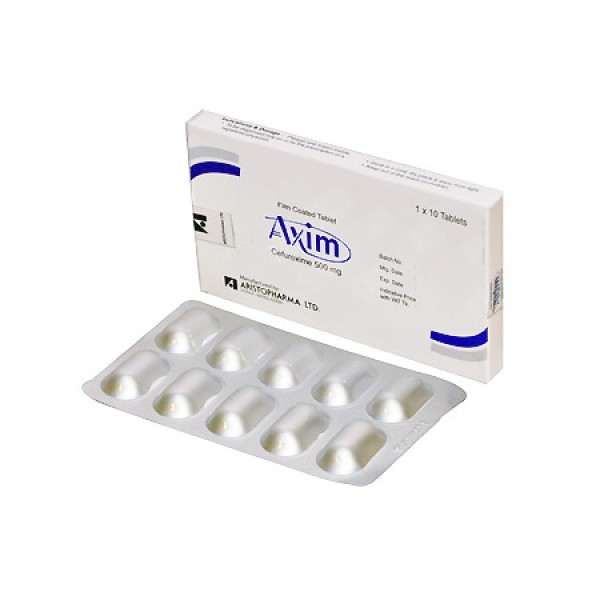
- Stock: Out Of Stock
- Brand: Aristopharma
- Product ID: Cefuroxime Axetil
🔒 100% Secure Payment | bKash | Nagad | SSLCommerz | COD
⭐ Become a FREE Member: 7% Extra Savings • Free Delivery • Refill Reminders • Priority Support
This Item is for pre order
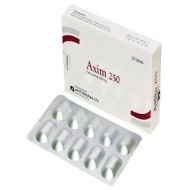
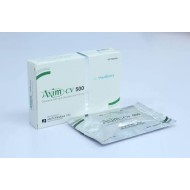
Axim 500 mg Tablet (Cefuroxime Axetil) — Clinical Overview
| Brand Name | Axim 500 mg Tab |
|---|---|
| Generic Name | Cefuroxime Axetil |
| Manufacturer | ACI Limited, Bangladesh |
| Strength | 500 mg per tablet |
| Dosage Form | Film-coated Tablet |
| Pack Size | 10 tablets per strip |
| Drug Class | Second-generation Cephalosporin (Beta-lactam Antibiotic) |
| Prescription Status | Prescription Only Medicine (POM) |
What is Axim 500 mg Tab?
Axim 500 mg Tab is an oral antibiotic from ACI Limited, Bangladesh. Its active ingredient, cefuroxime axetil, is a second-generation cephalosporin prodrug that is converted to active cefuroxime after intestinal absorption. The 500 mg formulation delivers higher systemic antibiotic exposure than the 250 mg strength, making it appropriate for infections requiring greater drug concentrations at the site of infection — particularly respiratory tract, skin, and soft tissue infections of moderate severity.
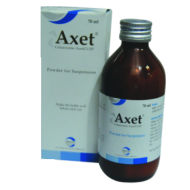
Axim is available across the full spectrum of cefuroxime formulations: 250 mg and 500 mg oral tablets, 70 mL oral suspension, and injectable cefuroxime sodium (Axim 750 mg and 1.5 g IV). This makes Axim one of ACI's most complete antibiotic product lines, suitable for step-down therapy from IV to oral treatment in the same brand.
Antimicrobial Activity of Cefuroxime 500 mg
At the 500 mg dose, cefuroxime achieves peak plasma concentrations (Cmax) of approximately 7–10 μg/mL. This is clinically relevant because certain respiratory pathogens — particularly H. influenzae strains from patients with repeated antibiotic exposure — may have higher MICs that require greater drug concentrations for bactericidal killing. The organisms covered include:
- Gram-positive: Streptococcus pneumoniae (non-PRSP), S. pyogenes (Group A Strep), MSSA (Staphylococcus aureus, methicillin-sensitive)
- Gram-negative: Haemophilus influenzae (including beta-lactamase producers), Moraxella catarrhalis, E. coli, Klebsiella pneumoniae, Proteus mirabilis
- Not covered: MRSA, Pseudomonas aeruginosa, Enterococcus, atypical organisms (Mycoplasma, Legionella, Chlamydophila)
Cefuroxime's stability against TEM-1, TEM-2, and BRO-type beta-lactamases produced by H. influenzae and M. catarrhalis makes it particularly valuable for community-acquired respiratory infections where beta-lactamase production is common.
Clinical Indications
Axim 500 mg Tab is indicated for moderate-severity bacterial infections:
- Acute exacerbations of chronic bronchitis (AECB): 500 mg twice daily is the standard dose, providing higher sputum drug concentrations for effective H. influenzae eradication
- Community-acquired pneumonia (mild): Suitable for outpatient management of pneumonia when atypical organisms are not suspected
- Acute bacterial sinusitis (moderate): When the lower 250 mg dose has failed or more extensive disease is present
- Early Lyme disease: 500 mg twice daily for 20 days for erythema migrans
- Moderate skin and soft tissue infections: Cellulitis, wound infections, infected diabetic foot ulcers (mild-to-moderate, non-limb-threatening)
Diabetes-Specific Clinical Considerations
At the 500 mg dose, Axim is particularly relevant for diabetic patients with more serious or refractory infections:
- Complicated UTIs in diabetes: Although cefuroxime 250 mg is usually adequate for uncomplicated lower UTIs, complicated diabetic UTIs with systemic signs or risk of ascending infection may benefit from 500 mg twice daily to achieve higher renal parenchymal drug concentrations, reducing risk of progression to pyelonephritis.
- Diabetic foot infections (DFIs): Per IWGDF guidelines, mild DFIs can be treated orally. Axim 500 mg twice daily is a reasonable option for MSSA-predominant infections with adequate perfusion. Patients with peripheral arterial disease may have reduced tissue drug penetration — higher doses help partially compensate.
- Respiratory infections with compromised immunity: Diabetics with HbA1c >9% have significantly impaired neutrophil function. Using the 500 mg dose ensures sustained supra-MIC drug concentrations, supporting the immune response in clearing infection more effectively.
- Monitoring glucose during treatment: Severe infection increases insulin resistance. Frequent blood glucose monitoring and possible insulin dose adjustment are warranted during any acute antibiotic course.
Pharmacokinetics and Renal Dosing
- Bioavailability: ~52% (fed) — food co-administration mandatory
- Cmax (500 mg): ~7–10 μg/mL
- Protein binding: 33–50%
- Elimination: Renal tubular secretion; urine concentrations well above MIC for UTI pathogens
- Half-life: 1.2–1.7 hours (normal renal function)
- Renal dose adjustment (critical for diabetic nephropathy): CrCl 10–30 mL/min → 250 mg twice daily; CrCl <10 mL/min → 250 mg once daily; haemodialysis → dose post-dialysis. Always check renal function (serum creatinine / eGFR) before prescribing to diabetic patients.
Dosage and Administration
- AECB: 500 mg twice daily × 7–10 days
- CAP (outpatient): 500 mg twice daily × 7–14 days
- Lyme disease: 500 mg twice daily × 20 days
- Skin / moderate soft tissue infections: 500 mg twice daily × 7–14 days
Take with food. Swallow whole — do not crush. Complete the full prescribed course. If symptoms worsen after 72 hours, seek medical review.
Drug Interactions
- Probenecid: Increases cefuroxime levels by inhibiting renal secretion
- PPIs / antacids: Reduce absorption; mitigated by taking with food
- Warfarin: Monitor INR — cefuroxime may potentiate anticoagulation
- Metformin: No direct interaction; however, hold metformin if acute kidney injury or significant dehydration develops during severe infection
- Oral contraceptives: Gut flora disruption may reduce efficacy; use barrier contraception
- Nephrotoxic drugs: Monitor renal function when combining with NSAIDs, aminoglycosides, or diuretics
Side Effects
- Common: Diarrhoea, nausea, vomiting, abdominal pain, headache, rash
- Uncommon: Elevated ALT/AST, eosinophilia, positive Coombs' test
- Rare: Anaphylaxis, Stevens-Johnson syndrome, Clostridioides difficile-associated colitis (risk increases with higher doses and longer courses)
Contraindications
- Hypersensitivity to cefuroxime, cephalosporins, or formulation excipients
- History of severe immediate hypersensitivity to penicillins
Frequently Asked Questions (FAQ)
Is Axim 500 mg more effective than 250 mg?
Not necessarily "more effective" — it is appropriate for different clinical situations. The 500 mg dose achieves higher plasma and tissue concentrations, making it suitable for more severe or treatment-demanding infections (AECB, pneumonia, Lyme disease, moderate skin infections). The 250 mg dose is fully adequate for uncomplicated UTIs, tonsillitis, and mild sinusitis. Using a higher dose than necessary increases side effect risk without additional benefit. Follow your doctor's prescription.
Can diabetic patients take Axim 500 mg for complicated UTI?
Yes, Axim 500 mg may be used for complicated UTIs in diabetic patients, particularly when there is risk of ascending infection or systemic involvement. All UTIs in diabetics are classified as "complicated" due to glycosuria, neurogenic bladder, and impaired immunity. A 7–14 day course is preferred over shorter regimens. Urine culture before starting treatment is strongly recommended to confirm susceptibility — ESBL-producing E. coli (resistant to cefuroxime) is increasingly common in diabetic patients in Bangladesh.
Should I take Axim 500 mg with food?
Yes — always take Axim 500 mg with food. Cefuroxime axetil bioavailability increases from ~37% (fasted) to ~52% (fed), representing a 40% improvement in drug absorption. Swallow the tablet whole — crushing causes an intensely bitter taste and reduces absorption. Antacids and acid-suppressing medications (PPIs like omeprazole, H2-blockers like ranitidine) reduce absorption; if you take these, taking cefuroxime with food partially compensates.
Is cefuroxime effective against H. pylori (stomach ulcer bacteria)?
No — cefuroxime axetil is not effective against Helicobacter pylori and should not be used for H. pylori eradication. Standard H. pylori triple therapy uses clarithromycin or metronidazole with amoxicillin and a proton pump inhibitor. If you have been prescribed Axim for a stomach-related symptom, it is likely for a different bacterial infection. Consult your gastroenterologist for H. pylori-specific treatment.