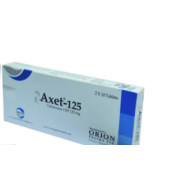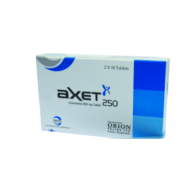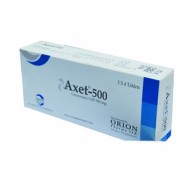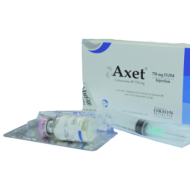
- Stock: In Stock
- Brand: Aristopharma
- Product ID: Cefuroxime Axetil
🔒 100% Secure Payment | bKash | Nagad | SSLCommerz | COD
⭐ Become a FREE Member: 7% Extra Savings • Free Delivery • Refill Reminders • Priority Support
This Item is for pre order
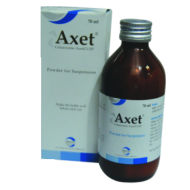
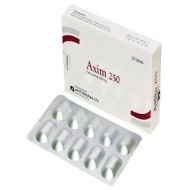
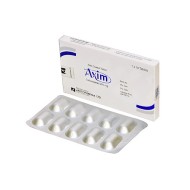
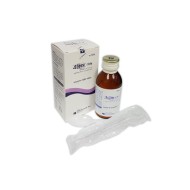
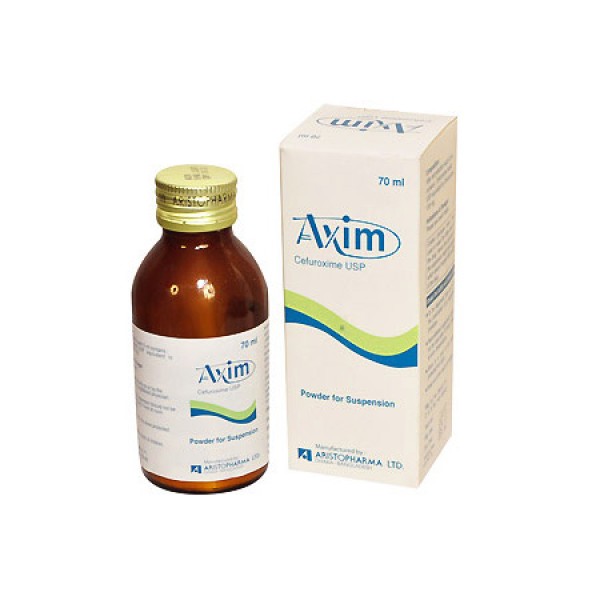
Axim 70 ml Suspension (Cefuroxime Axetil 125 mg/5 ml) — Clinical Overview
| Brand Name | Axim 70 ml Suspension |
|---|---|
| Generic Name | Cefuroxime Axetil |
| Manufacturer | ACI Limited, Bangladesh |
| Concentration | 125 mg per 5 ml (after reconstitution) |
| Dosage Form | Powder for Oral Suspension |
| Bottle Volume | 70 ml (after reconstitution) |
| Drug Class | Second-generation Cephalosporin (Beta-lactam Antibiotic) |
| Primary Use | Paediatric bacterial infections |
| Prescription Status | Prescription Only Medicine (POM) |
What is Axim 70 ml Suspension?
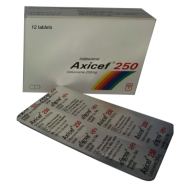
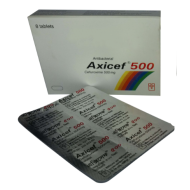
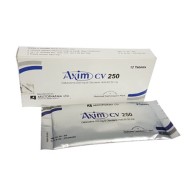
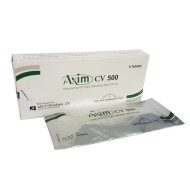
Axim 70 ml Suspension is a paediatric oral antibiotic by ACI Limited, Bangladesh, providing cefuroxime axetil at 125 mg per 5 ml concentration after reconstitution. It is supplied as a dry powder that must be mixed with water before administration. Axim suspension is part of ACI's comprehensive Axim cefuroxime product range — which also includes 250 mg and 500 mg oral tablets and injectable cefuroxime sodium formulations — making it suitable for use across all age groups and hospital settings.
Cefuroxime axetil is a second-generation cephalosporin prodrug converted to active cefuroxime after absorption. It is bactericidal, killing susceptible organisms by inhibiting cell wall synthesis through penicillin-binding protein (PBP) blockade.
Why Oral Suspension vs. Tablets for Children?
Most children under 7–8 years of age cannot safely swallow tablets. The oral suspension form delivers the same active ingredient (cefuroxime axetil) in a liquid form that can be measured precisely for weight-based dosing. However, two clinically important differences apply:
- Lower bioavailability: Cefuroxime axetil suspension has measurably lower oral bioavailability than the tablet formulation at equivalent doses. Tablets and suspension are not bioequivalent and cannot be interchanged on a mg-for-mg basis.
- Food requirement: Like the tablet, the suspension should be taken with food or milk to enhance absorption and minimise gastrointestinal side effects.
Antimicrobial Coverage
Axim suspension covers the key organisms causing community-acquired paediatric infections:
- Gram-positive: Streptococcus pyogenes (Group A Strep — pharyngitis, impetigo), Streptococcus pneumoniae (otitis media, sinusitis), Staphylococcus aureus MSSA (skin infections)
- Gram-negative: Haemophilus influenzae including beta-lactamase-producing strains (otitis media, sinusitis), Moraxella catarrhalis (otitis media), E. coli and Klebsiella (UTI)
- Not covered: MRSA, Pseudomonas, Enterococcus, atypical organisms (Mycoplasma pneumoniae — commonly causes "walking pneumonia" in school-aged children and requires a macrolide like azithromycin, not cefuroxime)
Clinical Indications in Children
- Pharyngitis and tonsillitis: Group A Streptococcal throat infections — a 10-day course is mandatory to prevent acute rheumatic fever
- Acute otitis media: Standard second-line option when amoxicillin fails; dose escalated to 15 mg/kg BID
- Acute bacterial sinusitis
- Urinary tract infections (UTI): Children with E. coli or Klebsiella cystitis who are not systemically unwell
- Impetigo and infected skin wounds: Due to susceptible S. aureus or Streptococcus
- Early Lyme disease: Paediatric dose 15 mg/kg twice daily (max 250 mg twice daily) for 20 days
Diabetes in Children — Infection Management
Children with Type 1 diabetes mellitus are particularly vulnerable to recurrent bacterial infections. Parents and caregivers should be aware:
- UTIs in diabetic girls: Glycosuria from hyperglycaemia promotes bacterial growth in urine. Recurrent UTIs in diabetic girls are common and may require urine cultures before prescribing to detect resistant organisms (ESBL-producing E. coli).
- Skin infections in diabetic children: Poor wound healing and impaired immune function increase susceptibility to impetigo and cellulitis. Early antibiotic treatment with cefuroxime suspension can prevent spread.
- Blood glucose monitoring during infection: Any acute bacterial infection can precipitate diabetic ketoacidosis (DKA) in Type 1 diabetic children. Parents should check blood glucose every 2–4 hours and ketones every 4 hours during any febrile illness and antibiotic course.
- Suspension sugar content: Some antibiotic suspensions contain sucrose. Check the product leaflet for sugar content in Axim suspension and discuss with your paediatric diabetologist if tight glycaemic control is a concern.
Reconstitution and Storage
- Tap bottle gently to loosen powder at the base
- Add cooled boiled water in two portions (total volume specified on label, ~37 ml for a 70 ml bottle)
- Cap the bottle and shake vigorously after each water addition
- Ensure no powder remains at the bottom — shake until a uniform white suspension forms
- Write reconstitution date on the label
Storage after reconstitution: Refrigerate at 2–8°C. Do NOT freeze. Shake well before each dose. Discard after 10 days even if medicine remains — efficacy cannot be guaranteed after this period.
Paediatric Dosing Guide
- General infections (pharyngitis, UTI, skin): 10 mg/kg twice daily (max 125 mg = 5 ml twice daily)
- Otitis media / Lyme disease: 15 mg/kg twice daily (max 250 mg = 10 ml twice daily)
- Treatment duration: Pharyngitis 10 days; otitis media 7–10 days; UTI 7–14 days; Lyme disease 20 days
Measure with an oral syringe or calibrated spoon. Do not use household teaspoons. Give with food or milk.
Drug Interactions
- Antacids / H2-blockers: Reduce cefuroxime absorption — avoid co-administration; give cefuroxime with food instead
- Probenecid: Increases plasma cefuroxime levels (uncommon in children)
- Live bacterial vaccines: Antibiotics may impair efficacy of oral typhoid vaccine and BCG — avoid vaccination during treatment
Side Effects
- Common: Diarrhoea (more frequent with suspension than tablets due to lower gut absorption and greater colonic drug exposure), nausea, vomiting, rash, nappy rash in infants
- Uncommon: Elevated liver enzymes, eosinophilia
- Rare: Anaphylaxis, Stevens-Johnson syndrome, C. difficile colitis
Contraindications
- Known hypersensitivity to cefuroxime or other cephalosporins
- Severe immediate penicillin allergy (cross-reactivity ~1–2%)
Frequently Asked Questions (FAQ)
Is Axim suspension bioequivalent to the Axim tablets?
No — cefuroxime axetil suspension and tablets are NOT bioequivalent and cannot be substituted on a mg-per-mg basis. The suspension provides lower oral bioavailability than the tablet formulation. Prescriptions for the tablet and suspension are not interchangeable. If your child is transitioning from suspension to tablets (as they grow older), your doctor will recalculate the appropriate tablet dose.
Can I give Axim suspension to a toddler under 3 years?
Yes, cefuroxime axetil suspension can be used in infants and toddlers from 3 months of age for most indications, and from birth for otitis media in some guidelines. The dose is calculated by weight (10–15 mg/kg twice daily). For very young infants, your paediatrician will determine the appropriate dose. Measure carefully with an oral syringe and administer with food or milk.
Does my child need to take Axim suspension with food?
Yes — unlike many antibiotics that can be taken on an empty stomach, cefuroxime axetil suspension absorption is significantly improved with food. Always give Axim suspension during or immediately after a meal. Giving it with milk is also acceptable and may reduce stomach upset. Do not give on an empty stomach if avoidable.
How does Axim suspension compare to amoxicillin for childhood respiratory infections?
Amoxicillin remains first-line for uncomplicated streptococcal pharyngitis and mild community-acquired pneumonia in children. Axim (cefuroxime axetil) is used as second-line therapy when amoxicillin fails, or as first-line when beta-lactamase-producing H. influenzae or M. catarrhalis is suspected (common in acute otitis media). Axim also has broader Gram-negative coverage. In Bangladesh, amoxicillin resistance in H. influenzae is rising, making cefuroxime an increasingly important alternative.