- Stock: Pre-Order
- Brand: Aristopharma
- Product ID: Ceftriaxone
🔒 100% Secure Payment | bKash | Nagad | SSLCommerz | COD
⭐ Become a FREE Member: 7% Extra Savings • Free Delivery • Refill Reminders • Priority Support
This Item is for pre order
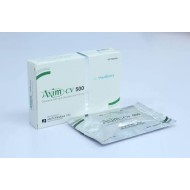
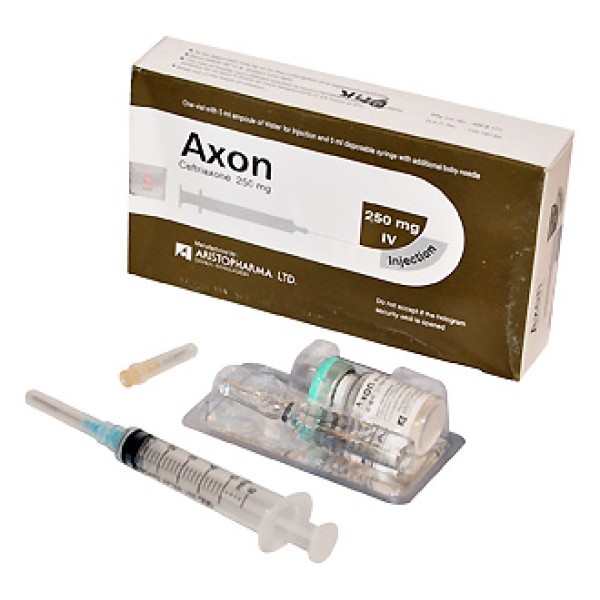
Axon 250 mg Injection (Ceftriaxone) — Clinical Overview
| Brand Name | Axon (Inj) 250 mg |
|---|---|
| Generic Name | Ceftriaxone Sodium |
| Manufacturer | ACI Limited, Bangladesh |
| Strength | 250 mg per vial |
| Dosage Form | Powder for Injection (Reconstituted IV/IM) |
| Drug Class | Third-Generation Cephalosporin Antibiotic |
| Route of Administration | Intravenous (IV) or Intramuscular (IM) |
| Prescription Status | Prescription Only Medicine (POM) |
About Axon 250 mg Injection
Axon 250 mg Injection by ACI Limited is a ceftriaxone sodium 250 mg parenteral antibiotic, presented as sterile powder for reconstitution for IV or IM injection. Ceftriaxone is the most widely used third-generation cephalosporin in Bangladesh due to its broad spectrum activity, once-daily dosing convenience, and excellent tissue penetration. The 250 mg vial is the smallest strength in the Axon range and is used for conditions requiring lower ceftriaxone doses — including single-dose gonorrhoea treatment, surgical prophylaxis in select patients, and infections in paediatric patients where weight-based dosing falls within this range.
In the context of diabetes care, ceftriaxone injection is one of the most important antibiotics in Bangladesh for the management of diabetic foot infections, hospitalised urinary tract infections, community-acquired pneumonia, and other serious bacterial infections where oral antibiotics are insufficient. The Axon brand by ACI maintains consistent quality standards for the reliable parenteral antibiotic therapy that these high-risk clinical situations demand.
Spectrum of Activity
Ceftriaxone has broad-spectrum bactericidal activity through inhibition of bacterial cell wall synthesis (binding to penicillin-binding proteins, PBPs), covering:
- Gram-positive organisms: Streptococcus pneumoniae, Streptococcus pyogenes, Staphylococcus aureus (MSSA — not MRSA)
- Gram-negative organisms: Escherichia coli, Klebsiella pneumoniae, Haemophilus influenzae, Neisseria gonorrhoeae, Neisseria meningitidis, Proteus mirabilis, Salmonella typhi, Shigella spp.
- Key limitation: Not active against Pseudomonas aeruginosa, Enterococcus spp., MRSA, or anaerobes
- Beta-lactamase stability: Stable against most plasmid-mediated beta-lactamases; however, ESBL-producing organisms are resistant
Indications
- Uncomplicated gonorrhoea: Single 250 mg IM dose — WHO-recommended first-line treatment; important in Bangladesh's sexually transmitted infection management
- Paediatric infections: Weight-based dosing (50–100 mg/kg/day) for serious bacterial infections in children may fall within the 250 mg range for younger/lighter patients
- Surgical prophylaxis: Selected low-risk procedures where a single 250–500 mg pre-operative dose provides adequate cover
- Mild-to-moderate infections: Some community-acquired pneumonia, UTI, and skin/soft tissue infections requiring parenteral therapy
Dosage and Administration
- Gonorrhoea: 250 mg IM as a single dose
- Paediatric (general infections): 50 mg/kg/day IV/IM once daily (max 2 g/day); 250 mg may be appropriate for children 5–10 kg
- Reconstitution (IM): Dissolve in 0.9 ml of 1% lidocaine injection to reduce injection site pain; administer into a large muscle (gluteus maximus, lateral thigh)
- Reconstitution (IV): Dissolve in 5 ml of sterile water for injection; administer as slow IV push over 2–4 minutes, or dilute further and infuse over 30 minutes
- Incompatibility: Never mix ceftriaxone with calcium-containing solutions (Ringer's lactate, Hartmann's solution) — may form dangerous precipitates
- Renal impairment: No dose adjustment for mild-moderate impairment; dose cap at 2 g/day in severe combined renal and hepatic failure
Relevance in Diabetic Patients
- Diabetic foot infections (DFI): Moderate-to-severe DFI requires parenteral antibiotic therapy. Ceftriaxone covers the gram-negative and gram-positive organisms (excluding Pseudomonas and anaerobes) commonly involved in early DFI. Often combined with metronidazole (for anaerobic cover) and/or an anti-pseudomonal agent in deep tissue or limb-threatening infections.
- Hospitalised UTI in diabetes: Diabetic patients have significantly higher rates of complicated UTI (pyelonephritis, bacteraemia from UTI). IV ceftriaxone is a first-line parenteral option for gram-negative uropathogens pending culture and sensitivity.
- Community-acquired pneumonia (CAP): Patients with diabetes face 3-fold higher risk of pneumococcal pneumonia. IV/IM ceftriaxone covers S. pneumoniae and most gram-negative respiratory pathogens.
- Glycaemic impact of infection: Serious bacterial infections trigger hyperglycaemia through stress hormones and cytokine-mediated insulin resistance. Rapid antibiotic initiation with effective agents like ceftriaxone reduces infectious burden and helps restore glycaemic control.
Frequently Asked Questions (FAQ)
What infections is Axon 250 mg injection used for?
Axon 250 mg (ceftriaxone) is used for uncomplicated gonorrhoea (single 250 mg IM dose), selected paediatric bacterial infections where weight-based dosing falls within this range, certain surgical prophylaxis scenarios, and mild-to-moderate bacterial infections requiring parenteral therapy. For adult serious infections (pneumonia, UTI, diabetic foot, typhoid), higher doses — 1 g to 2 g once daily — are typically required.
Is ceftriaxone safe for patients with diabetes?
Yes — ceftriaxone does not have significant interactions with antidiabetic medications and does not directly affect blood glucose levels. However, any serious bacterial infection causes hyperglycaemia through stress-response mechanisms, and insulin requirements often increase during active infections. Diabetic patients receiving IV ceftriaxone for serious infections should have blood glucose monitored closely and insulin doses adjusted as the infection responds to treatment. Ceftriaxone is one of the most important antibiotics for diabetic foot infections and hospitalised urinary tract infections in patients with diabetes.
Can Axon injection be mixed with other IV fluids?
Ceftriaxone is compatible with 0.9% sodium chloride (normal saline) and 5% dextrose for IV infusion. It must NEVER be mixed with calcium-containing solutions such as Ringer's lactate (Hartmann's solution) or any calcium-containing IV fluids — this combination forms insoluble ceftriaxone-calcium precipitates that can be life-threatening if administered intravenously. This restriction applies even if administered in separate IV lines simultaneously in neonates; in adults, flush the line between infusions.
How painful is ceftriaxone intramuscular injection?
Ceftriaxone IM injection is known to cause significant injection site pain and burning. To reduce pain, dissolve the 250 mg powder in 0.9 ml of 1% lidocaine injection (without adrenaline) instead of sterile water — this is the WHO-recommended and standard clinical practice for IM ceftriaxone administration in Bangladesh. Inject deep into a large muscle (gluteus maximus) and apply gentle pressure after injection. If IV access is available and the clinical situation permits, IV administration is generally better tolerated.