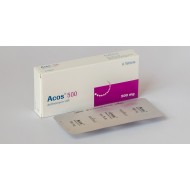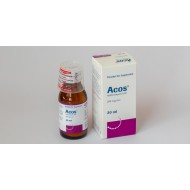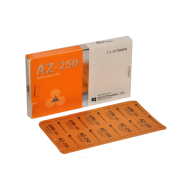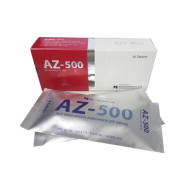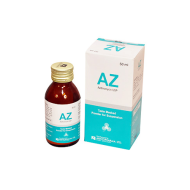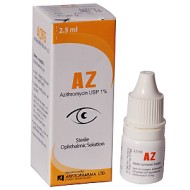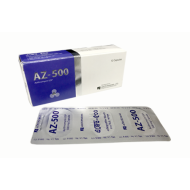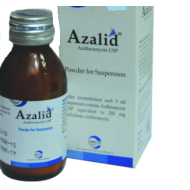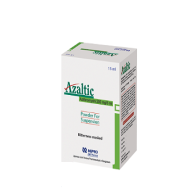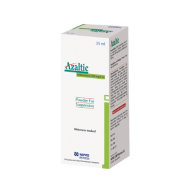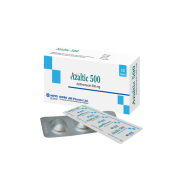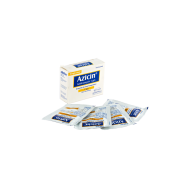
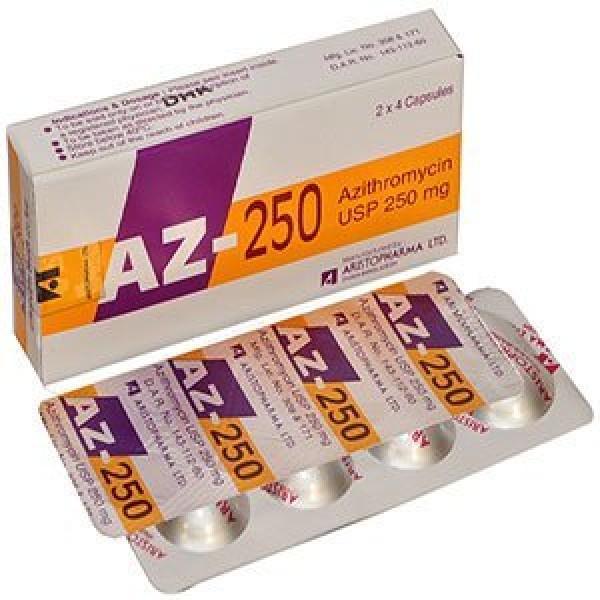
- Stock: In Stock
- Brand: Aristopharma
- Product ID: Azithromycin
Available Options
🔒 100% Secure Payment | bKash | Nagad | SSLCommerz | COD
⭐ Become a FREE Member: 7% Extra Savings • Free Delivery • Refill Reminders • Priority Support
This Item is for pre order
Az 250 Capsule (Azithromycin 250mg) — Clinical Overview
| Attribute | Details |
|---|---|
| Brand Name | Az |
| Generic Name | Azithromycin |
| Strength | 250 mg |
| Dosage Form | Hard Gelatin Capsule |
| Drug Class | Macrolide Antibiotic (Azalide subclass) |
| Manufacturer | ACI Limited, Bangladesh |
| Route of Administration | Oral |
About Az 250 Capsule
Az 250 Capsule contains azithromycin 250 mg in a hard gelatin capsule formulation manufactured by ACI Limited, Bangladesh. Unlike the film-coated tablet formulation, azithromycin capsules should be taken on an empty stomach — at least 1 hour before or 2 hours after food — as food reduces the rate and extent of absorption from capsules more significantly than from tablets. The capsule formulation is appropriate for patients who can swallow hard capsules comfortably and are aware of the food interaction requirement.
Azithromycin 250 mg capsules contain the same active pharmaceutical ingredient as Az 250 tablets, producing identical antibacterial spectrum and clinical efficacy when dosed equivalently. The drug inhibits bacterial protein synthesis by binding to the 50S ribosomal subunit, preventing peptide chain elongation. Its exceptional tissue penetration — accumulating 10–100 fold higher in tissues than in plasma — enables the characteristically short 3–5 day treatment courses that set azithromycin apart from other antibiotics.
Indications and Dosing
Az 250mg Capsule is indicated for the same conditions as the tablet formulation: community-acquired pneumonia (mild outpatient); pharyngitis and tonsillitis in penicillin-allergic patients; acute sinusitis; skin and soft tissue infections; Chlamydia trachomatis urogenital infections (1g = four 250mg capsules as single dose); uncomplicated typhoid fever; traveller's diarrhoea; and atypical respiratory infections due to Mycoplasma pneumoniae and Chlamydophila pneumoniae. Standard 5-day adult regimen: 500 mg on day 1 (two 250mg capsules), then 250 mg (one capsule) on days 2–5. All doses must be taken on an empty stomach for capsule formulations. Single-dose chlamydia treatment: four 250mg capsules taken together on an empty stomach (at least 1 hour before eating).
Capsule vs Tablet — Key Differences
Both capsule and tablet formulations of azithromycin 250 mg provide the same dose and active ingredient. The critical practical differences are: food interactions — capsule bioavailability is significantly reduced by food (take strictly on empty stomach); tablet bioavailability is less affected by food (can be taken with food to reduce GI side effects). Swallowing — tablets with film coating may be easier to swallow than capsules for some patients; capsules may be preferred if tablets are difficult to swallow whole. Stability — both forms have equivalent shelf stability under recommended storage conditions. The choice between capsule and tablet depends on patient preference, food-timing compliance ability, and availability. Ensure patients taking Az 250 Capsules understand the food restriction requirement for optimal efficacy.
Azithromycin in Diabetic Patients — Bangladesh Context
Diabetic patients in Bangladesh are at heightened risk for bacterial infections due to impaired immune function, reduced neutrophil activity, and compromised vascular supply. Common infections requiring azithromycin in diabetic patients include: community-acquired pneumonia (diabetics have higher severity and mortality); skin and soft tissue infections including diabetic foot infections (azithromycin as part of combination therapy for mixed infections with gram-positive and atypical organisms); genitourinary infections including Chlamydia in sexually active diabetic patients; and acute exacerbations of COPD (common comorbidity in Bangladeshi diabetics). Key consideration: azithromycin can prolong the QT interval — in diabetic patients with autonomic neuropathy (a cause of QT prolongation) or those taking drugs that prolong QT (certain antidiabetic drugs have minor QT effects), extra caution is warranted and ECG monitoring may be appropriate.
Frequently Asked Questions (FAQ)
Q1: Can Az 250 Capsule be opened and the powder mixed with food or liquid?
Opening azithromycin capsules and mixing the powder with food or liquid is generally not recommended as the food interaction may further reduce absorption, and the taste is unpleasant. For patients who cannot swallow capsules, azithromycin oral suspension (200mg/5mL) is the recommended alternative — it is specifically formulated for palatability and is approved for patients of all ages who cannot swallow solid dosage forms. Consult your physician or pharmacist about switching formulations if capsule swallowing is difficult.
Q2: Is azithromycin effective for chest infections caused by Klebsiella pneumoniae?
No. Klebsiella pneumoniae is an Enterobacteriaceae that is inherently resistant to azithromycin. Azithromycin covers gram-negative organisms such as Haemophilus influenzae and Moraxella catarrhalis but NOT Klebsiella, Pseudomonas, or ESBL-producing organisms. Klebsiella pneumonia — common in diabetics, alcoholics, and hospitalised patients — requires beta-lactam antibiotics (cephalosporins, carbapenems) or fluoroquinolones based on sensitivity. Azithromycin may be used as combination therapy to cover atypical organisms when Klebsiella pneumonia is treated with an appropriate beta-lactam.
Q3: How many Az 250 Capsules are typically in one pack?
Azithromycin 250 mg is commonly available in strips/packs of 6 or 10 capsules. A standard 5-day treatment course requires 6 capsules (two on day 1, then one each on days 2–5). Single-dose chlamydia treatment requires 4 capsules. A 3-day course of 500mg daily requires 6 capsules. Check the product pack for the number of capsules included. Consult your physician or pharmacist to ensure you have the correct quantity for your prescribed course.
Q4: What should I do if I experience severe diarrhoea while taking Az 250 Capsule?
Mild diarrhoea is a common side effect of azithromycin (occurs in approximately 5% of patients) and usually resolves without treatment after completing the course. However, severe, persistent, or bloody diarrhoea during or after azithromycin treatment may indicate Clostridioides difficile-associated diarrhoea (CDAD) — a potentially serious complication of antibiotic use. Do not take anti-diarrhoeal medications if C. difficile is suspected, as they can worsen the condition. Stop the antibiotic and consult a physician immediately if diarrhoea is severe, watery, or contains blood or mucus.
Medical Disclaimer: For healthcare professional reference and patient education only. Az 250 Capsule is a prescription-only antibiotic. All antibiotic treatment decisions must be made by a qualified physician. Do not self-medicate with antibiotics.