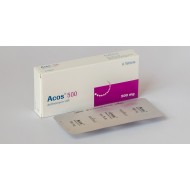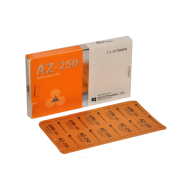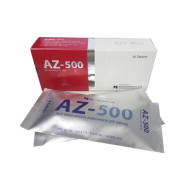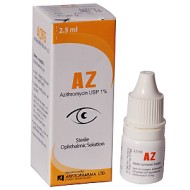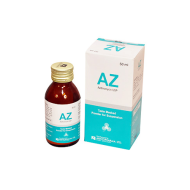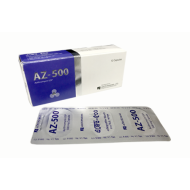

- Stock: Out Of Stock
- Brand: Astra Biopharmaceuticals Ltd.
- Product ID: Azithromycin
Available Options
🔒 100% Secure Payment | bKash | Nagad | SSLCommerz | COD
⭐ Become a FREE Member: 7% Extra Savings • Free Delivery • Refill Reminders • Priority Support
This Item is for pre order
Azithro 250 — Product Overview
| Attribute | Details |
|---|---|
| Generic Name | Azithromycin |
| Brand Name | Azithro 250 |
| Strength | 250 mg per tablet |
| Dosage Form | Film-coated Tablet |
| Manufacturer | Astra Biopharmaceuticals Ltd., Bangladesh |
| Therapeutic Class | Azalide / Macrolide Antibiotic |
| Route | Oral |
| Prescription Status | Rx (Prescription Required) |
What is Azithro 250?
Azithro 250 is a film-coated oral tablet containing azithromycin 250 mg, manufactured by Astra Biopharmaceuticals Ltd. in Bangladesh. Azithromycin is an azalide antibiotic — a structurally modified macrolide in which a methyl-substituted nitrogen is incorporated into the 14-membered lactone ring, greatly enhancing acid stability and producing an unusually long tissue half-life of approximately 68 hours. The 250 mg strength is the outpatient standard for the classic 5-day Z-Pack regimen: 500 mg (two tablets) on Day 1 as a loading dose, followed by 250 mg (one tablet) on Days 2 through 5, achieving a cumulative 1.5 g course. This regimen is recommended by national and international guidelines for mild-to-moderate community-acquired pneumonia (CAP) managed in the outpatient setting.
Mechanism of Action
Azithromycin inhibits bacterial protein synthesis by binding reversibly to the 50S ribosomal subunit at the peptidyl transferase centre of the 23S rRNA, blocking translocation of the growing peptide chain. Its most pharmacologically distinctive feature is extraordinary phagocyte uptake: neutrophils, monocytes, and macrophages actively sequester azithromycin, achieving intracellular-to-extracellular concentration ratios of 40:1 to 100:1. When phagocytes are recruited to a site of bacterial infection and degranulate, they release drug directly into infected tissue — a form of targeted, on-demand antibiotic delivery. This mechanism maintains effective bacteriostatic concentrations in pulmonary and soft-tissue sites for 7–10 days after the final 250 mg dose, providing a therapeutic tail that no other short-course antibiotic class can match.
5-Day Z-Pack Regimen — The Science Behind the Schedule
The Z-Pack is one of the most prescribed outpatient antibiotic regimens worldwide, and its 5-day structure is pharmacokinetically justified. Following the Day 1 500 mg load with Azithro 250 (two tablets), azithromycin concentrates rapidly in bronchial mucosa, alveolar macrophages, and lung interstitium to levels 10–100× above plasma. Days 2–5 of 250 mg each maintain tissue saturation and replenish phagocyte stores. By Day 5, lung tissue azithromycin concentration is already in sustained decline — but it remains above the MIC for Streptococcus pneumoniae, Haemophilus influenzae, Mycoplasma pneumoniae, and Chlamydophila pneumoniae for an additional 3–5 days. Clinical outcomes in CAP trials with the 5-day azithromycin Z-Pack have been equivalent to 7–10 days of amoxicillin-clavulanate, with superior patient compliance due to the shorter, simpler schedule.
Indications and Spectrum of Activity
Azithro 250 is indicated for mild-to-moderate infections caused by susceptible bacteria. Primary indications include: Community-acquired pneumonia (outpatient) caused by Streptococcus pneumoniae, Haemophilus influenzae, Mycoplasma pneumoniae, Chlamydophila pneumoniae, and Legionella pneumophila; Acute bacterial exacerbation of chronic bronchitis (ABECB) in COPD patients; Acute bacterial sinusitis; Pharyngitis and tonsillitis caused by Streptococcus pyogenes in penicillin-intolerant patients; Uncomplicated skin and soft-tissue infections caused by S. aureus, S. pyogenes, or S. agalactiae. Azithromycin lacks reliable coverage against penicillin-resistant S. pneumoniae (PRSP) where resistance rates exceed 30%, such as in certain healthcare-associated or nursing home-acquired pneumonias.
Pharmacokinetics
Azithromycin's pharmacokinetic profile is unique among antibiotics. Oral bioavailability is approximately 37%. Volume of distribution (Vd) is exceptionally large at 31 L/kg, reflecting massive sequestration in tissues rather than circulation. Plasma protein binding is modest at 51%. The elimination half-life in tissue reaches 68 hours (compared to 11–14 hours in plasma), enabling once-daily dosing. Metabolism is minimal — the drug is excreted largely unchanged in bile and faeces (~50%), with less than 6% renal excretion. This biliary predominance means dose adjustment is generally unnecessary in patients with mild-to-moderate renal impairment, a clinically important advantage for diabetic patients with chronic kidney disease (CKD stages 1–3).
Special Considerations for Diabetic Patients
Patients with diabetes commonly encounter clinical scenarios where azithromycin is the appropriate choice: respiratory infections in patients with penicillin allergy; soft-tissue infections with an atypical component; and periodontitis, a well-established complication of poorly controlled blood glucose. Key considerations for diabetic patients taking Azithro 250 include: QT prolongation risk — azithromycin prolongs cardiac QT interval; patients on QT-prolonging antidiabetic agents (rare) or cardiac medications should be monitored; CKD — azithromycin is generally safe in mild-to-moderate renal impairment (GFR >10 mL/min) without dose adjustment; potential anti-inflammatory benefit — azithromycin has documented immunomodulatory properties, reducing pro-inflammatory cytokines (TNF-α, IL-6, IL-8) that contribute to both infection severity and insulin resistance; Drug interactions — no direct pharmacokinetic interaction with metformin, but azithromycin may modestly increase warfarin INR and digoxin levels.
Adverse Effects and Safety Profile
Azithromycin is generally well tolerated. Common adverse effects (affecting 1–10% of patients) include nausea, diarrhoea, abdominal discomfort, and headache. Less common but clinically significant adverse effects include: QTc interval prolongation (risk increases with hypokalemia, hypomagnesemia, or concurrent QT-prolonging drugs); hepatotoxicity — rare, typically reversible cholestatic pattern; Clostridioides difficile-associated colitis — possible with any broad-spectrum antibiotic; skin reactions — rash, urticaria, and rare Stevens-Johnson syndrome; cardiovascular events — post-marketing data suggest a small increase in cardiovascular mortality in high-risk patients (NEJM 2012 Ray et al.), particularly those with pre-existing cardiac disease. Ototoxicity is reported with high doses in prolonged courses, not with standard 5-day therapy.
Dosage and Administration
Adults and children over 16 years: 500 mg (2 × Azithro 250 tablets) on Day 1, then 250 mg (1 × Azithro 250 tablet) once daily on Days 2–5. Take with or without food — food does not significantly affect absorption of film-coated tablets. Do not crush or chew tablets; swallow whole with a glass of water. If a dose is missed and it is remembered the same day, take it as soon as possible. If a day is missed entirely, skip the missed dose and continue the normal schedule. Do not double dose. In hepatic impairment, use with caution and avoid in severe hepatic disease. In children under 16 years, weight-based dosing applies; consider azithromycin suspension formulation for younger children.
Contraindications and Drug Interactions
Contraindicated in patients with hypersensitivity to azithromycin, erythromycin, or any macrolide/ketolide antibiotic. Use with caution in patients with known QT prolongation, uncorrected hypokalaemia, uncorrected hypomagnesaemia, clinically significant bradycardia, or hepatic impairment. Notable drug interactions: antiarrhythmics (amiodarone, sotalol, quinidine) — additive QT prolongation; warfarin — monitor INR closely; digoxin — elevated digoxin levels reported; antacids (aluminium/magnesium) — reduce peak concentration but not total absorption; administer Azithro 250 at least 1 hour before or 2 hours after antacids.
Storage
Store below 30°C in a dry place away from light and moisture. Keep out of reach of children. Do not use after the expiry date on the pack. In Bangladesh's tropical climate, avoid storage near windows or in bathrooms where humidity and temperature fluctuate.
Frequently Asked Questions
Q: Can Azithro 250 treat COVID-19 or influenza?
A: No. Azithromycin is an antibacterial agent with no proven antiviral activity. Large-scale trials (RECOVERY, PRINCIPLE, WHO Solidarity) conclusively showed no benefit of azithromycin in COVID-19. Using antibiotics for viral infections promotes antimicrobial resistance without helping the patient recover.
Q: Is it safe to take the full 5-day course of Azithro 250 even after symptoms resolve on Day 2 or 3?
A: Yes — completing the course is important. Azithromycin's 68-hour tissue half-life means effective antibacterial activity continues through Days 6–10 even after you stop taking tablets. The 5-day course is designed to deliver exactly the right cumulative exposure. Stopping early risks sub-therapeutic levels promoting resistance.
Q: Can I drink alcohol while taking Azithro 250?
A: Moderate alcohol consumption does not directly interact with azithromycin pharmacokinetics. However, alcohol may worsen gastrointestinal side effects (nausea, diarrhoea) that azithromycin can cause. It is advisable to limit alcohol during antibiotic therapy for any infection.
Q: Why does my doctor sometimes prescribe Azithro 250 instead of Azithro 500 for the same infection?
A: Azithro 250 and Azithro 500 contain the same drug at different doses per tablet. For the standard 5-day Z-Pack, some physicians prescribe two Azithro 250 tablets on Day 1 (as a loading dose) and one on Days 2–5. Others prefer to use Azithro 500 for the Day 1 load and switch to Azithro 250 for Days 2–5. The clinical outcome is identical — the choice often reflects availability and patient convenience.
Medical Disclaimer: This information is for educational purposes only and does not constitute medical advice. Azithro 250 is a prescription antibiotic requiring physician authorisation. Self-medication with antibiotics is hazardous and promotes drug resistance. Always consult a qualified healthcare professional before starting, stopping, or changing antibiotic therapy. DiabetesStore.com.bd is a licensed pharmacy retailer in Bangladesh.