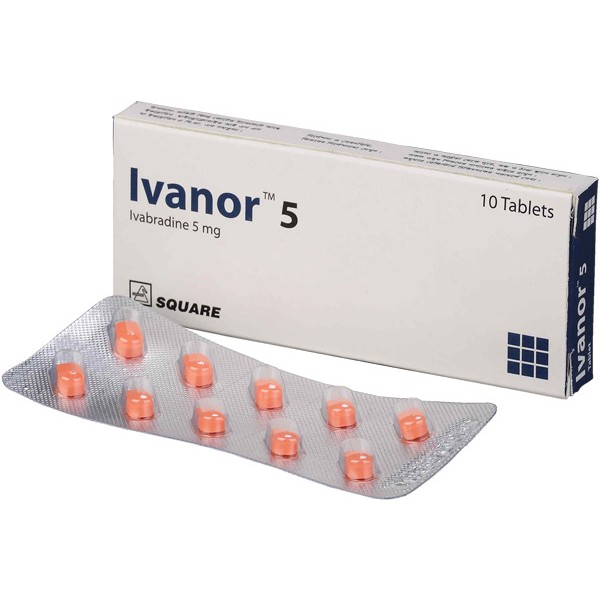
- Stock: In Stock
- Brand: Square Pharmaceuticals
- Product ID: Ivabradine
🔒 100% Secure Payment | bKash | Nagad | SSLCommerz | COD
⭐ Become a FREE Member: 7% Extra Savings • Free Delivery • Refill Reminders • Priority Support
| Generic Name | Ivabradine |
|---|---|
| Strength | 5 mg |
| Dosage Form | Tablet |
| Manufacturer | Square Pharmaceuticals PLC |
| Therapeutic Class | Other Anti-anginal & Anti-ischaemic drugs |
| Pack Size | 2 × 10 tablets (20's) |
Overview
Ivanor (Ivabradine) 5 mg Tablet is a selective heart rate-lowering agent manufactured by Square Pharmaceuticals PLC. It acts by specific inhibition of the cardiac pacemaker If current in the sinus node, reducing heart rate without affecting myocardial contractility or blood pressure. Ivanor is indicated for the symptomatic treatment of chronic stable angina pectoris in adults with coronary artery disease and normal sinus rhythm who are unable to tolerate beta-blockers or whose angina is not adequately controlled with optimal beta-blocker therapy (heart rate >60 bpm).
Dosage and Administration
The usual starting dose is 5 mg twice daily (morning and evening with meals). After 3–4 weeks, the dose may be increased to 7.5 mg twice daily based on therapeutic response. If resting heart rate falls persistently below 50 bpm or bradycardia symptoms occur, reduce to 2.5 mg twice daily (half a 5 mg tablet). Discontinue if heart rate remains below 50 bpm or bradycardia symptoms persist. Elderly patients (≥75 years): start with 2.5 mg twice daily. No dose adjustment is needed for mild-to-moderate renal impairment (creatinine clearance >15 ml/min). Use with caution in moderate hepatic impairment; contraindicated in severe hepatic insufficiency. Not recommended for children and adolescents.
Interaction
Avoid concomitant use with QT-prolonging drugs — both cardiovascular (quinidine, disopyramide, bepridil, sotalol, ibutilide, amiodarone) and non-cardiovascular (pimozide, ziprasidone, sertindole, mefloquine, halofantrine, pentamidine, cisapride, IV erythromycin) — as QT prolongation may be worsened by heart rate reduction. Use with strong CYP3A4 inhibitors (azole antifungals, macrolide antibiotics, HIV protease inhibitors) is contraindicated. If combination is necessary, close cardiac monitoring is required.
Contraindications
Ivanor is contraindicated in patients with hypersensitivity to ivabradine, resting heart rate below 60 bpm before treatment, cardiogenic shock, acute myocardial infarction, severe hypotension (<90/50 mmHg), severe hepatic insufficiency, sick sinus syndrome, sino-atrial block, 3rd degree AV block, pacemaker dependency, unstable angina, heart failure, and concurrent use of strong CYP3A4 inhibitors.
Side Effects
Common side effects include visual symptoms (phosphenes/luminous phenomena), blurred vision, bradycardia, 1st degree AV block, ventricular extrasystoles, headaches, and dizziness. Report persistent heart rate changes or visual disturbances to your doctor.
Pregnancy and Lactation
Ivabradine is contraindicated during pregnancy due to insufficient safety data. Animal studies show excretion into breast milk; therefore, Ivanor is contraindicated during breastfeeding.
Precautions and Warnings
Use with caution in patients with mild to moderate hypotension, atrial fibrillation, congenital QT syndrome, or those taking QT-prolonging medicines. Exercise caution in moderate hepatic impairment and severe renal insufficiency. Monitor heart rate regularly. The drug should always be taken with meals for optimal absorption.
Storage Conditions
Keep below 30°C, away from light and moisture. Keep out of the reach of children.
Frequently Asked Questions
Q: What is Ivanor 5 mg used for?
A: Ivanor 5 mg is used to treat chronic stable angina pectoris (chest pain) in patients with coronary artery disease and normal sinus rhythm. It reduces heart rate, thereby decreasing the heart's oxygen demand and relieving angina symptoms.
Q: Can Ivanor be taken with beta-blockers?
A: Yes, Ivanor can be combined with beta-blockers when angina is not adequately controlled with optimal beta-blocker doses and the resting heart rate remains above 60 bpm, under close medical supervision.