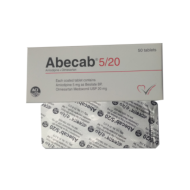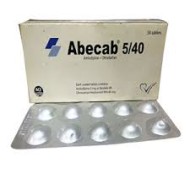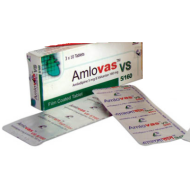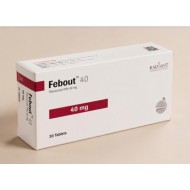
- Stock: In Stock
- Brand: Incepta Pharmaceuticals
- Product ID: Amlodipine & Valsartan
🔒 100% Secure Payment | bKash | Nagad | SSLCommerz | COD
⭐ Become a FREE Member: 7% Extra Savings • Free Delivery • Refill Reminders • Priority Support
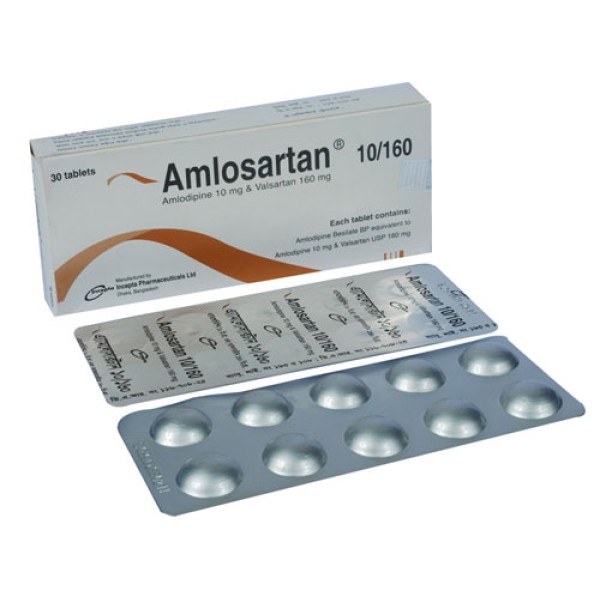
| Generic Name | Amlodipine Besilate + Valsartan |
| Brand Name | Amlosartan |
| Manufacturer | Incepta Pharmaceuticals Ltd. |
| Dosage Form | Tablet |
| Strength | 10 mg+160 mg |
| Pack Size | 3 x 10's |
| Drug Class | Combined Antihypertensive Preparation (Calcium Channel Blocker + Angiotensin II Receptor Blocker) |
| Prescription Required | Yes |
| Onset of Action | Within 2 weeks (full antihypertensive effect) |
| Peak Effect | Amlodipine: 6-12 hours; Valsartan: 2-4 hours |
| Duration of Action | 24 hours (once-daily dosing) |
What is Amlosartan?
Amlosartan is a fixed-dose combination of Amlodipine Besilate, a dihydropyridine calcium channel blocker, and Valsartan, an angiotensin II receptor blocker (ARB). It is manufactured by Incepta Pharmaceuticals Ltd. and used for the treatment of hypertension in patients not adequately controlled on either agent alone, particularly when higher-strength control is needed.
Indications
Amlodipine and Valsartan combination is indicated for the treatment of hypertension. This fixed combination drug is not indicated for the initial therapy of hypertension.
Pharmacology
Amlodipine is a dihydropyridine calcium channel blocker that inhibits the transmembrane influx of calcium ions into vascular smooth muscle and cardiac muscle. Valsartan blocks the vasoconstrictor and aldosterone-secreting effects of Angiotensin II by selectively blocking the binding of Angiotensin II to the AT1 receptor in many tissues, such as vascular smooth muscle and the adrenal gland. Its action is therefore independent of the pathways for Angiotensin II synthesis. Both Amlodipine and Valsartan lower blood pressure by reducing peripheral resistance, but calcium influx blockade and reduction of Angiotensin II vasoconstriction are complementary mechanisms.
Dosage & Administration
Treatment of hypertension: Amlodipine is effective in once-daily doses of 2.5 mg-10 mg while Valsartan is effective in doses of 80 mg-320 mg. In clinical trials using amlodipine doses of 5 mg-10 mg and Valsartan doses of 160 mg-320 mg, the antihypertensive effects increased with increasing doses. The majority of the antihypertensive effect is attained within 2 weeks after initiation of therapy or a change in dose. Dosage can be increased after 1 to 2 weeks of therapy to a maximum of 10/320 mg once daily as needed. May be administered with or without food, and with other antihypertensive agents.
Elderly patients: Because of decreased clearance of Amlodipine, therapy should usually be initiated at 2.5 mg.
Renal Impairment: No initial dosage adjustment required for mild or moderate renal impairment. Titrate slowly in severe renal impairment.
Hepatic Impairment: No initial dosage adjustment required for mild or moderate liver insufficiency. Titrate slowly in hepatic impairment.
Interaction
No drug interaction studies have been conducted with the Amlodipine and Valsartan combination, although studies have been conducted with the individual components.
Contraindications
Contraindicated in patients who are hypersensitive to any components of this product.
Side Effects
Generally mild and transient. Most common: peripheral edema, nasal congestion, sore throat and discomfort when swallowing, upper respiratory tract infection, dizziness.
Pregnancy & Lactation
Pregnancy Category D. It is not known whether Amlodipine or Valsartan is excreted in human milk. Because of the potential for adverse effects on the nursing infant, a decision should be made whether to discontinue nursing or discontinue the drug, taking into account the importance of the drug to the mother.
Precautions & Warnings
Avoid fetal or neonatal exposure. Assess for hypotension. Warn patients with severe obstructive coronary artery disease about the risk of myocardial infarction or increased angina. Titrate slowly in patients with impaired hepatic or severely impaired renal function.
Use in Special Populations
Safety and effectiveness in paediatric patients have not been established.
Therapeutic Class
Combined antihypertensive preparations
Storage Conditions
Keep below 30°C temperature, away from light & moisture. Keep out of the reach of children.