🔒 100% Secure Payment | bKash | Nagad | SSLCommerz | COD
⭐ Become a FREE Member: 7% Extra Savings • Free Delivery • Refill Reminders • Priority Support
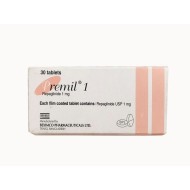
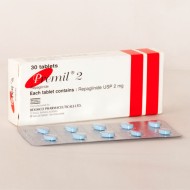
Singlin Tablet — Repaglinide
| Generic Name | Repaglinide |
|---|---|
| Strength | 1 mg |
| Dosage Form | Tablet |
| Manufacturer | Renata Limited |
| Therapeutic Class | Meglitinide Analogues |
Indications
Singlin is indicated as an adjunct to diet and exercise to lower the blood glucose in patients with type 2 diabetes mellitus (NIDDM) whose hyperglycemia cannot be controlled satisfactorily by diet and exercise alone. It is also indicated for use in combination with Metformin to lower blood glucose in patients whose hyperglycemia cannot be controlled by exercise, diet, and either Singlin or Metformin alone.
Mechanism of Action
Repaglinide binds to specific receptors in the cell membrane leading to the closure of ATP dependent K+ channels and the depolarisation of cell membrane. This in turn, leads to Ca++ influx, increased intracellular Ca++ and the stimulation of insulin secretion.
Dosage and Administration
For patients not previously treated or whose HbA1c is <8%, the starting dose should be 0.5 mg before each meal.
For patients previously treated with blood glucose-lowering drugs and whose HbA1c is >8%, the initial dose is 1 or 2 mg before each meal.
Repaglinide should be taken immediately or up to 30 minutes before each meal.
Dosage should be adjusted according to response at intervals of 1-2 weeks; up to 4 mg may be given as a single-dose, maximum 16 mg daily.
Contraindications
Repaglinide is contraindicated in patients with:
Diabetic ketoacidosis, with or without coma.
Type 1 diabetes mellitus and
Known hypersensitivity to the drug or its inactive ingredients.
Side Effects
The most common side effects of Singlin are hypoglycemia and related symptoms. Others include upper respiratory tract infections, diarrhea, constipation, nausea and vomiting. Hypersensitivity reactions include rashes and urticaria.
Drug Interactions
The dose of Singlin may need to be adjusted, if taken with other medications. The possible interactions of Singlin with other drugs are:
Inhibitors of the cytochrome P450 enzyme system (azole antifungals and macrolides) may lead to lower Singlin clearance and longer half life.
Inducers of the cytochrome P450 enzyme system (Rifampin, Phenobarbital, Carbamazepine, Troglitazone, etc.) may accelerate Singlin metabolism and shorten its effect.
Cimetidine has no significant effect on Singlin absorption or clearance.
Singlin has no significant effect on Digoxin, Theophyllin, or Warfarin.
Highly protein bound drugs (e.g., NSAIDs) may increase the plasma level of unbound Singlin and potentiate its glucose lowering effect. Thus, co-administration of these drugs with Singlin may increase the risk of hypoglycaemia.
The risk of hypoglycaemia may also be increased when hypoglycaemic agents are co-administered with certain drugs such as salicylates, sulphonamides, Chloramphenicol, coumarins, Probenecid, monoamine oxidase (MAO) inhibitors, and adrenergic blockers.
Pregnancy and Lactation
Safety in pregnant women has not been established. Repaglinide should be used during pregnancy only if it is clearly needed. It is not known whether Repaglinide is excreted in human milk. Because many drugs are excreted in human milk and because of the potential for serious adverse reactions in nursing infants from Repaglinide, a decision should be made whether to discontinue nursing or the drug, taking into account the importance of the drug to the mother.
Precautions and Warnings
Insulin should be substituted during concurrent illness (such as myocardial infarction, coma, infection, and trauma) and during surgery. All oral blood glucose-lowering drugs are capable of producing hypoglycemia. Singlin should be administered with meals to lessen the risk of hypoglycemia.
Overdose
Patients receiving up to 80 mg of Singlin developed few adverse effects other than lowering of blood glucose. Hypoglycemia did not occur when meals were given with these high doses. Severe hypoglycemic reactions with coma, seizure or other neurological impairment occur infrequently.
Storage
Do not store above 30°C. Keep away from light and out of the reach of children.
Medical Disclaimer: This information is provided for educational purposes only and is not intended as medical advice. Always consult a qualified healthcare professional before starting, changing, or stopping any medication.