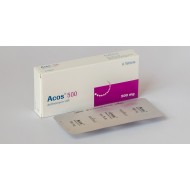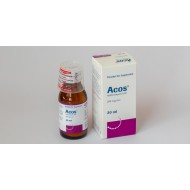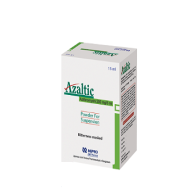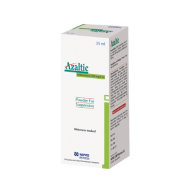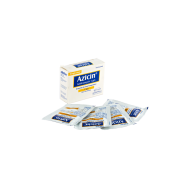
- Stock: In Stock
- Brand: Opsonin Pharma Limited
- Product ID: Azithromycin
🔒 100% Secure Payment | bKash | Nagad | SSLCommerz | COD
⭐ Become a FREE Member: 7% Extra Savings • Free Delivery • Refill Reminders • Priority Support
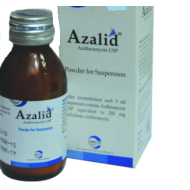
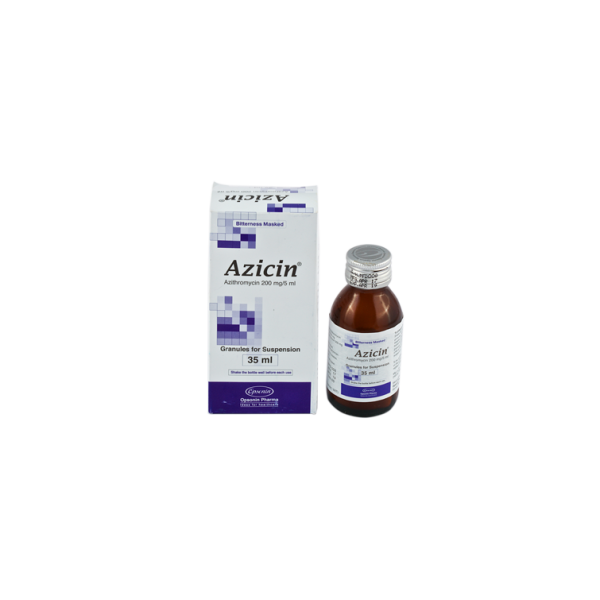
Azicin 35ml Suspension — Azithromycin 200mg/5ml for Adults & Larger Children
| Attribute | Details |
|---|---|
| Brand Name | Azicin |
| Generic Name | Azithromycin |
| Strength | 200 mg / 5 mL |
| Dosage Form | Oral Suspension (after reconstitution) |
| Pack Size | 35 mL bottle |
| Drug Class | Macrolide Antibiotic (Azalide) |
| Manufacturer | Opsonin Pharma Limited, Bangladesh |
| Route of Administration | Oral |
About Azicin 35ml Suspension
Azicin 35ml Suspension contains azithromycin 200 mg per 5 mL in oral suspension form after reconstitution, manufactured by Opsonin Pharma Limited, Bangladesh. The 35 mL pack size provides a total of 1400 mg azithromycin — sufficient for a 5-day course at 10 mg/kg/day for a child weighing approximately 28 kg, or a 3-day course for a child up to approximately 47 kg. The 35 mL size therefore bridges the paediatric-to-adolescent weight range, covering school-aged children (20–35 kg) for whom the smaller 20 mL bottle may be insufficient. It is also used in adults who cannot swallow tablets or capsules (dysphagia, post-surgical patients, or patients with oesophageal conditions) who require azithromycin therapy — the 35 mL bottle provides 1400 mg total, which covers a full 3-day or 5-day course depending on the adult dose used.
Dosage Guide for Key Weight Bands
At the standard paediatric dose of 10 mg/kg/day once daily using Azicin 200mg/5mL suspension:
| Weight | Daily Dose (mg) | Daily Volume (mL) | 3-day total (mL) | 5-day total (mL) |
|---|---|---|---|---|
| 20 kg | 200 mg | 5 mL | 15 mL | 25 mL ✓ (35mL bottle sufficient) |
| 25 kg | 250 mg | 6.25 mL | 18.75 mL | 31.25 mL ✓ |
| 28 kg | 280 mg | 7 mL | 21 mL | 35 mL ✓ (exactly full bottle) |
| 30 kg | 300 mg | 7.5 mL | 22.5 mL | 37.5 mL ✗ (need 50mL bottle) |
| 40 kg | 400 mg | 10 mL | 30 mL ✓ | 50 mL ✗ |
Maximum paediatric dose: 500 mg/day regardless of weight (same as adult dose). Children and adolescents above 45–50 kg may use adult tablet/capsule formulations.
Azithromycin Suspension for Typhoid Fever
Typhoid fever (enteric fever, caused by Salmonella typhi) remains a significant public health concern in Bangladesh, particularly in areas with inadequate sanitation and water treatment. Azithromycin has emerged as an important treatment option for typhoid, particularly with the spread of extensively drug-resistant (XDR) typhoid strains resistant to fluoroquinolones and third-generation cephalosporins. For uncomplicated typhoid: azithromycin 20 mg/kg/day (maximum 1g/day) for 5–7 days is recommended. Using Azicin 200mg/5mL, a 20kg child requires 400mg (10mL) daily — a 5-day course needs 50mL (35mL bottle insufficient for this indication at this weight; 50mL bottle needed). A 25kg child requires 500mg (12.5mL) daily — but maximum dose is 500mg, so this is achievable with the 35mL bottle for a 3-day course only. For typhoid treatment, the 35mL and 50mL bottles should be selected based on the prescribed dose and duration.
Azithromycin Suspension for Adults with Dysphagia
Dysphagia (difficulty swallowing) is more common in elderly patients and in individuals with neurological conditions, oesophageal disorders, or post-surgical states. Patients with dysphagia who require azithromycin therapy cannot use standard tablet or capsule formulations. Azicin 35ml Suspension provides an oral liquid alternative that is easy to swallow regardless of swallowing capacity. For adult patients with dysphagia: standard adult azithromycin dose is 500mg on Day 1 then 250mg on Days 2–5. Using 200mg/5mL: 500mg = 12.5mL on Day 1, then 250mg = 6.25mL on Days 2–5. Total for 5-day course = 12.5 + (4 × 6.25) = 37.5mL — the 35mL bottle falls just short; two bottles or the 50mL bottle would be needed for a full adult 5-day course. For a 3-day adult course (500mg × 3 days): 37.5mL total — again just over 35mL. The 50mL bottle is more appropriate for adult patients.
Diabetic Patients and Recurrent Infections
Recurrent respiratory, skin, and urinary tract infections are a hallmark of poorly controlled diabetes. Some diabetic patients, particularly children and adolescents with type 1 diabetes or adults with type 2 diabetes and significant comorbidities, may require multiple courses of antibiotics over a year. Consistent use of correctly dosed, full-course antibiotic therapy is essential to prevent incomplete treatment leading to antibiotic resistance. Azicin suspension allows accurate weight-based dosing in children — a critical advantage over adult-strength tablets that may be difficult to dose correctly in smaller children. For diabetic children on insulin, parents should be reminded that infections typically worsen glycaemic control and require more frequent blood glucose monitoring and potential insulin dose adjustment during the treatment period.
Frequently Asked Questions (FAQ)
Q1: When is the 35mL bottle of Azicin suspension better than the 20mL bottle?
Choose the 35mL bottle over the 20mL for children weighing more than approximately 22–23 kg who need a 5-day course (the 20mL bottle contains only 800mg total — sufficient for a 5-day course only up to about 16kg at 10mg/kg/day). The 35mL bottle (1400mg total) covers 5-day courses for children up to approximately 28kg, and 3-day courses for children up to about 47kg. For children over 30kg needing a full 5-day course, consider the 50mL bottle. If in doubt, calculate: daily dose (mg) = weight × 10; total dose (mg) = daily dose × number of days; volume needed (mL) = total dose ÷ 40 (since 200mg = 5mL, so 1mg = 0.025mL, 1mL = 40mg).
Q2: Does the Azicin 35ml suspension taste acceptable to children?
Azithromycin oral suspension is generally considered more palatable than azithromycin capsules because manufacturers typically incorporate flavouring (commonly cherry, banana, or strawberry) and sweeteners into the granule formulation. The 35mL bottle, once reconstituted, is taken once daily — only one dose per day needs to be administered, which is the minimum possible frequency for any antibiotic. If a child consistently refuses the suspension, administration can be improved by: chilling the reconstituted suspension (cold temperature reduces taste perception of bitter compounds); mixing the dose with a small amount of cold fruit juice immediately before administration (mix in the spoon, not the bottle); praising and rewarding compliance. Never mask a dose in a large volume of food or drink as this risks incomplete dose consumption.
Q3: How should Azicin 35ml suspension be stored after reconstitution?
After reconstitution (adding water to the dry granules as directed), Azicin suspension should be stored at room temperature (below 30°C) — not in the refrigerator. Storage in a refrigerator can cause crystallisation of azithromycin particles, potentially affecting dose accuracy and palatability. Protect from direct sunlight. The reconstituted suspension remains stable and effective for 10 days — any remainder after 10 days must be discarded. Always shake the bottle vigorously for at least 10 seconds immediately before each dose, as the suspension sediments on standing. Use the calibrated oral syringe or measuring spoon provided for accurate dose measurement.
Q4: Can the Azicin 35ml suspension be used for ear infections in children?
Yes — azithromycin is effective for acute otitis media (AOM, middle ear infection) in children, including cases caused by Streptococcus pneumoniae, H. influenzae, and Moraxella catarrhalis. For AOM, azithromycin is particularly used in penicillin-allergic children or when adherence to a 10-day amoxicillin course is a concern. The regimen for AOM is azithromycin 10mg/kg/day × 3 days or 30mg/kg single dose. For a 25kg child: 10mg/kg × 25kg = 250mg/day; 3-day course = 750mg (18.75mL) — well within the 35mL bottle. Note: guidelines recommend amoxicillin or amoxicillin-clavulanate as first-line for AOM in non-allergic children; azithromycin is reserved for allergy cases or specific epidemiological circumstances.
Medical Disclaimer: Calculate the exact volume needed for the prescribed course before dispensing Azicin 35ml Suspension to ensure the bottle is sufficient. Weight-based dosing must be verified by a physician or pharmacist. Do not use beyond 10 days after reconstitution.