- Stock: Out Of Stock
- Brand: Acme Laboratories Limited
- Product ID: Azithromycin
🔒 100% Secure Payment | bKash | Nagad | SSLCommerz | COD
⭐ Become a FREE Member: 7% Extra Savings • Free Delivery • Refill Reminders • Priority Support
This Item is for pre order
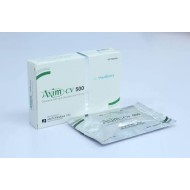
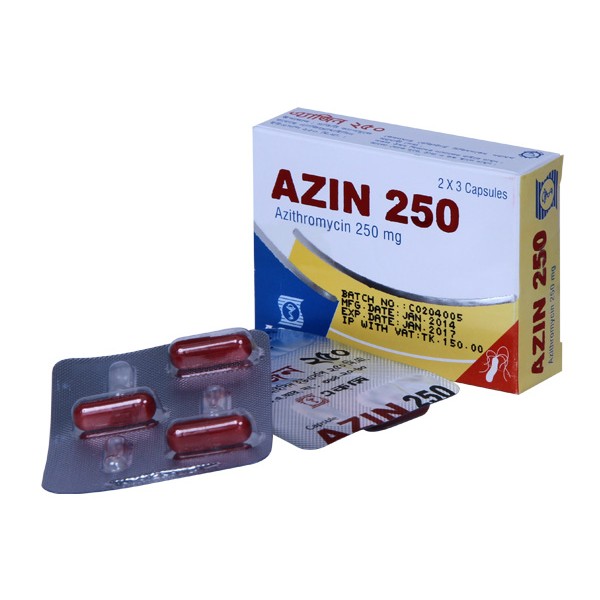
Azin 250mg Capsule — Azithromycin 250mg by Acme Laboratories for Flexible Oral Dosing
| Attribute | Details |
|---|---|
| Brand Name | Azin |
| Generic Name | Azithromycin |
| Strength | 250 mg |
| Dosage Form | Capsule |
| Drug Class | Macrolide Antibiotic (Azalide) |
| Manufacturer | Acme Laboratories Limited, Bangladesh |
| Route of Administration | Oral |
About Azin 250mg Capsule
Azin 250mg Capsule contains azithromycin 250 mg manufactured by Acme Laboratories Limited, Bangladesh. The capsule formulation of azithromycin offers a key practical advantage over tablets: for patients who are unable to swallow intact capsules but can manage liquid or semi-solid food, the Azin capsule can be carefully opened and the powder contents mixed with a small amount of food (applesauce, jam, yoghurt) or water immediately before administration. This makes Azin 250mg Capsule particularly valuable for paediatric patients who have outgrown the suspension but cannot yet swallow tablets, elderly patients with mild dysphagia, and patients who dislike the taste of tablets but can accept capsule contents in food. Acme Laboratories is one of Bangladesh's largest pharmaceutical manufacturers with international GMP certifications and a diversified export portfolio.
Azithromycin 250mg Capsule: The 5-Day Standard Regimen
Azin 250mg Capsule is the reference formulation for the classical 5-day azithromycin course: 500mg (two capsules) on Day 1 as a loading dose, followed by 250mg (one capsule) once daily on Days 2–5, for a total course dose of 1500mg. This 5-day protocol was the original regulatory-approved regimen and remains appropriate for: community-acquired pneumonia (CAP) in outpatients not requiring hospitalisation; acute bacterial sinusitis in penicillin-allergic patients; acute exacerbations of chronic obstructive pulmonary disease (AECB); skin and soft tissue infections (impetigo, cellulitis) caused by susceptible S. aureus and Streptococcus pyogenes; streptococcal pharyngitis/tonsillitis as an alternative for penicillin-allergic patients. The 5-day regimen with loading dose achieves faster initial tissue concentration build-up compared with fixed daily dosing, which may be beneficial in moderate-severity infections.
H. pylori Eradication — Azithromycin as an Alternative Agent
Helicobacter pylori eradication is a common clinical requirement in Bangladesh, where H. pylori prevalence remains very high (estimated 70–80% in adults). Standard first-line triple therapy uses clarithromycin + amoxicillin + a proton pump inhibitor (PPI). When clarithromycin is unavailable or resistance is suspected, azithromycin may be substituted as the macrolide component in some salvage regimens. Azin 250mg Capsule can be incorporated into azithromycin-based bismuth quadruple therapy protocols (bismuth subcitrate + metronidazole + tetracycline + PPI ± azithromycin). However, H. pylori eradication regimens should always be selected based on local resistance patterns and on gastroenterologist or specialist guidance — self-medication or empirical H. pylori treatment without endoscopic confirmation is not recommended. Patients with diabetes are at higher H. pylori prevalence and should be evaluated if presenting with upper GI symptoms, early satiety, or unexplained glycaemic instability.
Capsule vs Tablet: Which Is Better for Azithromycin?
Azithromycin 250mg is available as both capsules (Azin 250mg Capsule) and tablets (Azin 250mg Tab). Clinically, both deliver equivalent bioavailability and identical therapeutic outcomes. The choice is largely patient-preference and situational: the capsule formulation can be opened and contents administered in food — making it uniquely useful for patients unable to swallow capsules intact; the tablet formulation has a defined film coating that prevents direct contact with the mouth, which some patients prefer to avoid the bitter taste of azithromycin powder. For patients with no swallowing difficulty and no preference, either form is appropriate. Both Azin 250mg Capsule and Azin 250mg Tab are stored at room temperature away from moisture and light. Note: never crush or chew the capsule or tablet whole — open the capsule only when mixing with food as described, and take tablets whole.
Frequently Asked Questions (FAQ)
Q1: Can Azin 250mg Capsule be taken with food?
Yes, with an important note. The capsule formulation of azithromycin (unlike some extended-release formulations) can be taken with or without food — food reduces GI side effects without significantly affecting bioavailability. If the capsule contents are opened and mixed with food, administer immediately — do not prepare the food-drug mixture in advance, as stability outside the capsule shell is limited to a few minutes. Use only a small amount of food (1–2 teaspoons) to ensure the patient consumes the complete dose. Thick foods like yoghurt or jam are better choices than liquids, as they help mask the bitter taste and ensure complete consumption. After giving capsule contents in food, follow with a full glass of water.
Q2: Is Azin 250mg Capsule safe for patients with kidney disease?
Azithromycin is primarily eliminated via the biliary-faecal route, with less than 6% renal excretion. This makes it one of the safest antibiotics for patients with chronic kidney disease (CKD) — no dose adjustment is required for mild to moderate CKD (GFR > 10 mL/min). Azin 250mg Capsule can be used at standard doses in diabetic nephropathy patients with reduced GFR. Caution is warranted in severe hepatic impairment (Child-Pugh C), where biliary elimination is significantly reduced. In patients with both severe CKD and hepatic dysfunction, azithromycin should be used with specialist guidance. This renal safety profile makes azithromycin a frequently preferred antibiotic choice in diabetic patients who often have concurrent renal involvement.
Q3: What is the correct dose of Azin 250mg Capsule for a throat infection?
For streptococcal pharyngitis or tonsillitis in adults: the standard regimen is 500mg (2 capsules of Azin 250mg) on Day 1, then 250mg (1 capsule) once daily on Days 2–5 — total 5-day course, total 1500mg. Note: azithromycin is a second-line option for streptococcal pharyngitis (first-line is penicillin V or amoxicillin); use azithromycin for penicillin-allergic patients. Bacteriological eradication rates for azithromycin in streptococcal pharyngitis are slightly lower than penicillin (~85–88% vs 93–95%), so patients should be reassessed if symptoms worsen or fail to improve by Day 3. For recurrent streptococcal tonsillitis or pharyngitis unresponsive to beta-lactams, discuss ENT referral and tonsillectomy with your physician.
Q4: Can I give Azin 250mg Capsule to a child who has just started swallowing tablets/capsules?
Children typically develop reliable swallowing of tablets/capsules around age 6–10, depending on the child's development and the capsule size. Azin 250mg Capsule is a standard-sized hard gelatine capsule. If a child can swallow it intact — confirmed by a test with a small sweet first — it can be used. If not, the capsule can be opened and contents mixed in a teaspoon of jam, yoghurt, or honey (for children over 12 months). For children under 12 months or those requiring precise weight-based dosing below 250mg per dose, use the Azin oral suspension (200mg/5mL) which allows accurate measurement. Always confirm the dose in mg/kg with the prescribing physician for paediatric use.
Medical Disclaimer: Azin 250mg Capsule is a prescription antibiotic from Acme Laboratories Limited. Take the complete course as prescribed. Do not share antibiotics with others. If you are opening capsules to mix with food, do so for a single dose only and administer immediately.