- Stock: Out Of Stock
- Brand: Acme Laboratories Limited
- Product ID: Azithromycin
🔒 100% Secure Payment | bKash | Nagad | SSLCommerz | COD
⭐ Become a FREE Member: 7% Extra Savings • Free Delivery • Refill Reminders • Priority Support
This Item is for pre order
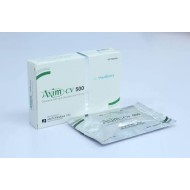
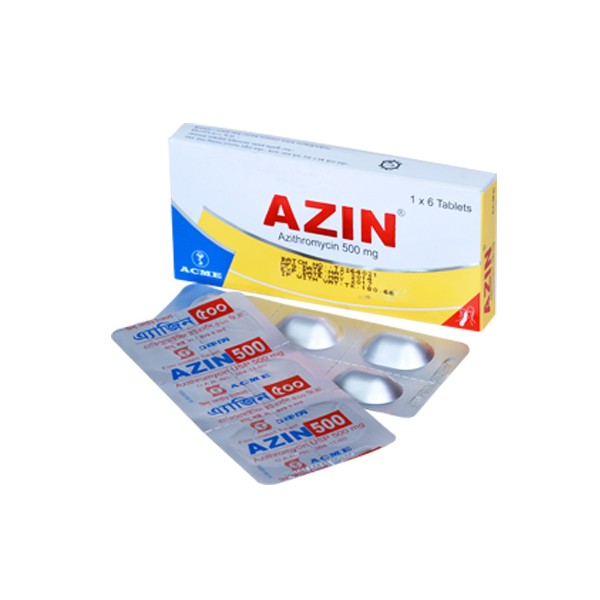
Azin 500mg Tab — Azithromycin 500mg by Acme Laboratories for Short-Course Therapy
| Attribute | Details |
|---|---|
| Brand Name | Azin |
| Generic Name | Azithromycin |
| Strength | 500 mg |
| Dosage Form | Film-Coated Tablet |
| Drug Class | Macrolide Antibiotic (Azalide) |
| Manufacturer | Acme Laboratories Limited, Bangladesh |
| Route of Administration | Oral |
About Azin 500mg Tab
Azin 500mg Tab contains azithromycin 500 mg in a film-coated tablet, manufactured by Acme Laboratories Limited, Bangladesh. The 500mg strength is the higher-dose formulation in the Azin range, designed for simplified short-course regimens. The defining advantage of the 500mg tablet is its role in the 3-day azithromycin course (one tablet once daily for 3 days = 1500mg total), which delivers therapeutically equivalent exposure to the classical 5-day course (500mg loading + 250mg × 4 days) in a shorter, more adherence-friendly regimen. Two Azin 500mg tablets (1000mg) also constitute the single-dose therapy for uncomplicated genital Chlamydia trachomatis infection. Acme Laboratories, one of Bangladesh's oldest and most respected pharmaceutical manufacturers, produces Azin 500mg Tab under internationally recognised quality standards.
Legionella Pneumonia and High-Dose Azithromycin
Legionella pneumophila causes Legionnaires' disease — a severe atypical pneumonia that is clinically indistinguishable from other CAP without specific laboratory testing (urinary Legionella antigen test or culture). Key clinical features suggestive of Legionella pneumonia: high fever (often >39.5°C), relative bradycardia, diarrhoea or abdominal pain accompanying respiratory symptoms, hyponatraemia (low sodium), elevated creatinine kinase, and rapid radiological progression. Risk factors for Legionella in Bangladesh: hotel/building cooling tower exposure, recent travel, air conditioning in large buildings, immunocompromised states including poorly controlled diabetes. Azithromycin 500mg is the first-choice antibiotic for Legionella pneumonia in outpatient and moderately ill patients — high tissue concentrations (particularly in alveolar macrophages, where Legionella replicates) make it ideal for this intracellular pathogen. Hospitalised Legionella patients typically receive IV azithromycin 500mg, then step-down to oral Azin 500mg Tab once clinically stable. Diabetic patients with CAP that is more severe than expected, or with hyponatraemia and diarrhoea, should have Legionella antigen testing.
Azithromycin 500mg: Acute Exacerbations of COPD in Diabetic Patients
Chronic obstructive pulmonary disease (COPD) frequently coexists with type 2 diabetes, particularly in elderly patients and those with a history of smoking. Acute exacerbations of COPD (AECOPD) are a major cause of hospitalisation and accelerated lung function decline. Azithromycin 500mg is recommended as an alternative first-line antibiotic for AECOPD in patients who are allergic to or intolerant of doxycycline and amoxicillin-clavulanate (the preferred agents for AECOPD per international GOLD guidelines). For AECOPD treatment: azithromycin 500mg daily for 3–5 days. Additionally, long-term prophylactic azithromycin (250mg three times per week or 500mg three times per week depending on protocol) has been shown in the AZISTUDY and COLUMBUS trials to reduce AECOPD frequency by 40–70% in high-risk COPD patients. Diabetic patients with both COPD and frequent exacerbations should discuss this prophylactic option with their respiratory physician. Caution: long-term azithromycin increases the risk of bacterial resistance and hearing changes — regular microbiological monitoring and audiometry are recommended.
Single-Dose STI Treatment Protocol
Two Azin 500mg tablets (1000mg = 1g) taken as a single oral dose constitute the WHO-recommended treatment for uncomplicated urogenital Chlamydia trachomatis infection in adults. This protocol is widely used globally for its exceptional adherence advantage — a single witnessed dose ensures complete treatment without risk of non-adherence. Important considerations for single-dose azithromycin STI therapy in Bangladesh: (1) simultaneous treatment of sexual partners is required to prevent re-infection; (2) screening for co-infections (gonorrhoea, syphilis, HIV) should accompany chlamydia treatment; (3) azithromycin 1g single dose is NOT appropriate for pharyngeal chlamydia or rectal chlamydia — doxycycline 100mg twice daily × 7 days is preferred for extragenital sites; (4) a test-of-cure 3–4 weeks post-treatment is recommended in high-risk patients, pregnant women, and those with treatment concerns. Diabetic patients with sexual health concerns should access STI testing and treatment through integrated sexual health services.
Frequently Asked Questions (FAQ)
Q1: How many Azin 500mg tablets do I need for a 3-day respiratory course?
Three tablets — one tablet (500mg) once daily for 3 consecutive days = 1500mg total. This is the complete 3-day azithromycin course for community-acquired pneumonia, sinusitis, tonsillitis (in penicillin-allergic patients), and acute exacerbations of COPD. Take at the same time each day — ideally in the morning, with or without food. For maximum convenience: set a daily reminder and take for 3 days without missing. Do not halve the dose or take tablets every other day — the 3-day regimen requires one full 500mg tablet per day for 3 consecutive days. Do not extend the course beyond 3 days without physician instruction.
Q2: Can Azin 500mg Tab be used in elderly diabetic patients with heart disease?
With caution. Azithromycin mildly prolongs the QTc interval on the ECG — an effect that is rarely clinically significant in healthy individuals but may be relevant in elderly patients with underlying cardiac disease, electrolyte abnormalities (low potassium or magnesium, common in diabetics on diuretics), or those taking other QTc-prolonging medications (some antipsychotics, domperidone, certain antifungals, fluoroquinolones). The risk is highest in patients with pre-existing prolonged QT syndrome or those taking multiple QTc-prolonging drugs. For elderly diabetic patients with significant cardiac history, discuss the choice of antibiotic with the prescribing physician before taking Azin 500mg Tab. If azithromycin is necessary, an ECG check pre- and post-treatment may be warranted in high-risk cases. For patients at low cardiac risk, the 3-day course presents minimal concern.
Q3: Will Azin 500mg Tab interact with my diabetes tablets?
Standard oral diabetes medications — metformin, glibenclamide, glimepiride, sitagliptin, empagliflozin, and similar agents — do not have clinically significant pharmacokinetic interactions with azithromycin. However, there are two important indirect considerations: (1) the infection being treated can itself cause insulin resistance and elevated blood glucose, so monitor glucose more frequently during any antibiotic course; (2) for patients on warfarin, azithromycin may enhance anticoagulant effects — INR monitoring is needed. There is an emerging body of research suggesting azithromycin may have mild insulin-sensitising and anti-inflammatory properties at low doses, but this is not yet a clinical recommendation. Report any significant blood glucose changes during the course to your diabetes care provider.
Q4: Is it safe to drive or operate machinery after taking Azin 500mg Tab?
Azithromycin has no significant central nervous system (CNS) sedative effects and does not impair driving ability or cognitive function in the vast majority of patients. However, rare side effects that could theoretically affect driving include: dizziness (in a small percentage of patients, typically mild); and in very rare cases, neurological effects such as agitation, syncope, or convulsions have been reported. If you experience dizziness, unusual fatigue, visual disturbances, or confusion after taking Azin 500mg Tab, avoid driving until the symptom resolves and inform your physician. For most patients at the 500mg 3-day dose, no driving restriction is required. Patients with hypoglycaemia risk (insulin or sulfonylurea users) should ensure blood glucose is in range before driving, independent of azithromycin use.
Medical Disclaimer: Azin 500mg Tab is a prescription antibiotic from Acme Laboratories Limited. Elderly patients with cardiac disease or those on multiple QTc-prolonging medications should use with physician guidance. Complete the prescribed course fully. Not for viral infections.