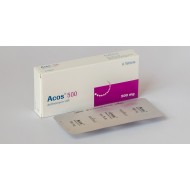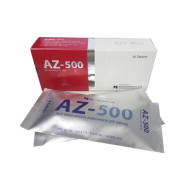

- Stock: Out Of Stock
- Brand: Chemist Laboratories Limited.
- Product ID: Azithromycin
🔒 100% Secure Payment | bKash | Nagad | SSLCommerz | COD
⭐ Become a FREE Member: 7% Extra Savings • Free Delivery • Refill Reminders • Priority Support
This Item is for pre order
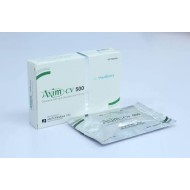
Azithin 500 — Azithromycin 500mg by Chemist Laboratories for Short-Course Antibiotic Therapy
| Attribute | Details |
|---|---|
| Brand Name | Azithin 500 |
| Generic Name | Azithromycin |
| Strength | 500 mg |
| Dosage Form | Tablet |
| Drug Class | Macrolide Antibiotic (Azalide) |
| Manufacturer | Chemist Laboratories Limited, Bangladesh |
| Route of Administration | Oral |
About Azithin 500
Azithin 500 contains azithromycin 500 mg per tablet, manufactured by Chemist Laboratories Limited, Bangladesh. As an azithromycin 500mg formulation, Azithin 500 delivers the same active ingredient and bioequivalent drug exposure as all other brands of azithromycin 500mg available in Bangladesh — providing reliable 3-day short-course therapy for community-acquired respiratory infections, single-dose STI treatment, and other indications for which azithromycin is indicated. Azithin 500 represents an accessible, cost-effective option within the azithromycin 500mg category, maintaining the same clinical efficacy standards as premium-branded alternatives. All azithromycin 500mg tablets available in Bangladesh that have received DGDA (Directorate General of Drug Administration) approval must meet the same bioequivalence standards, ensuring consistent therapeutic outcomes regardless of brand.
Antibiotic Stewardship: Using Azithromycin Appropriately
Antibiotic stewardship — the responsible use of antibiotics to slow resistance development while maintaining clinical effectiveness — is critically important with azithromycin in Bangladesh. Azithromycin resistance in key pathogens is rising: Streptococcus pneumoniae macrolide resistance in South Asia exceeds 30% in some studies; Helicobacter pylori clarithromycin and azithromycin resistance is increasing; Neisseria gonorrhoeae azithromycin resistance has emerged globally. Principles of appropriate azithromycin use for Azithin 500: (1) Use only when indicated — azithromycin is not effective against viral infections (common cold, influenza, COVID-19). Do not take Azithin 500 for these conditions. (2) Complete the full prescribed course — stopping early, even when symptoms improve, risks selecting for resistant bacteria. (3) Obtain a prescription — azithromycin is a prescription-only medicine in Bangladesh and should not be self-purchased or self-administered without medical evaluation. (4) Do not store leftover tablets — discard any remaining tablets after completing the prescribed course; do not save for future use.
Respiratory Tract Infections: When Azithin 500 Is Appropriate
Community-acquired pneumonia (CAP), acute bacterial sinusitis, and acute exacerbations of chronic bronchitis are the major respiratory indications for Azithin 500. Distinguishing bacterial from viral respiratory infections is clinically important to avoid unnecessary antibiotic use. Features suggesting bacterial lower respiratory infection (where Azithin 500 may be appropriate): fever over 38.5°C with purulent sputum production; clinical or radiological evidence of consolidation; significant systemic illness (prostration, rigors); failure to improve after 5–7 days of supportive treatment alone; or high clinical risk (COPD, asthma, diabetes, elderly). Features suggesting viral upper respiratory infection (where Azithin 500 is NOT appropriate): watery nasal discharge; mild sore throat without exudate; low-grade or absent fever; symptoms for less than 3 days without worsening; known local influenza or COVID-19 outbreak. Diabetic patients with respiratory infections should seek medical assessment promptly — respiratory infections in diabetics can deteriorate more rapidly than in non-diabetic individuals, and blood glucose should be monitored closely.
Azithromycin and Pregnancy: Safety Classification
Azithromycin has a complex pregnancy safety profile. It is classified as FDA Category B for most indications — animal reproductive studies show no evidence of fetal harm, and although adequate well-controlled studies in pregnant women are lacking, it is considered one of the safer antibiotics in pregnancy when clinically indicated. Specific pregnancy contexts where azithromycin (Azithin 500) is used: treatment of Chlamydia trachomatis in pregnancy — a single 1g dose (two Azithin 500 tablets) is recommended by WHO and CDC as the preferred alternative to doxycycline (which is contraindicated in pregnancy); community-acquired pneumonia in pregnancy — azithromycin is among the preferred oral antibiotics for atypical CAP; pertussis in pregnancy — azithromycin is preferred over clarithromycin for whooping cough treatment in pregnant women. Amoxicillin and other beta-lactams remain first-line for most infections during pregnancy; azithromycin is used when beta-lactams are not appropriate, not effective, or not tolerated. Always consult an obstetrician before taking any antibiotic during pregnancy.
Frequently Asked Questions (FAQ)
Q1: Is Azithin 500 the same as other azithromycin 500mg tablets?
Therapeutically, yes. All DGDA-approved azithromycin 500mg tablets in Bangladesh — including Azithin 500 (Chemist Laboratories), Azimex 500 (Square), Azin 500 (Acme), Azirox 500 (Navana), and other brands — contain the same active pharmaceutical ingredient at the same dose and must meet the same bioequivalence standards to receive regulatory approval. This means switching between these brands provides the same clinical treatment outcome. The key differences are in the film-coating formulation (affecting taste and appearance), excipient composition, packaging, and price. If cost is a consideration and your physician has prescribed azithromycin 500mg without specifying a brand, Azithin 500 provides equivalent clinical efficacy at an accessible price point.
Q2: Can I take Azithin 500 if I am allergic to penicillin?
Yes — azithromycin (Azithin 500) is a macrolide antibiotic belonging to the azalide subclass. It has no structural similarity to penicillin or other beta-lactam antibiotics (amoxicillin, ampicillin, cephalosporins, carbapenems) and there is no cross-reactivity between azithromycin and penicillin. Azithromycin is one of the most commonly prescribed antibiotic alternatives for penicillin-allergic patients. However, allergy to azithromycin itself (rare) is independent of penicillin allergy — if you have previously had a documented reaction to azithromycin or another macrolide (erythromycin, clarithromycin), inform your physician before taking Azithin 500. Azithromycin cross-reactivity with other macrolides is possible due to similar chemical structures within the macrolide class.
Q3: How long do the side effects of Azithin 500 last after I finish the tablets?
Azithromycin's prolonged tissue half-life (40–68 hours) means that drug levels in tissues decline gradually over 5–7 days after the last tablet. Side effects, particularly gastrointestinal (nausea, loose stools, abdominal cramps), typically resolve within 1–3 days of completing the 3-tablet course, as gut tissue levels fall. Headache and dizziness, if experienced, usually resolve within 24–48 hours of the last dose. Hearing changes (rare, transient high-frequency hearing loss) may take longer to resolve — inform your physician if you notice any hearing changes during or after a course of azithromycin. The prolonged tissue activity after the course ends (providing continued antibacterial effect for up to 7 days) means that re-prescribing azithromycin within 7–10 days of completing a course is generally not recommended except in specific circumstances.
Q4: What should I do if I miss a dose of Azithin 500 during my 3-day course?
For a 3-day once-daily course: if you miss a dose and remember within 12 hours, take the missed tablet immediately and continue as normal (taking the next dose approximately 24 hours later). If you remember less than 12 hours before the next scheduled dose, skip the missed dose and take the next dose at the regular time — do not double up. Do not take two Azithin 500 tablets in the same day. For a single-dose regimen (1g = two tablets at once for chlamydia): take both tablets at once as soon as possible after remembering; this is a single-administration treatment with no subsequent doses, so timing relative to another dose is not applicable. Contact your physician or pharmacist if you are unsure about missed doses and whether the infection has been adequately treated.
Medical Disclaimer: Azithin 500 is a prescription antibiotic from Chemist Laboratories Limited. Use only for bacterially confirmed or clinically diagnosed bacterial infections as directed by a physician. Complete the full prescribed course. Azithromycin is not effective against viral infections including the common cold, influenza, or COVID-19.