🔒 100% Secure Payment | bKash | Nagad | SSLCommerz | COD
⭐ Become a FREE Member: 7% Extra Savings • Free Delivery • Refill Reminders • Priority Support
This Item is for pre order
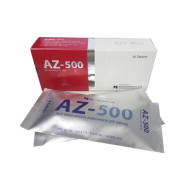
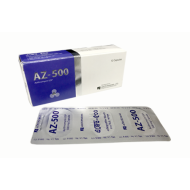
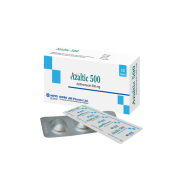
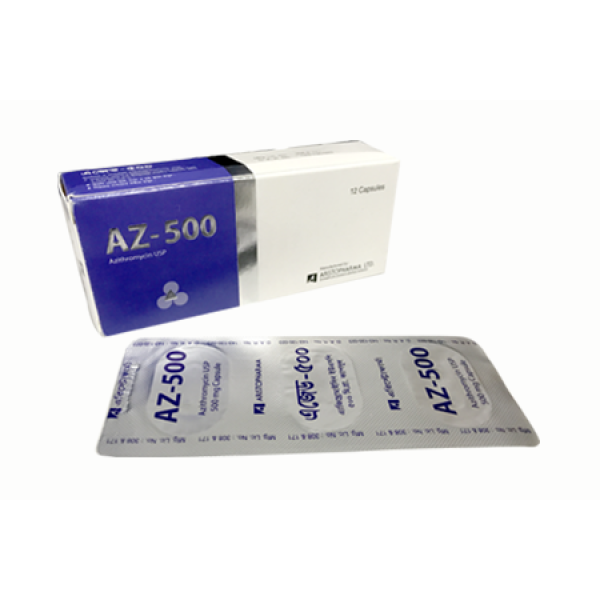
AZ 500 mg Tablet (Azithromycin 500mg) — Clinical Overview
| Attribute | Details |
|---|---|
| Brand Name | AZ 500 |
| Generic Name | Azithromycin |
| Strength | 500 mg |
| Dosage Form | Film-coated Tablet |
| Drug Class | Macrolide Antibiotic (Azalide) |
| Manufacturer | Aristopharma Ltd., Bangladesh |
| Route of Administration | Oral (may be taken with or without food) |
About AZ 500 mg Tablet
AZ 500 mg Tablet is azithromycin 500mg film-coated tablet manufactured by Aristopharma Ltd., Bangladesh. Aristopharma is a vertically integrated pharmaceutical manufacturer established in Bangladesh and operating to WHO-GMP standards. Film-coated azithromycin tablets — unlike hard gelatin capsules — can be taken with or without food, as the coating protects the drug from the acid-reducing effect of food on absorption. This makes AZ 500 mg Tablet a more convenient option for patients who find taking medication on an empty stomach difficult or who experience gastrointestinal discomfort.
Azithromycin 500 mg is the standard adult high-dose formulation used for once-daily 3-day short courses, as a loading dose for 5-day regimens, for typhoid fever treatment, and for specific sexually transmitted infections requiring higher dose exposures. The drug's tissue half-life of approximately 68 hours means a single 500mg dose maintains tissue concentrations above the minimum inhibitory concentration of most susceptible organisms for 5–7 days after the dose.
Typhoid Fever and Enteric Infections — A Key Indication in Bangladesh
Typhoid fever (enteric fever caused by Salmonella typhi and Salmonella paratyphi) remains endemic in Bangladesh, particularly in areas with limited access to safe drinking water and sanitation. With rising fluoroquinolone-resistant and multidrug-resistant (MDR) Salmonella typhi strains documented across South Asia, azithromycin has emerged as an important treatment option. WHO guidelines recommend azithromycin 500 mg once daily for 7 days for uncomplicated typhoid fever — an oral regimen with excellent clinical cure rates (88–96%) and safety profile. AZ 500 mg Tablet administered as a 7-day course is therefore clinically appropriate for uncomplicated typhoid in outpatient settings. Critically, azithromycin remains active against most fluoroquinolone-resistant Salmonella typhi strains in Bangladesh, making it particularly valuable where resistance to ciprofloxacin has been documented.
Sexually Transmitted Infection (STI) Treatment Protocols
Azithromycin 1 gram single dose (two AZ 500 mg Tablets taken together) is the first-line WHO-recommended treatment for uncomplicated Chlamydia trachomatis infection. For gonorrhoea, azithromycin 2g single dose (four tablets, combined with ceftriaxone) was historically used in dual-therapy regimens, though rising azithromycin resistance in Neisseria gonorrhoeae has led WHO to update guidelines toward ceftriaxone monotherapy for gonorrhoea. Consult current local STI treatment guidelines before prescribing azithromycin for gonorrhoea. Azithromycin 500mg once daily for 3 days (1500mg total) remains an alternative regimen for non-gonococcal urethritis. All STI treatments should be accompanied by partner notification and counselling.
Azithromycin in Traveller's Diarrhoea
Traveller's diarrhoea is a common illness affecting travellers to Bangladesh and similar settings, as well as Bangladeshi travellers abroad. The most common causative organisms are enterotoxigenic E. coli (ETEC), Campylobacter jejuni, Salmonella spp., and Shigella spp. Azithromycin 500mg once daily for 3 days is a preferred empirical antibiotic for traveller's diarrhoea in areas where fluoroquinolone resistance is prevalent (including South Asia). AZ 500 mg Tablet is a convenient single-tablet once-daily regimen that is effective against the full spectrum of common traveller's diarrhoea pathogens. It also covers Campylobacter, which is intrinsically resistant to fluoroquinolones in many regions.
Drug Interactions — Important Considerations
Clinically significant drug interactions with azithromycin include: antacids containing aluminium or magnesium hydroxide — these reduce the peak plasma concentration (Cmax) of azithromycin by approximately 24%, though the overall exposure (AUC) is not significantly affected; separate administration by at least 2 hours. Warfarin — azithromycin may potentiate the anticoagulant effect of warfarin and coumarin-type anticoagulants; INR monitoring is recommended during and after azithromycin therapy. Ergot derivatives (ergotamine, dihydroergotamine) — macrolide antibiotics including azithromycin may enhance ergot toxicity; avoid concurrent use. Cyclosporin — plasma levels may be elevated; cyclosporin concentration monitoring recommended. QT-prolonging medications (antiarrhythmics, antipsychotics, certain antihistamines) — additive QT prolongation risk; use with caution.
Storage and Patient Counselling
Store AZ 500 mg Tablets below 30°C, protected from light and moisture. Do not store in the bathroom. Keep original packaging intact. Keep out of reach of children. Tablets should be swallowed whole — do not crush or chew, as this may alter the drug's release characteristics and taste. Swallow with adequate water. Patients should be counselled that incomplete antibiotic courses contribute to resistance, and to complete the full prescribed course even if feeling better. Contact a healthcare provider if symptoms worsen, severe watery diarrhoea develops (possible C. difficile infection), or if a rash, facial swelling, or difficulty breathing develops (possible allergic reaction).
Frequently Asked Questions (FAQ)
Q1: Can AZ 500 mg Tablet be used to treat typhoid fever in children?
Azithromycin 500mg is the adult formulation. For children, weight-based dosing is required (10–20 mg/kg/day, up to adult dose). Paediatric azithromycin preparations (suspensions, lower-strength capsules/tablets) are more appropriate for children. AZ 500 mg Tablet may be appropriate for older adolescents who weigh ≥40kg and can be given the adult dose. Always confirm dosing with a physician.
Q2: My doctor prescribed AZ 500 mg Tablet for respiratory infection — should I take it with food?
Unlike azithromycin capsules which must be taken on an empty stomach, film-coated tablets (like AZ 500 mg Tablet) can be taken with or without food. If you experience nausea or stomach discomfort, taking the tablet with a light meal or snack is acceptable and will not significantly reduce effectiveness.
Q3: How long does azithromycin take to work for a respiratory infection?
Clinical improvement is typically seen within 24–72 hours of starting azithromycin. However, due to the drug's long tissue half-life, the full antibacterial effect continues for several days after the last tablet. For a 3-day 500mg course, clinical resolution of pneumonia symptoms typically occurs over 5–10 days. If fever persists beyond 72 hours or symptoms worsen, reassessment by a physician is recommended.
Q4: Is AZ 500 mg Tablet safe during pregnancy?
Azithromycin is classified as FDA Pregnancy Category B — animal studies have shown no fetal harm, and limited human data suggest it is relatively safe. It is used clinically during pregnancy for Chlamydia treatment (one-gram single dose), as an alternative to amoxicillin for pneumonia in penicillin-allergic pregnant women, and for prophylaxis in specific obstetric contexts. However, all antibiotic use during pregnancy should be under physician supervision, balancing the risks of untreated infection against potential drug effects.
Medical Disclaimer: This information is for educational and healthcare professional reference purposes only. AZ 500 mg Tablet is a prescription antibiotic. Use only as directed by a qualified physician. Antibiotic resistance is a public health crisis — avoid self-medication and unnecessary antibiotic use.