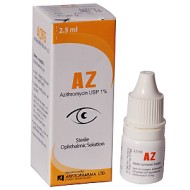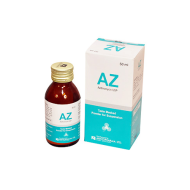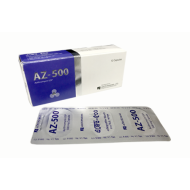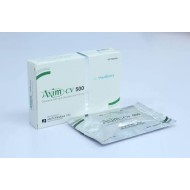
- Stock: In Stock
- Brand: Aristopharma
- Product ID: Azithromycin
🔒 100% Secure Payment | bKash | Nagad | SSLCommerz | COD
⭐ Become a FREE Member: 7% Extra Savings • Free Delivery • Refill Reminders • Priority Support
This Item is for pre order
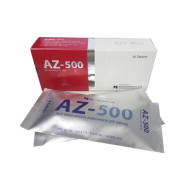
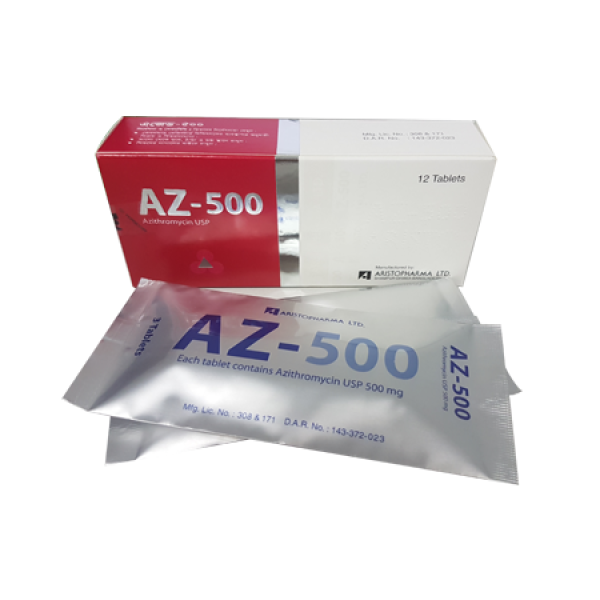
AZ-500 Tablet (Azithromycin 500mg) — Clinical Overview
| Attribute | Details |
|---|---|
| Brand Name | AZ |
| Generic Name | Azithromycin |
| Strength | 500 mg |
| Dosage Form | Film-coated Tablet |
| Drug Class | Macrolide Antibiotic (Azalide subclass) |
| Manufacturer | ACI Limited, Bangladesh |
| Route of Administration | Oral |
About AZ-500 Tablet
AZ-500 is azithromycin 500mg film-coated tablet manufactured by ACI Limited, Bangladesh — one of the country's leading pharmaceutical companies operating to WHO-GMP standards. The 500mg strength is the most commonly prescribed adult dose of azithromycin, enabling convenient once-daily dosing and short treatment courses that improve patient adherence compared to multiple-daily-dose antibiotic regimens.
Azithromycin acts by inhibiting bacterial 50S ribosomal subunit function, specifically blocking peptidyl-tRNA translocation which halts protein chain elongation. Unlike many antibiotics whose tissue concentrations mirror serum levels, azithromycin demonstrates remarkable tissue accumulation — achieving concentrations in lung tissue 300-fold higher than in plasma, and persisting in tonsils, prostate, and skin for 5–7 days after the final dose. This pharmacokinetic property is the scientific basis for short-course azithromycin therapy and explains why 3-day courses achieve equivalent outcomes to longer courses with other antibiotics.
Key Indications for AZ-500
Community-acquired pneumonia (outpatient): 500mg once daily for 3 days as monotherapy for mild CAP (CURB-65 score 0–1) — covers typical bacteria and atypical organisms (Mycoplasma, Chlamydophila, Legionella). For moderate CAP (CURB-65 score 2): 500mg azithromycin once daily combined with a beta-lactam (amoxicillin-clavulanate or ceftriaxone) for dual coverage. Acute bacterial sinusitis: 500mg once daily for 3 days. Acute exacerbation of chronic bronchitis/COPD: 500mg once daily for 3 days. Pharyngitis/tonsillitis (penicillin-allergic patients): 500mg on day 1, then 250mg on days 2–5. Uncomplicated skin and soft tissue infections: 500mg on day 1, then 250mg daily for days 2–5. Chlamydia trachomatis urogenital infection: 1g single oral dose (two AZ-500 tablets taken together as a one-time treatment). Uncomplicated typhoid fever: 500mg daily for 7 days (effective against fluoroquinolone-resistant Salmonella typhi).
Azithromycin's Role in Community-Acquired Pneumonia in Bangladesh
Community-acquired pneumonia (CAP) is a leading cause of hospitalisation and mortality in Bangladesh. The key pathogens in Bangladesh CAP are: Streptococcus pneumoniae (most common), Haemophilus influenzae, Klebsiella pneumoniae (in diabetics and alcoholics), atypical organisms (Mycoplasma pneumoniae, Chlamydophila pneumoniae — especially in younger patients), and Legionella pneumophila (less common but important in severe cases). AZ-500 azithromycin covers most of these pathogens (with exception of Klebsiella, which requires a beta-lactam). In outpatient mild CAP, azithromycin monotherapy is guideline-recommended. For hospitalised patients, azithromycin should be combined with a beta-lactam. The Bangladesh National Clinical Management Guidelines for Pneumonia recommend azithromycin as a component of CAP treatment regimens.
Macrolide Resistance — Prescriber Awareness
Macrolide resistance is rising globally and represents a serious concern in Bangladesh. The main resistance mechanisms — erm(B) (ribosomal methylation, producing high-level resistance) and mef(A) (efflux pump, producing low-level resistance) — have been identified in Streptococcus pneumoniae, Staphylococcus aureus, and Mycoplasma pneumoniae isolates in Bangladesh. Clinical implications: azithromycin monotherapy for pneumonia may fail in approximately 20–40% of cases if macrolide-resistant S. pneumoniae is the causative organism. Failure to improve within 48–72 hours of azithromycin therapy should prompt reassessment and potential switch to a beta-lactam or respiratory fluoroquinolone. Culture and sensitivity testing is encouraged for hospitalised patients with CAP.
Azithromycin and Cardiovascular Safety
AZ-500 prolongs the cardiac QT interval through hERG potassium channel blockade. A 2012 New England Journal of Medicine study (Ray et al.) found a small but statistically significant increase in cardiovascular mortality with azithromycin compared to amoxicillin, particularly in patients with highest cardiovascular risk. The FDA issued a Drug Safety Communication in 2013 advising prescribers to consider cardiovascular risk before prescribing azithromycin. In clinical practice, the absolute cardiovascular risk is very low in otherwise healthy young and middle-aged patients taking short courses. The risk-benefit analysis strongly favours azithromycin for bacterial infections in patients without known cardiac disease or QT risk factors. For high-risk patients (known QT prolongation, heart failure, hypokalaemia, concurrent QT-prolonging drugs), alternative antibiotics should be considered.
Long-Term Prophylactic Use in COPD
Beyond acute treatment, azithromycin 250mg three times weekly as long-term prophylaxis significantly reduces AECOPD frequency in high-risk COPD patients — a recommendation supported by multiple randomised trials and included in GOLD guidelines. AZ-500 tablets can be used for monthly "pulse" courses (500mg once daily for 3 days per month) as an alternative to the three-times-weekly regimen in some protocols. Long-term azithromycin use requires audiological monitoring (hearing tests every 6 months) and vigilance for macrolide resistance selection in the community. Specialist respiratory physician guidance is essential before initiating long-term azithromycin prophylaxis.
Storage and Dispensing
Store AZ-500 tablets below 30°C in a cool, dry place away from direct sunlight and moisture. Keep in original packaging until use. Keep out of reach of children. Do not use after the printed expiry date. AZ-500 should be dispensed on prescription only — pharmacists should counsel patients on completing the prescribed course, not sharing antibiotics, and avoiding use for viral symptoms. Dispensing advice: tablets may be taken with or without food; if stomach upset occurs, taking with food is recommended; complete the full prescribed course even if symptoms improve.
Frequently Asked Questions (FAQ)
Q1: Can AZ-500 treat gonorrhoea?
No — azithromycin alone is no longer recommended for gonorrhoea treatment due to widespread resistance. The current WHO recommendation (2021) for uncomplicated gonorrhoea is ceftriaxone 500mg IM single dose. Azithromycin previously used in dual-therapy gonorrhoea regimens has been removed from guidelines due to high rates of azithromycin-resistant Neisseria gonorrhoeae globally. If gonorrhoea is suspected, refer for testing and treat with injectable ceftriaxone.
Q2: How many AZ-500 tablets are needed for a full course of treatment?
It depends on the indication: community-acquired pneumonia (3-day regimen) — 3 tablets (one daily × 3 days); sinusitis — 3 tablets; chlamydia single dose — 2 tablets (1g); typhoid fever (7 days) — 7 tablets; skin infection 5-day course — day 1: one tablet (500mg), days 2–5 switch to 250mg. Always follow the physician's prescription for the correct number of tablets and duration.
Q3: Is AZ-500 safe during pregnancy?
Azithromycin is classified as FDA Pregnancy Category B — animal studies show no fetal harm, and limited human data suggest it is generally safe. It is commonly used in pregnancy for treatment of Chlamydia trachomatis (the single 1g dose is preferred over doxycycline, which is contraindicated in pregnancy). For other indications in pregnancy, risk-benefit analysis with a physician is essential. Avoid long-term use in pregnancy without specialist guidance.
Q4: What should I do if I miss a dose of AZ-500?
Take the missed dose as soon as you remember on the same day. If it is the next day, skip the missed dose and continue with the next scheduled dose — do not double up. For the single-dose chlamydia treatment (1g = two tablets), there is no "missed dose" issue as it is taken all at once. For short 3-day courses, missing a dose significantly reduces effectiveness — if you miss the second dose entirely, contact your physician for guidance.
Medical Disclaimer: This content is for healthcare professional reference and patient education only. AZ-500 Tablet is a prescription-only antibiotic. Take only as prescribed by a qualified physician. Antibiotic misuse causes antimicrobial resistance. Consult a licensed healthcare provider before starting or stopping antibiotic therapy.