- Stock: Pre-Order
- Brand: Aristopharma
- Product ID: Erythromycin
Available Options
🔒 100% Secure Payment | bKash | Nagad | SSLCommerz | COD
⭐ Become a FREE Member: 7% Extra Savings • Free Delivery • Refill Reminders • Priority Support
This Item is for pre order
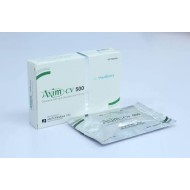
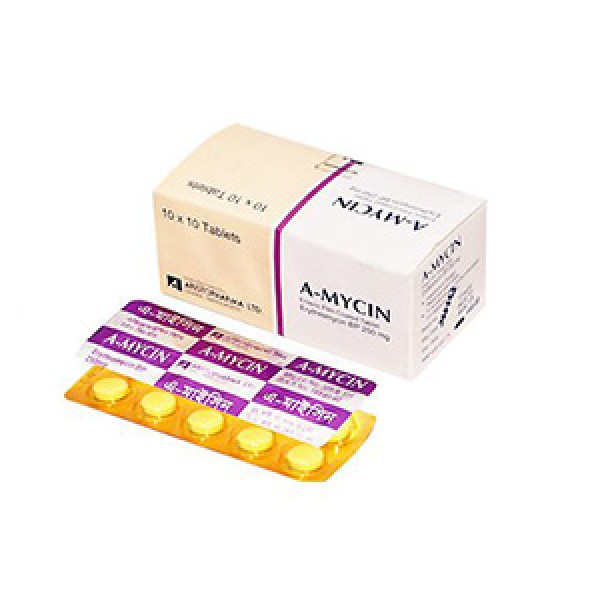
A-Mycin 500mg Tablet — Erythromycin | Beximco Pharmaceuticals
| Generic Name | Erythromycin 500mg |
| Drug Class | Macrolide Antibiotic |
| Manufacturer | Beximco Pharmaceuticals Ltd. |
| Route | Oral (Tablet) |
| Prescription Status | Prescription Required |
Overview
A-Mycin 500mg is an oral macrolide antibiotic tablet containing Erythromycin 500mg. It is used for respiratory tract infections, skin and soft tissue infections, and as a first-line penicillin-allergy alternative. Erythromycin was the original macrolide and remains clinically important despite newer macrolides (azithromycin, clarithromycin), particularly for atypical pneumonia, whooping cough prophylaxis, Campylobacter gastroenteritis, and Helicobacter pylori eradication combinations. The 500mg dose is the standard adult tablet strength.
Mechanism of Action
Erythromycin reversibly binds to the 23S rRNA component of the bacterial 50S ribosomal subunit, blocking the translocation step of protein synthesis. It is bacteriostatic at standard concentrations, bactericidal at high concentrations against susceptible organisms. Erythromycin also has motilin receptor agonist properties at the gut level, stimulating gastric and small bowel motility — relevant in diabetic gastroparesis and explaining its GI side effects.
Indications
- Community-acquired pneumonia — including atypical pathogens (Mycoplasma, Chlamydia, Legionella)
- Upper respiratory tract infections — pharyngitis, tonsillitis (penicillin-allergy patients)
- Skin and soft tissue infections (mild-moderate) — penicillin-allergy alternative
- Whooping cough (Bordetella pertussis) — treatment and prophylaxis
- Chlamydial genital infections
- Campylobacter gastroenteritis
- H. pylori eradication — as part of triple therapy combinations
- Acne vulgaris (as part of combination regimen — often with topical treatment)
Dosage
| Indication | Dose | Frequency | Duration |
|---|---|---|---|
| Most adult infections | 500mg | Every 6 hours (QID) | 5–10 days |
| Severe infections | 1g (2 tablets) | Every 6 hours | As directed |
| Whooping cough | 500mg | Every 6 hours | 14 days |
| Chlamydia | 500mg | Every 6 hours | 7 days |
| H. pylori (combination) | 500mg | Twice daily | 7–14 days |
Best taken on an empty stomach (30–60 minutes before meals). If GI upset is problematic, may be taken with a small amount of food — though this reduces absorption. Do not crush enteric-coated tablets.
Critical Diabetic Patient Information
- Simvastatin / lovastatin — AVOID: Erythromycin is a potent CYP3A4 inhibitor. Co-administration with simvastatin or lovastatin can increase statin plasma levels 5–10 fold — risk of severe rhabdomyolysis. Switch to atorvastatin or rosuvastatin during any erythromycin course
- Repaglinide interaction: Erythromycin may increase repaglinide levels via CYP3A4 inhibition — monitor blood glucose carefully during erythromycin courses in patients on repaglinide
- QT prolongation: Erythromycin prolongs the QT interval. Diabetic patients with cardiac autonomic neuropathy may already have prolonged QT. Avoid concurrent use with fluoroquinolones, antifungals, or other QT-prolonging drugs
- Gastroparesis — potential prokinetic benefit: Erythromycin stimulates motilin receptors, accelerating gastric emptying. Some physicians use very low-dose erythromycin as a prokinetic in diabetic gastroparesis — however tolerance develops within days. Do not self-medicate for this purpose
- Warfarin monitoring: Erythromycin significantly increases warfarin effect in patients on anticoagulation therapy — check INR within 3–5 days of starting a course
Side Effects
| System | Side Effect | Severity |
|---|---|---|
| GI | Nausea, vomiting, abdominal cramping, diarrhoea | Very common — Mild to Moderate |
| Cardiac | QT prolongation, torsades de pointes (rare) | Uncommon — Potentially Serious |
| Hepatic | Cholestatic jaundice (especially estolate ester — rare with stearate/ethylsuccinate) | Rare |
| Hypersensitivity | Rash, urticaria, anaphylaxis (rare) | Uncommon |
| Hearing | Reversible ototoxicity (high doses) | Rare |
Drug Interactions
| Drug | Interaction |
|---|---|
| Simvastatin / lovastatin | AVOID — 5–10× statin level increase → rhabdomyolysis |
| Warfarin | Significantly increases INR — monitor closely |
| Cyclosporin / tacrolimus | Increases immunosuppressant levels — nephrotoxicity |
| Repaglinide | May increase repaglinide levels — monitor glucose |
| Theophylline | Increases theophylline levels — toxicity risk |
| Digoxin | May increase digoxin levels |
| Colchicine | Potentially fatal colchicine toxicity — avoid |
| QT-prolonging drugs | Additive QT prolongation — avoid |
| Ergotamine | Acute ergotism — contraindicated |
Contraindications
- Known hypersensitivity to erythromycin or macrolides
- Concurrent use with ergotamine, pimozide, or cisapride
- Pre-existing QT prolongation or history of torsades de pointes
- Severe hepatic impairment
Storage
Store below 25°C. Protect from light and moisture. Keep in original packaging. Keep out of reach of children.
Frequently Asked Questions
Q: Why is erythromycin given 4 times a day when newer antibiotics are once or twice daily?
A: Erythromycin has a short half-life (~2 hours) and requires QID dosing for adequate 24-hour coverage. Newer macrolides (azithromycin — once daily, clarithromycin — twice daily) were designed partly to improve on this inconvenience.
Q: I am on a cholesterol tablet (simvastatin) — can I take A-Mycin?
A: No — erythromycin dramatically increases simvastatin levels, risking serious muscle damage (rhabdomyolysis). Inform your physician. Switch to atorvastatin temporarily during your antibiotic course.
Q: Can I take A-Mycin with food to reduce stomach upset?
A: Yes, a small amount of food can reduce nausea — but it also reduces absorption. If GI effects are manageable, take it fasting for better efficacy. Discuss with your physician if GI effects are severe.
Medical Disclaimer: A-Mycin 500mg (Erythromycin) is a prescription-only antibiotic. Avoid concurrent use with simvastatin, lovastatin, or ergotamine — serious adverse reactions possible. Prolongs QT interval — avoid in patients with cardiac rhythm disorders or on other QT-prolonging drugs. Monitor INR if on warfarin. This information is for educational purposes only. Always follow your physician's instructions.