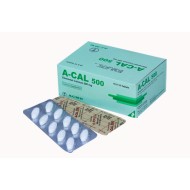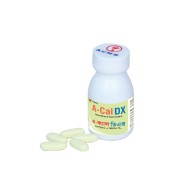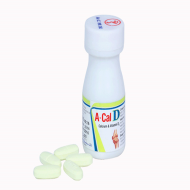
- Stock: Out Of Stock
- Brand: ACI Pharmaceuticals
- Product ID: Calcium Carbonate
🔒 100% Secure Payment | bKash | Nagad | SSLCommerz | COD
⭐ Become a FREE Member: 7% Extra Savings • Free Delivery • Refill Reminders • Priority Support
This Item is for pre order
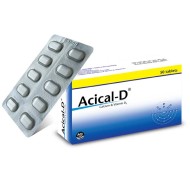
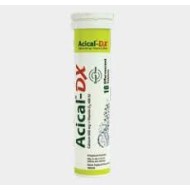
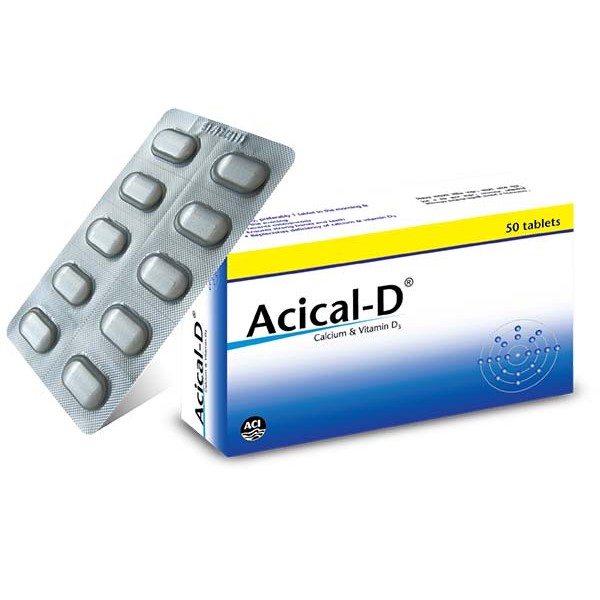
Acical D — Calcium Carbonate + Vitamin D3 Tablet
| Product Overview | |
|---|---|
| Brand Name | Acical D |
| Generic Name | Calcium Carbonate + Vitamin D3 (Cholecalciferol) |
| Manufacturer | ACI Pharmaceuticals Ltd., Bangladesh |
| Drug Class | Calcium + Vitamin D Supplement |
| Dosage Form | Tablet |
| Key Components | Calcium Carbonate + Vitamin D3 (Cholecalciferol 200–400 IU) |
| Why Combine? | Vitamin D3 increases intestinal calcium absorption from 10–15% to 30–40% |
| Storage | Store below 30°C in a dry place, away from light. Keep out of reach of children. |
| Pregnancy & Lactation | Recommended during pregnancy and lactation under physician supervision |
1. Indications & Uses
Acical D is a combined calcium and vitamin D3 supplement for superior efficacy over calcium alone. Vitamin D3 (cholecalciferol) is the essential co-factor for intestinal calcium absorption. Without adequate vitamin D, absorbed calcium drops to 10–15% of intake. In Bangladesh, vitamin D deficiency affects 60–80% of the population, making standalone calcium supplementation largely ineffective. This combination addresses both deficiencies simultaneously.
Indicated for: prevention and treatment of calcium and vitamin D deficiency; osteoporosis (first-line supplementation); osteomalacia; postmenopausal bone loss; calcium supplementation in pregnancy and lactation; secondary hyperparathyroidism in chronic disease; and supplementation in the elderly. In diabetes: Vitamin D regulates insulin secretion through pancreatic beta-cell VDR (vitamin D receptors), reduces systemic inflammation, and improves insulin sensitivity. Acical D addresses both bone health and metabolic needs of diabetic patients — over 65% of Bangladeshi diabetics have vitamin D insufficiency.
2. Mechanism of Action
Calcium: Absorbed via TRPV6 channels in the intestinal brush border, regulated by calcitriol. Provides structural calcium for bone mineralisation, nerve conduction, muscle contraction, and clotting. Vitamin D3: Converted in the liver to 25(OH)D, then in the kidney to active calcitriol [1,25(OH)₂D]. Calcitriol binds to VDR in enterocytes, upregulating TRPV6 calcium channels and calbindin-D9k to increase calcium absorption 2–3 fold. In bone, promotes osteoblast differentiation. In the pancreas, supports insulin gene expression and beta-cell survival. In immune cells, reduces pro-inflammatory cytokines (IL-6, TNF-α) that impair insulin signalling.
3. Dosage & Administration
Adults (general supplementation): 1–2 tablets daily with meals for optimal calcium dissolution and absorption.
Osteoporosis prevention: 2 tablets daily (morning + evening meals) providing ~1000 mg calcium and 400–800 IU vitamin D3.
Pregnancy/lactation: 2–3 tablets daily as prescribed; 1200–1500 mg elemental calcium required daily.
Postmenopausal women: 2 tablets daily with regular weight-bearing exercise.
Elderly (>65 years): 2 tablets daily — reduced sun exposure and impaired renal D3 activation increase deficiency risk.
Diabetic patients: 1–2 tablets daily with meals. May improve insulin sensitivity — monitor blood glucose when initiating supplementation.
4. Side Effects
Well tolerated at standard doses. Common: constipation, flatulence, nausea. Rare: hypercalcaemia (excessive doses), hypercalciuria, vitamin D toxicity (>4000 IU/day chronic). Monitor serum calcium and 25(OH)D in long-term users with renal disease.
5. Contraindications
Contraindicated in: hypercalcaemia; vitamin D toxicity; nephrolithiasis (calcium stones); severe renal failure; sarcoidosis; granulomatous diseases; immobilisation hypercalcaemia.
6. Warnings & Precautions
Do not exceed 2500 mg elemental calcium/day total. Separate from quinolones, tetracyclines, thyroid medications, bisphosphonates, and iron supplements by 2–4 hours. Monitor serum calcium and 25(OH)D in renal disease. Adequate hydration (≥8 glasses/day) prevents calcium kidney stones. Thiazide diuretics reduce urinary calcium — monitor for hypercalcaemia. Avoid excessive vitamin D without monitoring serum levels.
7. Drug Interactions
Calcium reduces absorption of quinolones, tetracyclines, bisphosphonates, levothyroxine, iron, and zinc — separate by 2–4 hours. Vitamin D may enhance digoxin toxicity. Thiazide diuretics + D3 may cause hypercalcaemia. Rifampicin and anticonvulsants accelerate vitamin D metabolism. Corticosteroids reduce absorption of both calcium and vitamin D. Cholestyramine reduces fat-soluble vitamin D absorption.
8. Pharmacokinetics
Calcium absorbed 20–40% in small intestine; peak 1–2h post-dose; 99% stored in bone. Vitamin D3 absorbed with dietary fats; hepatically hydroxylated to 25(OH)D (T½ 2–3 weeks); renally activated to calcitriol. Adequate serum 25(OH)D target: >75 nmol/L. Vitamin D stored in adipose tissue; accumulation possible with prolonged high doses.
9. Storage & Handling
Store below 30°C away from sunlight and moisture. Vitamin D3 is light-sensitive — keep in original blister pack. Check expiry before use.
10. Overdose
Symptoms: hypercalcaemia (nausea, polyuria, confusion), nephrocalcinosis. Stop all calcium and vitamin D. Give IV saline and furosemide. Seek emergency care immediately.
11. Missed Dose
Take as soon as remembered; skip if next dose is due. Do not double. Long-term compliance matters more than individual doses.
12. Clinical Evidence
RECORD trial: calcium + D3 reduced fracture incidence by 16% in 5,292 elderly patients. Women's Health Initiative: 12% hip fracture reduction with combined supplementation. BIRDEM study, Bangladesh: vitamin D supplementation in T2DM patients improved HbA1c by 0.5% and fasting glucose by 0.8 mmol/L over 6 months. Meta-analysis (NEJM): vitamin D3 reduces overall cancer mortality 12% and cardiovascular events 10%. Calcium + D3 combination is the global gold standard for osteoporosis supplementation.
13. Patient Counselling Points
• Take with meals — enhances calcium absorption and reduces GI side effects.
• Get 15–30 min of sunlight daily for natural vitamin D production.
• Drink ≥8 glasses of water daily to reduce kidney stone risk.
• Separate from thyroid medication, antibiotics, and iron by 2–4 hours.
• Diabetic patients: consistent vitamin D intake supports insulin sensitivity.
• Annual 25(OH)D testing recommended for long-term users.
Frequently Asked Questions (FAQ)
Q1. Does vitamin D deficiency worsen diabetes?
Yes. Vitamin D deficiency impairs pancreatic beta-cell function, increases insulin resistance, and raises pro-inflammatory cytokines. Studies show deficient individuals have 40–60% higher T2DM risk. Correcting deficiency with Acical D supports better glycaemic control alongside diabetes medications.
Q2. How much vitamin D is enough for diabetic patients?
Most guidelines recommend maintaining serum 25(OH)D >75 nmol/L. For Bangladeshi diabetics, who are frequently deficient, 800–1000 IU daily (from supplements + diet + sun) is typically needed. Acical D provides a physiological dose that is safe for daily use without monitoring in most patients.
Q3. Can Acical D be taken alongside metformin?
Yes, no interactions. Some studies suggest metformin may reduce B12 absorption but does not affect calcium or vitamin D. Acical D can safely be taken with metformin, ideally at a meal rather than simultaneously to reduce combined GI effects.
Q4. What foods are rich in calcium and vitamin D in Bangladesh?
Dietary calcium sources: milk, yoghurt, small fish (shutki, mola carp eaten whole), dark green vegetables (shak), sesame seeds, and lentils. Vitamin D sources: fatty fish (ilish/hilsa, tuna), egg yolk, fortified milk, and sunlight (most important source). Even with a balanced diet, supplementation is often necessary — especially in women and the elderly.
⚕ Medical Disclaimer: For educational purposes only. Patients with renal disease, hypercalcaemia, or sarcoidosis should consult a physician before use. This content does not substitute professional medical advice.