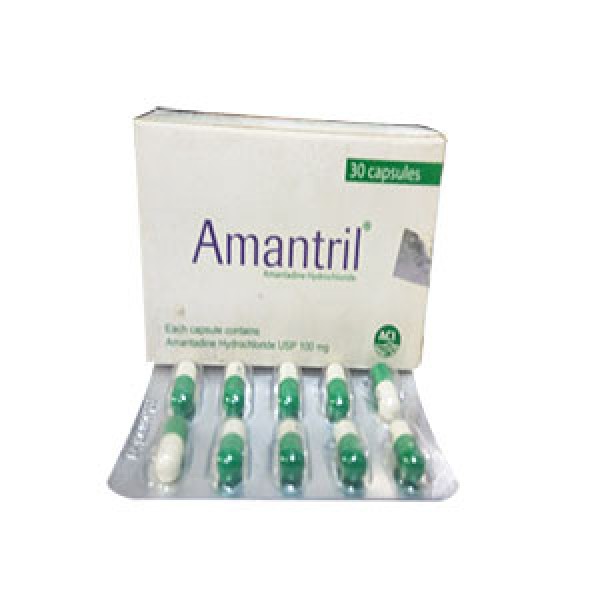
- Stock: Out Of Stock
- Brand: ACI Pharmaceuticals
- Product ID: Amantadine Hydrochloride
🔒 100% Secure Payment | bKash | Nagad | SSLCommerz | COD
⭐ Become a FREE Member: 7% Extra Savings • Free Delivery • Refill Reminders • Priority Support
This Item is for pre order
Amantril 100 mg Capsule (Amantadine Hydrochloride) – ACI Limited
| Brand Name | Amantril 100 mg Capsule |
|---|---|
| Generic Name | Amantadine Hydrochloride |
| Strength | 100 mg |
| Dosage Form | Capsule (hard gelatin) |
| Manufacturer | ACI Limited, Bangladesh |
| Drug Class | Antiviral / Antiparkinson Agent (NMDA Receptor Antagonist / Dopamine Releaser) |
| Pack Size | 10 Capsules per Strip |
| Prescription Required | Yes (Rx) |
| Storage | Store below 30°C in a cool, dry place away from light |
1. About Amantril (Amantadine Hydrochloride)
Amantril 100 mg Capsule contains Amantadine Hydrochloride, a unique pharmacological agent with both antiviral and antiparkinson properties, manufactured by ACI Limited, Bangladesh. Amantadine was originally developed as an antiviral for influenza A prophylaxis and later found to have significant benefit in Parkinson's disease — a dual mechanism drug class quite rare in pharmacology.
Amantadine acts primarily as an NMDA receptor antagonist and also stimulates the release of dopamine from presynaptic neurons. In clinical practice in Bangladesh, Amantril is used primarily for: Parkinson's disease (both idiopathic and drug-induced), drug-induced extrapyramidal symptoms from antipsychotic medications, and influenza A prophylaxis. It remains an important agent in neurological practice due to its unique mechanism and accessible cost.
2. Mechanism of Action
Antiparkinson mechanism:
- Dopamine release: Amantadine enhances the release of dopamine (and norepinephrine) from presynaptic storage vesicles in the striatum, and inhibits reuptake of these neurotransmitters. In Parkinson's disease, where dopaminergic neurons are lost, this mechanism compensates partially for the dopamine deficit.
- NMDA receptor antagonism: Amantadine blocks N-methyl-D-aspartate (NMDA) glutamate receptors. Glutamatergic over-activity in the basal ganglia contributes to parkinsonism and dyskinesia. By blocking NMDA receptors, amantadine reduces pathological glutamatergic signaling — explaining its effectiveness in levodopa-induced dyskinesias.
- Anticholinergic properties: Minor central anticholinergic effects also contribute to its antiparkinson activity.
Antiviral mechanism:
Amantadine inhibits viral uncoating by blocking the M2 ion channel protein of influenza A virus, preventing the release of viral RNA into the host cell cytoplasm. This mechanism is specific to influenza A — amantadine has no activity against influenza B.
3. Indications
Amantril (Amantadine HCl) 100 mg is indicated for:
- Parkinson's Disease: Symptomatic treatment of idiopathic Parkinson's disease — used as monotherapy in early disease or as adjunct to levodopa/carbidopa in more advanced disease
- Levodopa-Induced Dyskinesias (LID): One of the very few agents with evidence for reducing the involuntary movements (chorea, dystonia) that develop with long-term levodopa use in Parkinson's disease — likely through NMDA antagonism
- Drug-Induced Extrapyramidal Syndrome (DEPS): Treatment of parkinsonism, akathisia, and dystonia caused by antipsychotic medications (e.g., haloperidol, chlorpromazine, risperidone)
- Influenza A — Prophylaxis: Prevention of influenza A infection in non-immunized patients during epidemic periods (though widespread resistance limits utility; vaccination remains the preferred approach)
- Influenza A — Treatment: Early treatment of influenza A infection to reduce severity and duration when started within 48 hours of symptom onset
- Post-Encephalitic Parkinsonism: Treatment of parkinsonism following viral encephalitis
4. Dosage and Administration
Parkinson's Disease / Extrapyramidal Syndrome:
- Starting dose: 100 mg once daily for 1 week
- Maintenance: 100 mg twice daily (200 mg/day)
- Maximum dose: 400 mg/day in divided doses under specialist supervision
- When used with levodopa for dyskinesia: typically 100–300 mg/day
Influenza A Prophylaxis:
- Adults: 100 mg twice daily; start before and continue during exposure period (up to 6 weeks during outbreak)
- Elderly (≥65 years): 100 mg once daily
Influenza A Treatment:
- 200 mg/day (100 mg twice daily) for 5 days; start within 48 hours of symptom onset
Special populations:
- Elderly (≥65 years): Reduce dose to 100 mg/day — risk of accumulation and CNS toxicity
- Renal impairment: Mandatory dose reduction — amantadine is primarily renally excreted. CrCl 30–50 mL/min: 100 mg daily. CrCl 15–30 mL/min: 100 mg every other day. CrCl <15 mL/min: avoid or 200 mg/week.
- Hepatic impairment: Use with caution; no specific dose adjustment as hepatic metabolism is minor
Administration: Swallow capsule whole with water. Can be taken with food to reduce GI side effects. Avoid taking the last daily dose close to bedtime to reduce insomnia.
5. Contraindications
- Known hypersensitivity to amantadine or any component
- Severe renal impairment (CrCl <15 mL/min) without specialist oversight
- Concurrent use of memantine — combined NMDA antagonism may cause additive CNS toxicity
- History of epilepsy — amantadine lowers seizure threshold
- Angle-closure glaucoma — anticholinergic properties may precipitate acute glaucoma
6. Warnings and Precautions
Abrupt Discontinuation in Parkinson's Disease: Do not stop amantadine suddenly in Parkinson's patients — this can precipitate a dangerous rapid worsening of symptoms similar to neuroleptic malignant syndrome (characterized by fever, muscle rigidity, altered consciousness). Taper the dose gradually when discontinuing.
CNS Effects: Amantadine can cause confusion, hallucinations, dizziness, and abnormal thinking — particularly in elderly patients or those with renal impairment. Reduce dose at the first sign of CNS toxicity.
Livedo Reticularis: A distinctive mottled, purplish skin discoloration (livedo reticularis) on the lower extremities is a common and benign, though disconcerting, effect seen in some patients on long-term amantadine therapy. It resolves after discontinuation.
Peripheral Oedema: Ankle and leg swelling (peripheral oedema) can occur due to amantadine's effects on catecholamine release and vascular tone.
Psychiatric Effects: May worsen pre-existing psychiatric conditions. Patients should be monitored for paranoid ideation, hallucinations, or aggressive behavior, especially in those with a history of mental illness.
Diabetes: Amantadine does not directly affect blood glucose. However, in diabetic patients with renal impairment (a common comorbidity of diabetes), amantadine accumulates due to reduced renal clearance — dose adjustment is mandatory. Orthostatic hypotension from amantadine may be confused with autonomic neuropathy symptoms in diabetic patients.
Cardiac Effects: QT prolongation has been reported rarely — caution in patients with cardiac arrhythmias or those on QT-prolonging medications.
Pregnancy and Lactation: Not recommended during pregnancy (teratogenic in animal studies) or breastfeeding.
7. Side Effects
Common (5–10%):
- Nausea, dry mouth, constipation
- Dizziness, lightheadedness
- Insomnia
- Livedo reticularis (mottled purplish skin discoloration)
- Ankle oedema
Less common (1–5%):
- Hallucinations, confusion, abnormal thinking
- Headache
- Anxiety, nervousness
- Blurred vision
- Orthostatic hypotension
Rare/Serious:
- Neuroleptic malignant syndrome-like reaction on abrupt discontinuation
- Seizures — especially at higher doses or in susceptible patients
- Suicidal ideation and suicidal behavior
- QT prolongation and cardiac arrhythmias
- Severe skin reactions (Stevens-Johnson syndrome — very rare)
8. Drug Interactions
- Anticholinergic drugs (e.g., trihexyphenidyl, benztropine, older antihistamines): Additive anticholinergic effects — confusion, urinary retention, constipation; use cautiously
- Memantine: Both are NMDA antagonists — additive CNS toxicity; avoid combination
- CNS stimulants (e.g., dextroamphetamine): Additive stimulant effects; co-administration not recommended
- Trimethoprim: Reduces renal tubular secretion of amantadine, increasing plasma levels; avoid or monitor
- Quinine/quinidine: Also reduce renal tubular secretion; increase amantadine toxicity risk
- Levodopa: Combination generally beneficial (additive antiparkinson effect) but may increase CNS side effects; monitor
- QT-prolonging drugs (amiodarone, clarithromycin, haloperidol): Additive QT prolongation risk
- Bupropion: Additive risk of seizures and CNS toxicity
9. Pharmacokinetics
Absorption: Well absorbed after oral administration. Bioavailability ~86–90%. Tmax ~2–4 hours. Food does not significantly affect absorption.
Distribution: Widely distributed into body tissues including the lungs (high concentration), CNS (good brain penetration), nasal secretions, and salivary glands. Vd ~3–8 L/kg. Plasma protein binding ~67%.
Metabolism: Minimal hepatic metabolism. Small amounts are acetylated to N-acetyl amantadine (no significant activity). Majority eliminated unchanged.
Elimination: Primarily excreted unchanged by the kidneys via glomerular filtration and tubular secretion. Terminal half-life ~9–37 hours (mean ~15 hours) in young adults; significantly prolonged in renal impairment and elderly. Renal clearance depends on urine pH — acidic urine increases clearance.
10. Amantadine in Parkinson's Disease Management
In Parkinson's disease, amantadine has an important and distinctive clinical role:
- Early disease monotherapy: Effective in early, mild PD — provides modest symptom relief, delays need for levodopa
- Adjunct to levodopa: Adds antiparkinson benefit and allows reduction of levodopa doses, reducing levodopa side effects
- Levodopa-induced dyskinesia (LID): The most valued current use of amantadine — reduces involuntary movements by 40–60% in clinical trials through NMDA antagonism. Very few other oral agents are effective for LID.
- Neuroprotection (investigational): NMDA antagonism may have neuroprotective effects, though this has not been conclusively proven clinically
11. Drug-Induced Extrapyramidal Syndrome in Bangladesh
Drug-induced extrapyramidal syndrome (DEPS) is common in Bangladesh due to widespread use of first-generation antipsychotics (haloperidol, chlorpromazine, fluphenazine) and dopamine-blocking agents (metoclopramide). Symptoms include:
- Drug-induced parkinsonism: tremor, rigidity, bradykinesia, masked facies
- Akathisia: inner restlessness and inability to remain still
- Acute dystonia: painful involuntary muscle contractions
- Tardive dyskinesia: late-onset involuntary repetitive movements
Amantril (Amantadine) is effective for drug-induced parkinsonism and can complement anticholinergic therapy (trihexyphenidyl) in managing DEPS.
12. Storage
- Store below 30°C in a cool, dry place
- Keep away from direct sunlight and moisture
- Keep out of reach of children
- Do not use after expiry date on the pack
Frequently Asked Questions (FAQ)
Q1: What is Amantril 100 mg (Amantadine) used for?
Amantril 100 mg capsule contains Amantadine Hydrochloride and is used for two main purposes: (1) Parkinson's disease — to reduce symptoms like tremor, rigidity, and slow movements, both as initial treatment in mild disease and as an add-on to levodopa in advanced disease. It is particularly valuable for reducing levodopa-induced involuntary movements (dyskinesias). (2) Drug-induced parkinsonism and extrapyramidal symptoms — caused by antipsychotic medications. It is also used for influenza A prophylaxis and treatment, though antiviral resistance limits this use now.
Q2: Why is Amantadine used in Parkinson's disease alongside levodopa?
Amantadine complements levodopa therapy in Parkinson's disease through a completely different mechanism — while levodopa replaces depleted dopamine, amantadine works through NMDA receptor antagonism (reducing harmful glutamate activity) and promotes dopamine release. This dual action provides additional symptom control. Most importantly, amantadine is one of the only oral medicines proven to reduce levodopa-induced dyskinesias (involuntary writhing movements that develop after years of levodopa use) — this is one of its most clinically valuable applications. The combination can improve motor function and quality of life in patients with both Parkinson's symptoms and dyskinesia.
Q3: Can I stop Amantril suddenly?
No — amantadine (Amantril) should never be stopped abruptly in Parkinson's disease patients. Sudden discontinuation can cause a dangerous and potentially life-threatening condition called neuroleptic malignant syndrome-like reaction, characterized by high fever, severe muscle rigidity, confusion, and autonomic instability. Always taper the dose gradually under physician supervision when discontinuing Amantril. Even for non-Parkinson's uses (e.g., extrapyramidal syndrome), consult your doctor before stopping the medication.
Q4: Is Amantril safe for elderly patients?
Amantadine should be used with extra caution in the elderly. Older patients are at higher risk of side effects including confusion, hallucinations, dizziness, falls (from orthostatic hypotension), and ankle swelling. The dose should be reduced to 100 mg once daily for elderly patients (≥65 years), and kidney function should be checked as reduced renal clearance in the elderly means amantadine accumulates — causing toxicity at doses that would be safe in younger adults. Regular neurological and renal function monitoring is recommended during therapy.