- Stock: Out Of Stock
- Brand: ACI Pharmaceuticals
- Product ID: Hydroxyzine Hydrochloride
🔒 100% Secure Payment | bKash | Nagad | SSLCommerz | COD
⭐ Become a FREE Member: 7% Extra Savings • Free Delivery • Refill Reminders • Priority Support
This Item is for pre order
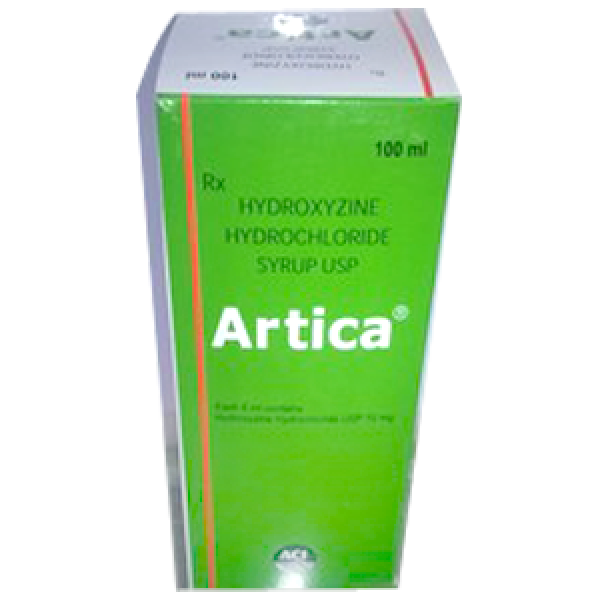
Artica Syrup 10 mg/5 ml (Hydroxyzine HCl) – ACI Limited
| Brand Name | Artica Syrup 10 mg/5 ml |
|---|---|
| Generic Name | Hydroxyzine Hydrochloride 10 mg/5 ml |
| Strength | 10 mg per 5 ml |
| Dosage Form | Oral Syrup |
| Manufacturer | ACI Limited, Bangladesh |
| Drug Class | First-generation Antihistamine / Anxiolytic / Antipruritic |
| Prescription Required | Yes (Rx) |
| Storage | Store below 30°C. Protect from light. Keep tightly closed. Do not freeze. |
1. About Artica Syrup (Hydroxyzine HCl 10 mg/5 ml)
Artica Syrup contains Hydroxyzine Hydrochloride 10 mg per 5 ml — a liquid oral formulation of the first-generation antihistamine hydroxyzine, manufactured by ACI Limited, Bangladesh. The syrup formulation is designed for paediatric patients who cannot swallow tablets, elderly patients requiring small, precise doses, and any patient who finds the liquid form more tolerable.
At 10 mg/5 ml concentration, Artica Syrup allows weight-based dosing in children using a measured 5 ml spoon or oral syringe. It provides the same antipruritic, anxiolytic, and sedative properties as the tablet forms, with onset of action in 15–30 minutes and duration of 4–6 hours per dose.
2. Mechanism of Action
Hydroxyzine competitively antagonises H1 histamine receptors both peripherally (skin mast cells — antipruritic) and centrally (limbic system — anxiolytic, sedative). Central H1 blockade accounts for its sedation and anxiolytic properties. Additional muscarinic antagonism contributes to drying secretions and the anticholinergic side effect profile. Metabolised to cetirizine (active metabolite) via CYP3A4/CYP2D6; half-life approximately 20 hours in adults and 7 hours in children (faster hepatic metabolism). Syrup provides equivalent bioavailability to tablets.
3. Indications
- Paediatric pruritus: Urticaria, atopic dermatitis, allergic skin reactions in children — weight-based dosing
- Paediatric anxiety and procedural sedation: Pre-procedure anxiety, MRI/procedure preparation in children
- Adults with swallowing difficulty: Elderly or post-surgical patients requiring liquid antihistamine
- Nausea and vomiting in children (antihistamine mechanism)
4. Dosage and Administration
Paediatric pruritus/anxiety (0.5–1 mg/kg per dose, QID):
- 10 kg child: 5–10 mg per dose = 2.5–5 ml of Artica Syrup
- 15 kg child: 7.5–15 mg per dose = ~4–8 ml of Artica Syrup
- 20 kg child: 10–20 mg per dose = 5–10 ml (may switch to Artica 10 mg tablet)
- Maximum paediatric dose: 50 mg/day (<6 years); 100 mg/day (6–12 years)
Adults (swallowing difficulty): 10–25 mg per dose = 5–12.5 ml, TDS–QID.
Shake well before use. Measure with graduated oral syringe or measuring spoon. Do not use household teaspoons (inaccurate volume).
5. Contraindications
- Hypersensitivity to hydroxyzine, cetirizine, or piperazine derivatives
- QTc prolongation risk
- Premature neonates (immature hepatic metabolism)
- Pregnancy (first trimester and near-term)
6. Warnings and Precautions
QTc prolongation: Same concern as tablets. Avoid in patients with QTc prolongation or on QTc-prolonging drugs.
Paradoxical CNS stimulation in children: Some children develop hyperactivity, irritability, or tremor instead of sedation — particularly with higher doses. Reduce dose if this occurs.
Sedation: Artica Syrup causes significant drowsiness. Children must be supervised and should not engage in activities requiring alertness after dosing.
Syrup sugar content: Contains excipients that may affect diabetic patients. Check the product leaflet for sugar content; consider sugar-free alternatives or tablets where available.
7. Side Effects
Common: Drowsiness, dry mouth, blurred vision, dizziness.
Paediatric: Paradoxical stimulation (excitability, tremor) in some children — dose-related.
Rare: QTc prolongation, anaphylaxis, seizures at very high doses.
8. Drug Interactions
- CNS depressants: Additive sedation with alcohol, opioids, benzodiazepines
- QTc-prolonging drugs: Avoid combination (amiodarone, azithromycin, haloperidol, ondansetron)
- Anticholinergics: Additive effects — dry mouth, urinary retention, constipation
9. Artica Syrup vs Artica Tablet
Artica Syrup (10 mg/5 ml) and Artica 10 mg Tablet contain identical amounts of hydroxyzine per dose (10 mg). The syrup is preferred for: children <10 kg or those unable to swallow tablets; patients requiring doses between 5–10 mg (measurable in ml); elderly with dysphagia. The tablet is preferred for: children >20 kg (convenient single tablet); adults; situations where sugar-free formulation is needed. Both have equivalent bioavailability and clinical efficacy.
10. Storage
- Store below 30°C. Protect from light. Do not freeze. Keep tightly closed.
- Once opened, use within the stated shelf life. Shake well before each use.
Frequently Asked Questions (FAQ)
Q1: What age is Artica Syrup suitable for?
Artica Syrup (Hydroxyzine 10 mg/5 ml) is used in children from approximately 1 year of age (though neonates and premature infants are excluded due to immature hepatic metabolism). It is most commonly used in children 1–12 years for pruritus (urticaria, atopic dermatitis) and pre-procedure anxiety. Below 1 year, hydroxyzine use should be under close specialist supervision only. Above 12 years or >40 kg, the tablet formulation is generally more practical and may be switched.
Q2: Can Artica Syrup be given at night for itching?
Yes — nocturnal dosing with Artica Syrup is a common practice for children with atopic dermatitis where nighttime itching disrupts sleep. A dose given 30 minutes before bedtime helps reduce nocturnal scratching and aids sleep onset via its sedative effect. The antipruritic effect lasts 4–6 hours, covering the first half of the night. For persistent nocturnal pruritus throughout the night, a second dose may be considered but should be discussed with the paediatrician. Morning alertness in children is usually adequate due to faster paediatric clearance (t½ ~7h vs ~20h in adults).
Q3: How do I measure the correct dose of Artica Syrup for my child?
Use a graduated oral syringe (5 ml or 10 ml) or a calibrated medicine cup — never a household teaspoon, which holds variable volumes (3–7 ml) making accurate dosing impossible. Calculate the dose as 0.5–1 mg/kg: for a 12 kg child this is 6–12 mg = 3–6 ml of Artica Syrup (10 mg/5 ml). Start at the lower end (0.5 mg/kg) and titrate based on response and tolerability. Document the dose and timing, and do not exceed recommended daily maximums.
Q4: Does Artica Syrup contain sugar or alcohol?
Artica Syrup contains excipients that may include sweetening agents to improve palatability in children. Patients with diabetes or phenylketonuria should check the product insert for specific excipient details. If sugar-free formulation is required (diabetic patient), discuss with the physician — the Artica 10 mg tablet formulation may be more suitable. Hydroxyzine syrup typically does not contain significant alcohol, but checking the batch-specific package insert for excipient content is recommended for strict dietary requirements.