
- Stock: Out Of Stock
- Brand: ACI Pharmaceuticals
- Product ID: Amoxicillin Trihydrate
🔒 100% Secure Payment | bKash | Nagad | SSLCommerz | COD
⭐ Become a FREE Member: 7% Extra Savings • Free Delivery • Refill Reminders • Priority Support
This Item is for pre order
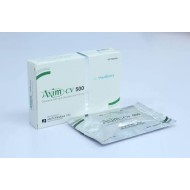
Avlomox 500 Capsule – Amoxicillin 500mg (ACI Limited Bangladesh)
| Brand Name | Avlomox 500 |
|---|---|
| Generic Name | Amoxicillin Trihydrate 500mg |
| Strength | 500mg per capsule |
| Dosage Form | Hard Gelatin Capsule |
| Manufacturer | ACI Limited, Bangladesh |
| Drug Class | Aminopenicillin (Beta-Lactam Antibiotic) |
| Prescription Required | Yes (Rx) |
| Storage | Below 25°C. Protect from moisture. Keep in original blister pack until use. |
1. About Avlomox 500 (Amoxicillin 500mg)
Avlomox 500 Capsule contains Amoxicillin Trihydrate 500mg, an aminopenicillin broad-spectrum antibiotic manufactured by ACI Limited, Bangladesh. Amoxicillin is one of the most widely prescribed antibiotics globally and remains the first-line treatment for numerous common bacterial infections. It works by inhibiting bacterial cell wall synthesis (binding penicillin-binding proteins PBP1 and PBP2), leading to bacterial cell lysis and death. The 500mg dose is the standard adult dose for most indications, offering a good balance between efficacy and side effect risk. Amoxicillin has excellent oral bioavailability (85–90%), good tissue penetration, and is well tolerated by most patients.
2. Indications
- Ear infections — acute otitis media (first-line, standard dose)
- Upper respiratory tract infections — acute bacterial sinusitis, strep throat (pharyngitis/tonsillitis)
- Lower respiratory tract infections — mild-to-moderate community-acquired pneumonia (CAP)
- Urinary tract infections — uncomplicated UTI and cystitis
- Dental infections — dental abscess, periodontal infection, acute necrotising gingivitis
- Helicobacter pylori eradication — component of triple/quadruple therapy
- Skin and soft tissue infections — impetigo, mild cellulitis (MSSA streptococcal)
- Typhoid and enteric fever — in sensitivity-confirmed cases
- Lyme disease (early) — primary treatment where tetracyclines are contraindicated
3. Standard Dosage
Adults and children >40kg: 500mg three times daily (TDS, every 8 hours) for standard infections. Duration: 5–7 days for most URTIs and skin infections; 7–10 days for UTI and dental infections; 10 days for strep throat (to prevent rheumatic fever); 7–14 days for pneumonia. High-dose amoxicillin (1g TDS): Used for suspected drug-resistant S. pneumoniae in pneumonia and sinusitis — significantly more effective for pneumococcal infections. Take with or without food — food reduces GI upset and slightly enhances clavulanate absorption (less relevant for plain amoxicillin, but taking with food is still advisable). Space doses as evenly as possible throughout the waking hours.
4. Amoxicillin vs Co-amoxiclav — When to Escalate
Amoxicillin is first-line for many infections but has important limitations — it is inactivated by beta-lactamase enzymes produced by many bacteria. Key decision points: Use plain amoxicillin first for uncomplicated strep throat, simple UTI, first-episode AOM, mild community pneumonia (no risk factors), Helicobacter pylori (as part of combination). Escalate to co-amoxiclav (Avloclav) when: failed amoxicillin (48–72h no improvement), suspected beta-lactamase producers (H. influenzae, S. aureus, Klebsiella, Bacteroides), bite wounds, diabetic foot infection, severe sinusitis with risk factors, or when local susceptibility data suggest high resistance. Empirically, roughly 15–30% of H. influenzae and nearly all S. aureus produce beta-lactamases — for infections where these organisms are common (AOM, SSTI, sinusitis), co-amoxiclav is often preferred from the outset.
5. Amoxicillin in H. pylori Eradication
Amoxicillin 1g BD is a core component of most H. pylori eradication regimens. Standard triple therapy: Amoxicillin 1g BD + Clarithromycin 500mg BD + PPI (omeprazole/pantoprazole) BD for 7–14 days. Bismuth quadruple therapy adds bismuth subsalicylate + tetracycline. Important: H. pylori eradication rates with triple therapy have fallen in many regions due to clarithromycin resistance (>20% resistance in Bangladesh). Quadruple or sequential therapy is increasingly preferred. Always complete the full course — partial treatment risks incomplete eradication and antibiotic resistance. Confirm eradication by urea breath test or stool antigen test at least 4 weeks after completing therapy.
6. Side Effects
Common: Diarrhoea, nausea (less than with co-amoxiclav — no clavulanate), oral candidiasis with prolonged use, skin rash. Important: Amoxicillin-associated rash — appears in 5–10% of patients, typically maculopapular (flat red spots), appearing on day 5–7. This is often NOT true penicillin allergy but a hypersensitivity rash — it is particularly common in patients with concurrent EBV (mononucleosis) infection. A true allergic rash (urticarial/wheals/angio-oedema) requires stopping and allergy evaluation. Rare but serious: Anaphylaxis (<0.05%), interstitial nephritis (long-term), C. difficile pseudomembranous colitis (uncommon).
7. Amoxicillin Use in Diabetic Patients
Amoxicillin 500mg is commonly used in diabetic patients for UTIs, dental infections, and mild skin infections. Key considerations: (1) Most uncomplicated UTIs in diabetic patients respond to standard antibiotics including amoxicillin, but local E. coli susceptibility is important — if local amoxicillin resistance exceeds 20%, co-amoxiclav or nitrofurantoin may be preferable for UTI; (2) For diabetic dental infections: amoxicillin 500mg TDS + metronidazole 400mg TDS for 5 days is the standard first-line combination for dental abscess; (3) Amoxicillin is generally safe with all standard diabetic medications — no significant interactions with metformin, insulin, SGLT2-inhibitors, or DPP4-inhibitors; (4) Monitor blood glucose during any significant infection — hyperglycaemia impairs antibiotic efficacy and wound healing; tight glycaemic control during infection is a clinical priority alongside antibiotic therapy.
Frequently Asked Questions (FAQ)
Q1: How does amoxicillin 500mg differ from 250mg, and which should I take?
The 500mg and 250mg doses differ in the amount of amoxicillin per capsule. 250mg (TDS): Used for mild infections in adults, and standard dosing for older children. Appropriate for uncomplicated UTI, mild respiratory infections, and mild skin infections in otherwise healthy adults. 500mg (TDS): Standard adult dose for most moderate infections — recommended by most guidelines including WHO Model Formulary. Preferred for sinusitis, lower respiratory tract infections, and dental infections. 1000mg (1g TDS): High-dose, reserved for suspected drug-resistant organisms (especially pneumococcal infections). Your doctor or pharmacist will prescribe the appropriate dose based on your infection type and severity. Taking 250mg instead of 500mg when 500mg is needed may lead to treatment failure.
Q2: Can I take amoxicillin 500mg with food?
Yes — amoxicillin can be taken with or without food. Unlike co-amoxiclav (where food improves clavulanate absorption), food does not significantly affect amoxicillin's pharmacokinetics. Taking it with food is still advisable as it reduces stomach upset (nausea, epigastric discomfort) which some patients experience. Take each dose at evenly spaced intervals throughout the day — TDS means approximately every 8 hours (e.g., 7am, 3pm, 11pm). Maintaining even spacing keeps blood levels above the minimum inhibitory concentration for longer periods, which is important for the time-dependent bactericidal activity of amoxicillin. Do not double up a dose if you miss one — simply take the next dose at the normal time.
Q3: I developed a rash after taking amoxicillin — am I allergic to penicillin?
Not necessarily — this is a very important distinction. Two types of amoxicillin-associated rashes must be distinguished: (1) Maculopapular (non-allergic) rash: flat, non-raised red spots, appearing days 5–7 of treatment, non-itchy or mildly itchy — NOT true allergy. This occurs in 5–10% of patients on amoxicillin and is caused by immune complex deposition, not IgE-mediated allergy. It resolves within days of stopping the antibiotic and does NOT mean you are penicillin-allergic. It is especially common in EBV (mononucleosis) infection. (2) Urticarial (allergic) rash: raised wheals (hives), immediate or within 1 hour, associated with angio-oedema, difficulty breathing, or anaphylaxis — this IS true allergy. Stop immediately and seek medical attention. If unsure which type you have, do not take the antibiotic again and consult your doctor. Incorrectly labelling oneself as "penicillin allergic" leads to use of less effective, more expensive, broader-spectrum alternatives and contributes to antibiotic resistance.
Q4: Why must I complete the full course of amoxicillin even if I feel better?
This is a critical principle of antibiotic use. Feeling better typically occurs within 48–72 hours when bacteria are suppressed but not yet eliminated. Stopping early: (1) Leaves a residual bacterial population that is more likely to be resistant — the sensitive bacteria die first; the slightly more resistant ones survive and multiply; (2) Leads to recurrence of infection, often requiring a stronger antibiotic; (3) Contributes to antibiotic resistance in your own microbiome and in the community. The recommended duration (e.g., 5–7 days for most infections, 10 days for strep throat) is based on clinical trial data showing the minimum time needed to eliminate the infection and prevent recurrence or complications. Strep throat specifically requires 10 days of amoxicillin to reliably prevent rheumatic fever — this is not negotiable.