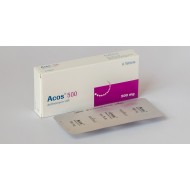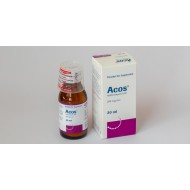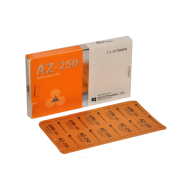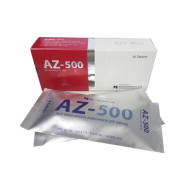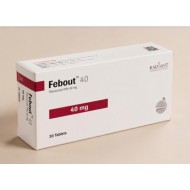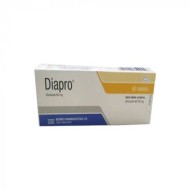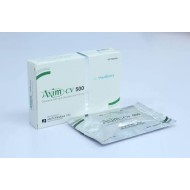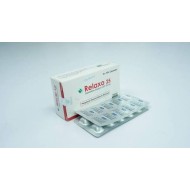
- Stock: In Stock
- Brand: Beximco Pharmaceutical
- Product ID: Azithromycin
🔒 100% Secure Payment | bKash | Nagad | SSLCommerz | COD
⭐ Become a FREE Member: 7% Extra Savings • Free Delivery • Refill Reminders • Priority Support
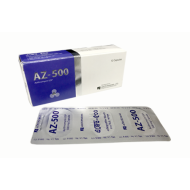
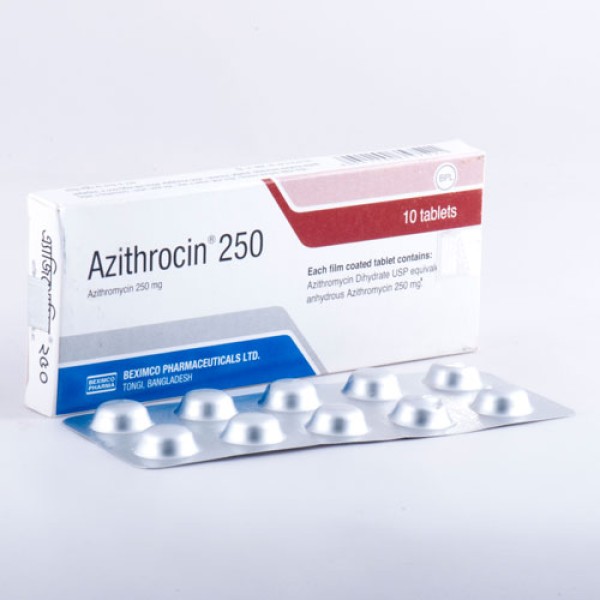
Azithrocin 250mg Tablet — Azithromycin 250mg | Beximco Pharmaceuticals
| Generic Name | Azithromycin Dihydrate 250 mg |
| Dosage Form | Film-coated Tablet |
| Manufacturer | Beximco Pharmaceuticals Ltd. |
| Therapeutic Class | Macrolide Antibiotic (Azalide subclass) |
| Spectrum | Broad-spectrum: Gram-positive, atypical organisms (Mycoplasma, Chlamydia, Legionella), Gram-negative (H. influenzae, M. catarrhalis) |
| Availability | In Stock — Available Online |
Overview
Azithrocin 250mg contains Azithromycin 250 mg, a broad-spectrum macrolide antibiotic of the azalide subclass. Azithromycin is distinguished by its exceptionally long tissue half-life (~68 hours), enabling short 3–5 day treatment courses that achieve clinical outcomes equivalent to 7–10 day courses of other antibiotics. It has excellent intracellular penetration — concentrating in phagocytes (neutrophils, macrophages) and reaching tissues at concentrations far exceeding plasma levels — making it particularly effective against atypical respiratory pathogens that reside intracellularly. It is one of the most prescribed antibiotics globally for community-acquired respiratory infections.
Mechanism of Action
Azithromycin binds irreversibly to the 50S ribosomal subunit of bacterial ribosomes, specifically to the 23S rRNA, blocking the translocation step of protein synthesis. This is bacteriostatic at standard doses (bactericidal at high concentrations). Its unique pharmacokinetic profile — extremely high tissue distribution (Vd ~31 L/kg), high tissue:plasma concentration ratio, and prolonged post-antibiotic effect — means bacteria remain exposed to inhibitory concentrations for days after the last dose.
Indications
- Community-Acquired Pneumonia (CAP) — covers typical (S. pneumoniae) and atypical (Mycoplasma, Chlamydophila, Legionella) pathogens
- Acute Exacerbation of Chronic Bronchitis (AECB)
- Acute Bacterial Sinusitis
- Pharyngitis/Tonsillitis — in penicillin-allergic patients (S. pyogenes)
- Skin and Soft Tissue Infections — mild-moderate (S. aureus, S. pyogenes)
- Sexually Transmitted Infections (STIs) — Chlamydia trachomatis (urethritis, cervicitis); non-gonococcal urethritis
- Typhoid / Enteric Fever (mild cases) — in areas with fluoroquinolone-resistant strains
Dosage & Administration
| Indication | Dose | Duration | Regimen |
|---|---|---|---|
| Community-Acquired Pneumonia (adults) | 500 mg Day 1, then 250 mg Days 2–5 | 5 days | 2× Azithrocin 250 on Day 1, then 1× daily |
| Mild-Moderate CAP (Z-pack) | 500 mg once daily | 3 days | Use Azithrocin 500mg tablet |
| Acute Bacterial Sinusitis | 500 mg once daily | 3 days | — |
| Pharyngitis/Tonsillitis | 500 mg Day 1, then 250 mg Days 2–5 | 5 days | — |
| Skin & Soft Tissue Infections | 500 mg Day 1, then 250 mg Days 2–5 | 5 days | — |
| Chlamydia (STI) | 1000 mg (4 tablets) stat | Single dose | 4× Azithrocin 250 tablets once |
Can be taken with or without food. Complete the full course even if symptoms improve. For the standard CAP regimen: take 2 tablets (500mg) on Day 1, then 1 tablet (250mg) once daily on Days 2–5.
Special Note for Diabetic Patients
Azithromycin has no direct effect on blood glucose. However, any serious infection raises blood glucose in diabetic patients through stress hormone release — treating the infection promptly will help restore glycaemic control. Also note: Azithromycin can cause QT prolongation — use with caution in patients taking medications that also prolong QT (e.g., some antidiabetic medications and cardiac drugs). Consult your physician.
Drug Interactions
| Drug | Interaction |
|---|---|
| Warfarin | May potentiate anticoagulant effect — monitor INR closely |
| QT-prolonging drugs (amiodarone, haloperidol, hydroxychloroquine) | Additive QT prolongation — avoid combination if possible |
| Cyclosporine | Azithromycin may increase cyclosporine levels — monitor |
| Antacids (Al/Mg) | Reduce azithromycin peak concentration slightly — separate by 2 hours |
| Ergot alkaloids | Risk of ergotism — avoid combination |
Side Effects
- Common (GI): Nausea, diarrhoea, abdominal pain, vomiting (most common — usually mild and transient)
- Cardiac: QT prolongation (rare but serious — risk increases with other QT-prolonging drugs or pre-existing cardiac disease)
- Hepatic: Elevated liver enzymes; rare cholestatic jaundice
- Skin: Rash; rare Stevens-Johnson syndrome
- Hearing: Reversible tinnitus and hearing loss with prolonged/high-dose use
Contraindications
- Hypersensitivity to azithromycin or other macrolides (erythromycin, clarithromycin)
- History of cholestatic jaundice/hepatic dysfunction with prior azithromycin use
- Significant QT prolongation or known arrhythmia risk
Storage
- Store below 30°C in a dry place, protected from light. Keep out of reach of children.
FAQ
Q1: Why is my doctor prescribing only 3–5 days of Azithrocin when other antibiotics require 7–10 days?
Azithromycin's unique pharmacokinetic profile means it accumulates at very high concentrations in infected tissues and is released slowly over several days after the last dose. After a 5-day course, therapeutic tissue concentrations persist for 5–7 additional days. This prolonged tissue effect means 3–5 day courses achieve the same clinical cure rates as 7–10 day courses of most other antibiotics.
Q2: Can I take Azithrocin with food?
Yes. Unlike some macrolides (e.g., erythromycin), azithromycin tablets can be taken with or without food. Food may help reduce nausea, which is the most common side effect.
Q3: Is azithromycin safe in patients with diabetes?
Yes, azithromycin itself does not affect blood glucose. However, it can prolong the QT interval on the heart's ECG. Some diabetes patients have underlying cardiac disease — consult your physician if you have a history of heart rhythm problems.
Q4: I feel better after 2 days — can I stop taking Azithrocin?
No. Always complete the full prescribed course. Stopping early allows surviving bacteria to multiply and develop antibiotic resistance. Azithromycin's prolonged tissue distribution means it continues working even after the last dose.
Medical Disclaimer: Educational information only. Antibiotics must be used only as prescribed by a licensed physician.