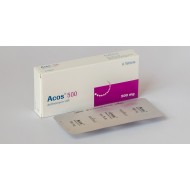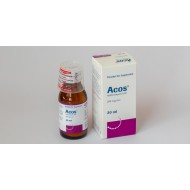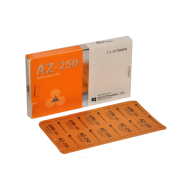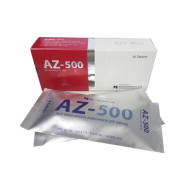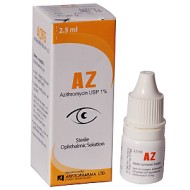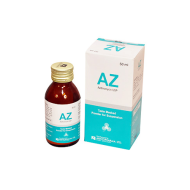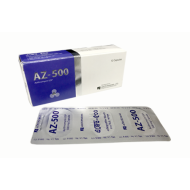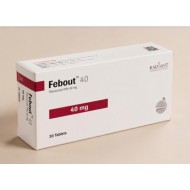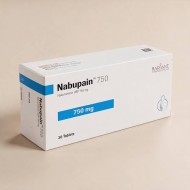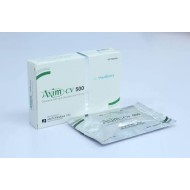
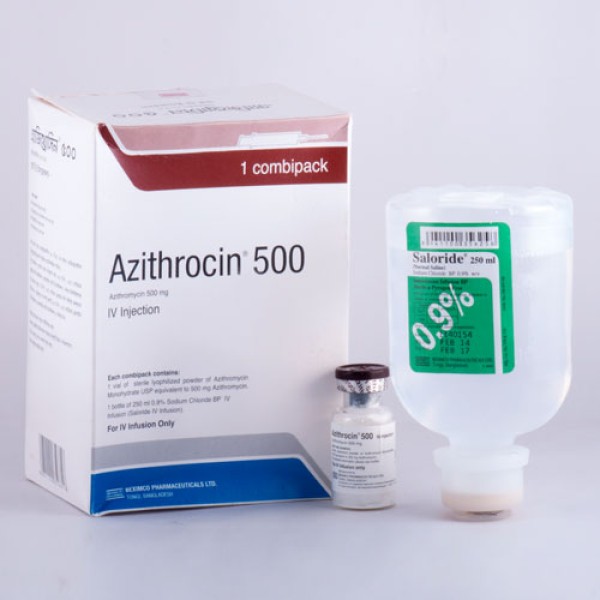
- Stock: In Stock
- Brand: Beximco Pharmaceutical
- Product ID: Azithromycin
🔒 100% Secure Payment | bKash | Nagad | SSLCommerz | COD
⭐ Become a FREE Member: 7% Extra Savings • Free Delivery • Refill Reminders • Priority Support
Azithrocin 500mg IV — Azithromycin 500mg for Intravenous Infusion | Beximco Pharmaceuticals
| Generic Name | Azithromycin 500 mg (as lyophilised powder for IV infusion) |
| Dosage Form | Powder for Solution for IV Infusion (Injection) |
| Manufacturer | Beximco Pharmaceuticals Ltd. |
| Therapeutic Class | Macrolide Antibiotic (Azalide) — Parenteral |
| Route | Intravenous (IV) infusion only — NOT for IM, subcutaneous, or bolus IV injection |
| Setting | Hospital / Clinic use — requires physician/nurse administration |
| Availability | In Stock — Available Online |
Overview
Azithrocin 500mg IV is the parenteral (intravenous) formulation of Azithromycin 500mg, supplied as a lyophilised powder to be reconstituted and administered as an IV infusion. It is indicated for hospitalised patients with severe community-acquired pneumonia (CAP) or other serious infections where oral therapy is not possible or sufficient. IV azithromycin provides rapid attainment of therapeutic tissue concentrations and is used as part of standard CAP combination regimens (typically with a beta-lactam). Patients are transitioned to oral azithromycin (Azithrocin 500mg tablet) as soon as clinically appropriate — the "IV-to-oral switch" strategy that reduces hospitalisation duration and costs.
When IV vs Oral Azithromycin is Used
| Situation | Route |
|---|---|
| Outpatient, mild-moderate CAP | Oral (Azithrocin 500mg tablet) |
| Hospitalised patient, can swallow | Start IV → switch to oral when improving |
| ICU / severely ill patient | IV (combined with IV beta-lactam) |
| Unable to take oral medications | IV for full course |
| GI absorption compromised | IV until enteral route restored |
Indications
- Severe Community-Acquired Pneumonia (CAP) — PSI class III–V; in combination with a beta-lactam (ceftriaxone, co-amoxiclav) to cover atypical organisms
- CAP Requiring Hospitalisation — patients who cannot tolerate oral medications
- Pelvic Inflammatory Disease (PID) — parenteral regimen (with metronidazole and cefoxitin)
- Severe Skin & Soft Tissue Infections — when IV antibiotic is warranted
Dosage & Administration
| Indication | Dose | Frequency | Duration | Infusion Rate |
|---|---|---|---|---|
| Severe CAP | 500 mg IV | Once daily | 2–5 days (then switch to oral) | Over 60 minutes (1 mg/mL) or over 3 hours (2 mg/mL) |
| Pelvic Inflammatory Disease | 500 mg IV | Once daily | 1–2 days (then switch to oral 250mg BD × 7 days) | Over 60 minutes |
Reconstitution: Add 4.8 mL sterile water for injection to the vial → resulting 100 mg/mL solution. Further dilute in 250 mL (1 mg/mL) or 500 mL (2 mg/mL) NaCl 0.9% or glucose 5%. Infuse over 60 minutes (1 mg/mL) or 3 hours (2 mg/mL). Never give as bolus IV or IM injection.
Important Clinical Notes
- QT Prolongation: IV route carries higher QT prolongation risk than oral — monitor ECG in patients with pre-existing cardiac disease, electrolyte disturbances (hypokalaemia, hypomagnesaemia), or on concurrent QT-prolonging drugs
- IV-to-Oral Switch: Transition to oral azithromycin as soon as patient can take oral medications — equivalent bioavailability means clinical outcomes are maintained
- Combination Therapy in Severe CAP: IV azithromycin should be combined with a beta-lactam (e.g., IV ceftriaxone) in severe CAP per BTS/IDSA guidelines — monotherapy is not recommended for hospitalised severe pneumonia
- Compatibility: Do not mix with other drugs in the same IV line — flush line before and after infusion
Special Note for Diabetic Patients
Diabetic patients with severe pneumonia are at high risk of hyperglycaemic crises (DKA, HHS) triggered by the infection and physiological stress response. IV azithromycin helps control the underlying infection rapidly. Monitor blood glucose closely during hospitalisation and adjust insulin as needed. Inform the treating physician of all current diabetes medications.
Side Effects
- Local: Injection site pain, phlebitis (common with IV infusion)
- GI: Nausea, vomiting, diarrhoea, abdominal pain
- Cardiac: QT prolongation, ventricular arrhythmia (higher risk IV vs oral)
- Hepatic: Elevated liver enzymes, cholestatic jaundice (rare)
Storage
- Store unreconstituted vials below 30°C, protected from light. Reconstituted solution: use within 24 hours at 30°C or within 7 days if refrigerated at 5°C. Do not freeze reconstituted solution.
FAQ
Q1: Can Azithrocin 500mg IV be purchased for home use?
The IV formulation requires reconstitution, IV access (cannula), and trained administration — it is not intended for self-administration at home. It is typically purchased by hospitals, clinics, or nursing homes. If a physician has prescribed home IV therapy with nursing support, ensure a trained healthcare professional administers the infusion.
Q2: When can a patient switch from IV to oral azithromycin?
The IV-to-oral switch is appropriate when the patient shows clinical improvement (reducing fever, improving oxygen saturation, tolerating oral intake, haemodynamically stable). This typically occurs after 2–3 days of IV therapy. Oral azithromycin has approximately 37% bioavailability — equivalent clinical outcomes to IV at appropriate doses.
Q3: Why must azithromycin IV be infused slowly over 1–3 hours?
Rapid IV infusion of azithromycin causes severe local reactions (pain, phlebitis) and increases the risk of QT prolongation and cardiac arrhythmia. The 60-minute minimum infusion rate is mandatory to ensure safe administration.
Medical Disclaimer: For professional healthcare use only. IV azithromycin must be prescribed and administered by qualified medical personnel in an appropriate clinical setting.