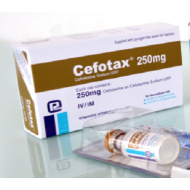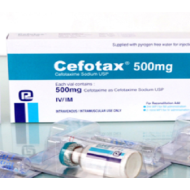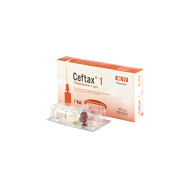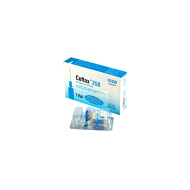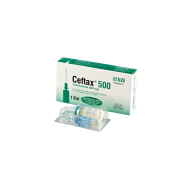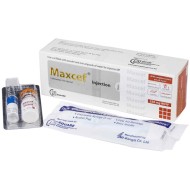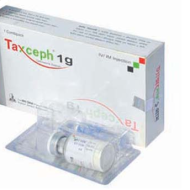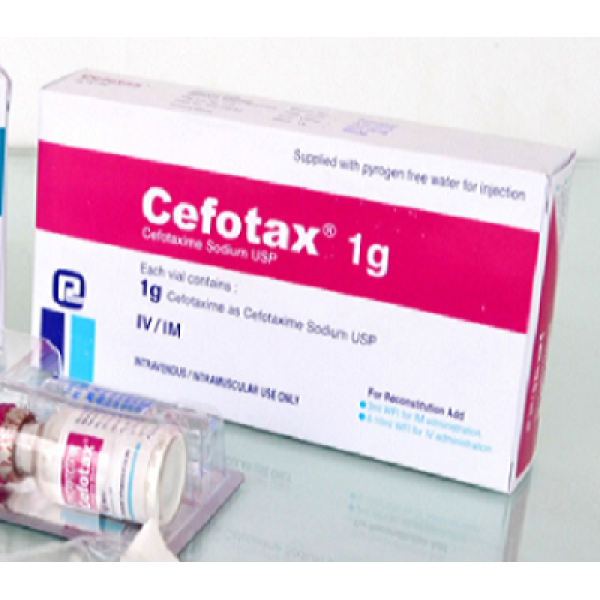
- Stock: Out Of Stock
- Brand: Renata
- Product ID: Cefotaxime
🔒 100% Secure Payment | bKash | Nagad | SSLCommerz | COD
⭐ Become a FREE Member: 7% Extra Savings • Free Delivery • Refill Reminders • Priority Support
This Item is for pre order
Cefotax 1gm IM/IV Injection — Cefotaxime 1g | Beximco Pharmaceuticals
| Generic Name | Cefotaxime Sodium 1 g (1000 mg) |
| Dosage Form | Powder for Injection (IM/IV) |
| Drug Class | Third-Generation Cephalosporin (Beta-lactam Antibiotic) |
| Manufacturer | Beximco Pharmaceuticals Ltd. |
| Prescription Status | Prescription Only — Hospital / Clinical Use |
| Route | Intramuscular (IM) or Intravenous (IV) |
Overview
Cefotax 1gm contains Cefotaxime Sodium 1g — the standard adult dose of this third-generation cephalosporin antibiotic and the most commonly prescribed strength for hospitalised patients with serious bacterial infections. Cefotaxime 1g every 8–12 hours is the backbone of empirical antibiotic therapy for community-acquired pneumonia, complicated urinary tract infections, and intra-abdominal infections in hospitals across Bangladesh. For life-threatening infections including bacterial meningitis and severe sepsis, doses are escalated to 2g every 4–6 hours. Cefotaxime achieves outstanding tissue penetration, including the CSF, and provides reliable coverage against the Enterobacteriaceae responsible for the majority of Gram-negative hospital infections.
Mechanism of Action
Cefotaxime inhibits bacterial cell wall synthesis by binding penicillin-binding proteins (PBPs) and blocking peptidoglycan transpeptidation — causing osmotic lysis and bacterial death. Its acetyl group enables greater resistance to beta-lactamase degradation than first and second generation cephalosporins, providing enhanced Gram-negative coverage. An active desacetyl metabolite provides additional antibacterial activity synergistically. Not active against MRSA, Enterococcus, Pseudomonas aeruginosa, ESBL producers, or atypical organisms.
Spectrum of Activity
| Organism Type | Coverage | Key Pathogens |
|---|---|---|
| Gram-positive aerobes | Good | S. pneumoniae, S. aureus (MSSA), streptococci |
| Gram-negative aerobes | Excellent | E. coli, Klebsiella, Proteus, H. influenzae, N. meningitidis, N. gonorrhoeae |
| Anaerobes | Limited | Add metronidazole for intra-abdominal / polymicrobial coverage |
| MRSA | None | Use vancomycin or linezolid |
| Pseudomonas | None | Use ceftazidime or piperacillin-tazobactam |
| ESBL producers | None | Use carbapenem (meropenem, imipenem) |
Indications
- Community-acquired pneumonia (CAP) — severe CAP requiring hospitalisation
- Hospital-acquired pneumonia (HAP) — Gram-negative HAP (when Pseudomonas not suspected)
- Bacterial Meningitis — first-line empirical therapy (2g dose); excellent CSF penetration
- Septicaemia / Bacteraemia — empirical IV therapy for systemic infection
- Complicated UTI / Pyelonephritis — Gram-negative upper UTIs requiring IV treatment
- Intra-abdominal infections — peritonitis, cholangitis, liver abscess (with metronidazole)
- Diabetic foot infections — moderate to severe, with systemic signs or Gram-negative pathogens
- Spontaneous bacterial peritonitis (SBP)
- Gynaecological infections — PID, post-partum infections
Dosage and Administration
| Indication | Adult Dose | Frequency | Route |
|---|---|---|---|
| Moderate infections (pneumonia, UTI, skin) | 1 g | Every 8–12 hours | IV or IM |
| Severe infections / sepsis | 2 g | Every 6–8 hours | IV |
| Bacterial meningitis | 2 g | Every 4–6 hours | IV |
| Uncomplicated gonorrhoea | 500 mg–1 g | Single dose | IM |
| Renal impairment (CrCl <20 mL/min) | Halve dose | As above | IV/IM |
Reconstitute with 4 mL sterile water for IV injection or compatible diluent. IV: administer over 3–5 minutes (slow IV push) or dilute in 50–100 mL NS/D5W and infuse over 20–60 minutes. IM: reconstitute with 1% lidocaine (where permitted) to reduce injection site pain. Maximum daily dose 12 g/day in life-threatening infections under specialist guidance.
Critical Considerations for Diabetic Patients
- When to escalate to cefotaxime: Diabetic patients with skin or foot infections not responding to oral antibiotics within 48 hours, any signs of systemic infection (fever, rigors, raised white cell count), spreading cellulitis, suspected bone involvement, or compromised wound healing with systemic features require hospitalisation and IV cefotaxime
- Glycaemic management during IV antibiotic therapy: Sepsis and serious bacterial infection cause profound insulin resistance — target blood glucose 7–10 mmol/L in critically ill diabetic patients using IV insulin infusion; intensive monitoring with point-of-care testing every 1–2 hours in ICU
- Renal function — mandatory assessment: Diabetic nephropathy affects many Bangladeshi diabetic patients — always check serum creatinine and eGFR before prescribing cefotaxime; dose reduction is required if eGFR <20 mL/min to avoid neurotoxicity
- Antibiotic stewardship: Cefotaxime is a broad-spectrum agent; use should be guided by culture results where possible, with de-escalation to a narrower-spectrum antibiotic once the causative organism and sensitivity are known
- ESBL consideration: Diabetic patients with recurrent UTIs or prior antibiotic exposure may harbour ESBL-producing E. coli or Klebsiella — cefotaxime is ineffective against ESBL producers; if urine culture shows resistance, switch to carbapenem (meropenem or imipenem)
Side Effects
| Side Effect | Frequency | Notes |
|---|---|---|
| Injection site pain, phlebitis (IV) | Common | Rotate IV sites; slow infusion reduces phlebitis |
| Diarrhoea, nausea, vomiting | Common | Usually mild; contact physician if severe/bloody |
| Skin rash, urticaria | Uncommon | Stop and assess; allergy review required |
| Anaphylaxis | Rare | ~1–2% cross-reactivity with penicillin allergy; have emergency resuscitation available |
| C. difficile colitis | Uncommon | Watery/bloody diarrhoea during or after course — stop and contact physician |
| Elevated LFTs, eosinophilia | Uncommon (transient) | Monitor LFTs in prolonged courses |
| Neurotoxicity (encephalopathy, seizures) | Rare | Risk increased with high doses in renal impairment — reduce dose in CKD |
Contraindications
- Known hypersensitivity to cefotaxime or any cephalosporin
- History of severe immediate hypersensitivity to penicillins (anaphylaxis/angioedema) — use with extreme caution; consider alternative if available
Storage
Store unreconstituted vials below 25°C, protected from light and moisture. Once reconstituted, use immediately or store at 2–8°C and use within 24 hours. Discard any unused portion. Keep out of reach of children.
FAQ
Q: My diabetic father has been admitted with a severe leg infection. The doctor prescribed IV cefotaxime. What should our family know?
IV cefotaxime is appropriate for serious diabetic soft tissue or foot infections that require hospitalisation. It covers the common Gram-positive (streptococci, MSSA S. aureus) and Gram-negative organisms causing these infections. The most important things for families to know: (1) blood glucose will likely be elevated during infection and requires intensive monitoring and IV insulin — this is expected and is being managed by the team; (2) a wound swab should be sent for culture before starting antibiotics to confirm the organism and guide therapy; (3) if there is no improvement within 48–72 hours, the culture result may indicate the need to change antibiotics or broaden coverage; (4) diabetic foot infections often require wound debridement and specialist wound care alongside antibiotics.
Q: Can cefotaxime treat MRSA or drug-resistant infections?
No — cefotaxime has no activity against MRSA (methicillin-resistant Staphylococcus aureus), ESBL-producing bacteria (E. coli or Klebsiella resistant to most cephalosporins), or Pseudomonas aeruginosa. If a diabetic patient does not respond to cefotaxime or the culture shows resistance, the physician will switch to appropriate agents — vancomycin or linezolid for MRSA, carbapenem (meropenem/imipenem) for ESBL producers, piperacillin-tazobactam or ceftazidime for Pseudomonas.
Medical Disclaimer: This information is for educational purposes only. Cefotaxime is a hospital-use injectable antibiotic requiring physician prescription and administration by trained healthcare personnel. Diabetic patients with signs of serious infection require immediate emergency medical evaluation. Prescription required.