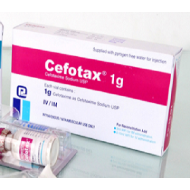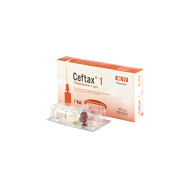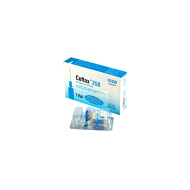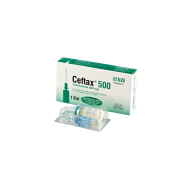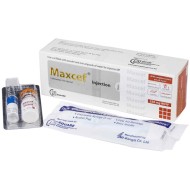

- Stock: In Stock
- Brand: Renata
- Product ID: Cefotaxime
🔒 100% Secure Payment | bKash | Nagad | SSLCommerz | COD
⭐ Become a FREE Member: 7% Extra Savings • Free Delivery • Refill Reminders • Priority Support
This Item is for pre order
Cefotax 250mg IM/IV Injection — Cefotaxime 250mg | Beximco Pharmaceuticals
| Generic Name | Cefotaxime Sodium 250 mg |
| Dosage Form | Powder for Injection (IM/IV) |
| Drug Class | Third-Generation Cephalosporin (Beta-lactam Antibiotic) |
| Manufacturer | Beximco Pharmaceuticals Ltd. |
| Prescription Status | Prescription Only — Hospital / Clinical Use |
| Route | Intramuscular (IM) or Intravenous (IV) |
Overview
Cefotax 250mg contains Cefotaxime Sodium — a third-generation cephalosporin antibiotic with broad-spectrum activity against both Gram-positive and Gram-negative bacteria, including many that are resistant to earlier generation cephalosporins and penicillins. Cefotaxime has excellent tissue penetration, including the blood-brain barrier (making it effective for bacterial meningitis), and is used extensively in hospitals for serious infections requiring parenteral therapy. The 250mg strength is used for moderate infections and in paediatric dosing. Cefotaxime is particularly valuable in diabetic patients with severe infections — pneumonia, complicated urinary tract infections, bacteraemia, and diabetic foot infections with systemic involvement — where oral antibiotics are insufficient and broad Gram-negative coverage is essential.
Mechanism of Action
Cefotaxime, like all beta-lactams, inhibits bacterial cell wall synthesis by binding to penicillin-binding proteins (PBPs) and blocking transpeptidation of peptidoglycan — leading to cell lysis and bacterial death. As a third-generation cephalosporin, cefotaxime has enhanced stability to many beta-lactamase enzymes compared to first and second generation agents, providing improved activity against Enterobacteriaceae (including E. coli, Klebsiella, Proteus) and streptococci, while retaining useful activity against S. aureus (MSSA). It is inactive against MRSA, Enterococcus, Pseudomonas aeruginosa, and ESBL-producing organisms.
Indications
- Pneumonia — community-acquired and hospital-acquired pneumonia (covers Streptococcus pneumoniae, H. influenzae, Gram-negative bacilli)
- Bacterial Meningitis — first-line for Gram-negative and streptococcal meningitis; excellent CSF penetration
- Septicaemia / Bacteraemia — systemic bacterial infection requiring IV antibiotics
- Urinary Tract Infections — complicated UTIs, pyelonephritis unresponsive to oral therapy
- Intra-abdominal Infections — peritonitis, biliary tract infections (often combined with metronidazole)
- Diabetic Foot Infections — moderate-severe infections with suspected Gram-negative involvement (often combined with metronidazole for anaerobic coverage)
- Neonatal infections — neonatal sepsis, meningitis (safe in neonates)
- Gonorrhoea — single-dose treatment
- Gynaecological infections — pelvic inflammatory disease, post-operative infections
Dosage and Administration
| Indication | Adult Dose | Frequency |
|---|---|---|
| Moderate infections | 1 g | Every 8–12 hours IV/IM |
| Severe infections (sepsis, meningitis) | 2 g | Every 4–6 hours IV |
| Uncomplicated UTI | 1 g | Single dose or BD |
| Gonorrhoea | 500 mg–1 g | Single dose IM |
| Paediatric (≥50 kg) | Adult doses | As above |
| Paediatric (under 50 kg) | 50–200 mg/kg/day | Divided every 6–8 hours |
| Neonates | 50 mg/kg/day | Every 12 hours |
Reconstitute powder with appropriate sterile water for injection or compatible diluent per hospital protocol. Administer IV by slow injection (over 3–5 minutes) or infusion (over 20–60 minutes) for high doses. IM injections may be painful — use lidocaine as diluent where permitted by local protocol. Adjust dose in renal impairment (CrCl <20 mL/min — halve dose or extend interval).
Critical Notes for Diabetic Patients
- Diabetic infections requiring IV cefotaxime: Diabetic patients develop severe infections faster than non-diabetic patients — impaired neutrophil function, peripheral vascular disease, and neuropathy all allow infections to progress rapidly to bacteraemia and sepsis. Signs requiring hospital admission and IV antibiotics include: fever >38°C, rapidly spreading cellulitis, foot infection with bone involvement, systemic unwellness, or failure of oral antibiotics
- Hyperglycaemia during severe infection: Sepsis causes profound insulin resistance and hyperglycaemia — blood glucose typically rises significantly; continuous glucose monitoring and IV insulin infusion are standard for hospitalised diabetic patients on IV antibiotics
- Polymicrobial diabetic foot infections: Severe diabetic foot infections often involve multiple organisms including Gram-negative bacilli (E. coli, Klebsiella, Proteus) and anaerobes — cefotaxime plus metronidazole (or cefotaxime alone for purely Gram-positive/Gram-negative aerobic infections) provides appropriate coverage; microbiological guidance is essential
- Renal dosing: Diabetic nephropathy is common — always check eGFR before prescribing cefotaxime; dose reduction required if CrCl <20 mL/min
Side Effects
| Side Effect | Frequency |
|---|---|
| Injection site pain, phlebitis (IV) | Common |
| Diarrhoea, nausea | Common |
| Hypersensitivity reactions — rash, urticaria | Uncommon |
| Anaphylaxis (cross-reactivity with penicillins ~1–2%) | Rare |
| C. difficile-associated diarrhoea (CDAD) | Uncommon (all broad-spectrum antibiotics) |
| Elevated LFTs, transient eosinophilia | Uncommon |
| Neurotoxicity (high doses in renal impairment) | Rare |
Contraindications
- Known hypersensitivity to cefotaxime or cephalosporins
- History of severe immediate penicillin allergy (anaphylaxis) — use with caution; ~1–2% cross-reactivity
Storage
Store unreconstituted vials below 25°C, protected from light. Once reconstituted, use immediately or within the time frame specified in hospital protocols (typically within 6 hours at room temperature or 24 hours refrigerated). Keep out of reach of children.
Medical Disclaimer: This information is for educational purposes only. Cefotaxime is a hospital-use injectable antibiotic — administration requires trained healthcare personnel. Diabetic patients with signs of severe infection must seek emergency medical care. Prescription required.