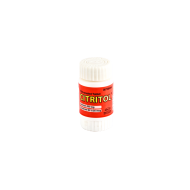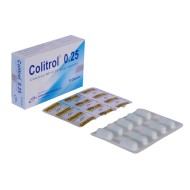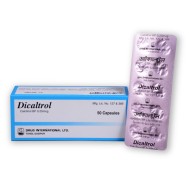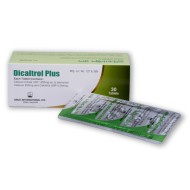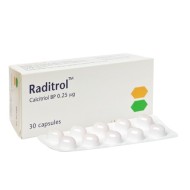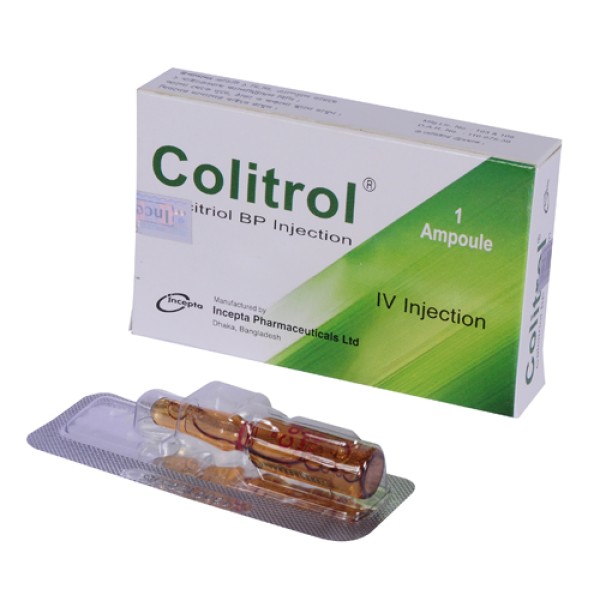
- Stock: Out Of Stock
- Brand: Incepta Pharmaceuticals
- Product ID: Calcitriol
Available Options
🔒 100% Secure Payment | bKash | Nagad | SSLCommerz | COD
⭐ Become a FREE Member: 7% Extra Savings • Free Delivery • Refill Reminders • Priority Support
This Item is for pre order
Colitrol Injection 1mcg/ml — Calcitriol IV Injection (Active Vitamin D3) | Beximco Pharmaceuticals
| Generic Name | Calcitriol 1 mcg per ml (Injection) |
| Chemical Name | 1α,25-Dihydroxycholecalciferol (1,25-(OH)₂D₃) |
| Dosage Form | Solution for IV Injection (ampoule) |
| Route | Intravenous (IV) — administered at end of dialysis session, or slow IV push |
| Manufacturer | Beximco Pharmaceuticals Ltd. |
| Therapeutic Class | Vitamin D Analogue — Active Vitamin D3 (IV Formulation) |
| Primary Use | Secondary hyperparathyroidism in haemodialysis / peritoneal dialysis patients |
Overview
Colitrol Injection contains Calcitriol 1mcg/ml — the active form of Vitamin D3 in injectable solution for intravenous administration. The IV formulation is specifically used in dialysis patients who require reliable, controlled delivery of calcitriol to suppress secondary hyperparathyroidism (2° HPT) — the most common metabolic complication of end-stage renal disease. Unlike oral calcitriol capsules, IV administration at the end of each dialysis session achieves rapid, predictable peak levels that are highly effective at PTH suppression. It bypasses any potential absorption issues (common in uraemic patients with GI disturbances) and can be administered under clinical supervision at the dialysis centre.
Why IV Calcitriol in Dialysis?
| Feature | Oral Calcitriol (Colitrol Cap) | IV Calcitriol (Colitrol Inj) |
|---|---|---|
| Compliance | Patient-dependent; may be missed | Given at dialysis centre — 100% compliance |
| Absorption | Variable in uraemic GI dysfunction | Bypasses GI tract — 100% bioavailability |
| Peak PTH suppression | Gradual | Rapid — high peak level more effective at suppressing PTH |
| Clinical supervision | No | Yes — given under nurse supervision at dialysis unit |
| Calcium monitoring | Outpatient monitoring | Monitored at each dialysis session |
Indications
- Secondary Hyperparathyroidism in haemodialysis patients — most common indication; prevents and treats elevated PTH and renal osteodystrophy
- Secondary Hyperparathyroidism in peritoneal dialysis patients — IV at clinic visits or oral calcitriol
- Advanced CKD (Stage 4–5, pre-dialysis) — severe 2° HPT not controlled with oral calcitriol
- Hypoparathyroidism — severe or refractory cases requiring IV treatment
Dosage & Administration
| Indication | Starting Dose | Frequency | Route |
|---|---|---|---|
| Dialysis — Secondary HPT (PTH 300–600 pg/ml) | 0.5–1.0 mcg | 3× per week at end of dialysis | IV bolus over 2 min |
| Dialysis — Severe 2° HPT (PTH >600 pg/ml) | 1–2 mcg | 3× per week | IV bolus; pulse therapy |
| Hypoparathyroidism (IV) | 0.5–1 mcg | As directed by physician | Slow IV push |
Pulse IV therapy: Higher intermittent doses (1–4 mcg × 3/week) are more effective at suppressing elevated PTH than the same total dose given daily — this "pulse" approach is preferred for severe 2° HPT. Administer as a rapid IV bolus directly into the venous return port of the dialysis circuit at the end of each session.
Dose titration: Adjust based on PTH, serum calcium, and phosphate levels. If serum calcium rises above 2.6 mmol/L or phosphate above 1.78 mmol/L, withhold dose until levels normalise.
Special Note for Diabetic Patients on Dialysis
Diabetic nephropathy is the leading cause of end-stage renal disease in Bangladesh — the majority of dialysis patients in many centres are diabetic. Calcitriol IV therapy is standard care for diabetic dialysis patients to prevent renal osteodystrophy and secondary hyperparathyroidism. Key points: (1) Calcium-phosphate product must be closely monitored — hyperphosphataemia is common in diabetics on dialysis; (2) Phosphate binders must be prescribed alongside calcitriol to prevent dangerous calcium-phosphate product elevation; (3) Tight glycaemic control remains critical even on dialysis — insulin requirements often change significantly as CKD progresses; (4) Calcitriol injection does not affect blood glucose directly.
Monitoring During IV Calcitriol Therapy
- Serum calcium: Check before each dialysis session initially; maintain within normal limits
- Serum phosphate: Target <1.78 mmol/L; ensure phosphate binders are adequate
- Calcium × Phosphate product: Keep below 4.4 mmol²/L²
- PTH (iPTH): Monthly initially; target 2–9× upper limit of normal for CKD stage
- Clinical symptoms: Nausea, weakness, polyuria may indicate hypercalcaemia
Side Effects
- Hypercalcaemia: The primary risk — dose-limiting; causes nausea, weakness, confusion, polyuria
- Hyperphosphataemia: Worsens vascular calcification in dialysis patients
- Over-suppression of PTH (adynamic bone disease): PTH that is too low (below 2× ULN in dialysis) indicates over-treatment — reduce dose
- Metastatic/Vascular calcification: With prolonged high doses and uncontrolled phosphate
Storage
Store ampoules at 15–25°C. Protect from light. Do not freeze. Use immediately after opening ampoule. Do not mix with other medications in the same syringe.
FAQ
Q1: Why is calcitriol given at the end of the dialysis session, not the beginning?
Administering IV calcitriol at the end of dialysis ensures the drug is not partially removed by the dialysis procedure itself (calcitriol is partially dialysable). End-of-session dosing also allows the high post-dose calcium levels to be monitored before the patient leaves the centre, enabling detection of hypercalcaemia.
Q2: What is the target PTH level for dialysis patients on calcitriol?
Current KDIGO guidelines recommend maintaining intact PTH (iPTH) at 2–9 times the upper limit of normal for dialysis patients. PTH levels that are too high cause osteitis fibrosa cystica; levels that are too low (over-suppression) cause adynamic bone disease — both are detrimental. Calcitriol dose is titrated to maintain PTH within this therapeutic window.
Q3: Can Colitrol Injection be replaced with oral Colitrol Capsules?
In some patients, yes — particularly those on peritoneal dialysis (CAPD) who come to the clinic less frequently. Oral calcitriol is also effective for mild-moderate 2° HPT and in pre-dialysis CKD. However, for haemodialysis patients with severe 2° HPT (PTH >600 pg/ml), IV pulse calcitriol achieves substantially better PTH suppression than oral therapy and is the preferred route. The nephrologist will guide the choice based on PTH level, compliance history, and clinical response.
Medical Disclaimer: Educational information only. Calcitriol injection must be administered by trained healthcare professionals in a dialysis or clinical setting. Prescription and physician supervision required. Regular laboratory monitoring is mandatory.