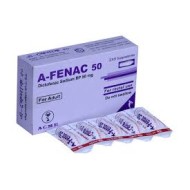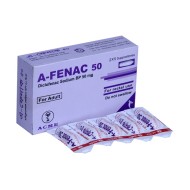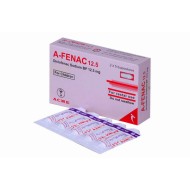
- Stock: Out Of Stock
- Brand: Acme Laboratories Limited
- Product ID: Diclofenac Sodium
🔒 100% Secure Payment | bKash | Nagad | SSLCommerz | COD
⭐ Become a FREE Member: 7% Extra Savings • Free Delivery • Refill Reminders • Priority Support
This Item is for pre order
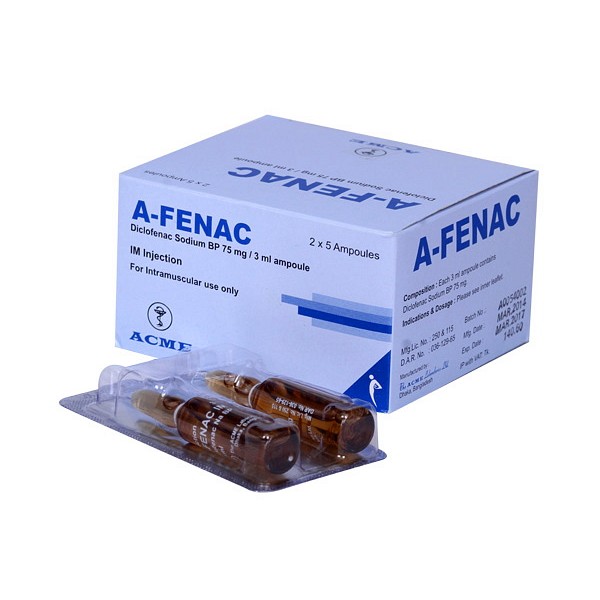
A-Fenac 25 mg/ml IM Injection (Diclofenac Sodium) — Product Overview
| Quick Reference | |
|---|---|
| Brand Name | A-Fenac 25 mg/ml IM Injection |
| Generic Name | Diclofenac Sodium 25 mg/ml (75 mg per 3 ml ampoule) |
| Drug Class | Non-Steroidal Anti-Inflammatory Drug (NSAID) — Parenteral |
| Manufacturer | ACI Limited, Bangladesh |
| Dosage Form | Solution for Injection — Intramuscular (IM) only |
| Strength | 25 mg/ml concentration; 75 mg total per 3 ml ampoule |
| Route | Deep intramuscular injection — NEVER intravenous |
| Onset of Action | 15–30 minutes IM; peak at ~1 hour |
| Prescription Status | Prescription Required |
What is A-Fenac 25 mg/ml IM Injection?
A-Fenac 25 mg/ml IM Injection contains Diclofenac Sodium in a concentration of 25 mg per ml, supplied in 3 ml ampoules delivering 75 mg of diclofenac per injection. Diclofenac is one of the most widely used NSAIDs globally for pain and inflammation. The parenteral IM formulation provides faster and more complete drug absorption than oral tablets, making it the preferred choice for acute severe pain where rapid onset is critical. Unlike A-Fenac Plus (which includes lidocaine to reduce injection pain), this is the plain diclofenac formulation for cases where lidocaine addition is not preferred or available.
Indications
- Renal colic (ureteric colic) — first-line analgesic alongside opioids for acute kidney stone pain
- Acute musculoskeletal pain — back pain, sciatica, sprains, strains, sports injuries
- Post-operative pain — as part of multimodal analgesia protocol
- Acute gout — rapid NSAID onset important for acute attack
- Acute migraine — when oral therapy is not tolerated (vomiting)
- Biliary colic — acute right upper quadrant pain from gallstones
- Acute orthopaedic pain — fracture pain, post-procedure pain
- Dental pain — post-extraction, procedure pain
Dosage
Adults: 75 mg (1 ampoule / 3 ml) by deep IM injection, once or twice daily.
Maximum: 150 mg/day. Limit IM use to 2 days maximum — then switch to oral diclofenac if continued treatment needed.
Elderly: Start with the lowest effective dose. Avoid if possible in patients over 75 or with renal impairment.
Injection site: Upper outer quadrant of the gluteus maximus (buttock). Inject slowly into deep muscle. Aspirate first to confirm not intravascular. Alternate sides if giving twice daily.
Never IV. Do not mix with other injections in the same syringe.
Mechanism of Action
Diclofenac inhibits cyclooxygenase-1 (COX-1) and COX-2 enzymes, blocking the conversion of arachidonic acid to prostaglandins (PGE2, PGI2) and thromboxanes. Reduced prostaglandin synthesis lowers pain sensitisation at peripheral and central levels, reduces inflammatory oedema, and decreases fever. Diclofenac also inhibits arachidonic acid release from cell membranes and has some lipoxygenase inhibitory activity, giving it broader anti-inflammatory action than pure COX inhibitors.
Contraindications
- Hypersensitivity to diclofenac or any NSAID
- Aspirin-exacerbated respiratory disease (NSAID-sensitive asthma)
- Active or recurrent peptic ulcer / GI bleeding
- Severe hepatic, cardiac, or renal impairment
- Hypovolaemia or dehydration (high renal failure risk)
- Third trimester of pregnancy — NSAIDs cause premature ductus arteriosus closure
- Established ischaemic heart disease, stroke, or peripheral arterial disease (increased CV risk)
Side Effects
Injection site: Pain, tenderness, induration. IM diclofenac is painful — consider A-Fenac Plus (with lidocaine) if injection pain is a significant concern. Do not massage the site after injection.
GI: Nausea, dyspepsia — less common than oral route but still possible.
Renal: Acute kidney injury — risk highest in dehydrated, elderly, renally impaired, or those on ACE inhibitors/ARBs/diuretics. Ensure patient is well hydrated before administration.
Cardiovascular: Increased MI and stroke risk with regular NSAID use (class effect). Keep IM course ≤2 days.
Haematological: Inhibits platelet aggregation (COX-1 effect) — increases bleeding time. Monitor in surgical patients.
NSAIDs and Diabetic Nephropathy — Key Warning
Diclofenac and all NSAIDs reduce renal prostaglandin production and can precipitate acute kidney injury, especially in patients who are dehydrated, on dual renin-angiotensin system blockade, or have pre-existing renal disease (including diabetic nephropathy). In diabetic patients, always check renal function before using IM diclofenac. For patients with eGFR <30, avoid diclofenac entirely. Paracetamol is the preferred analgesic in advanced diabetic nephropathy.
Frequently Asked Questions (FAQ)
Q: What is the difference between A-Fenac Injection and A-Fenac Plus Injection?
A: A-Fenac 25 mg/ml injection contains only Diclofenac Sodium 75mg. A-Fenac Plus contains Diclofenac 75mg plus Lidocaine 20mg — the lidocaine reduces the pain of the injection. A-Fenac Plus is generally preferred when patient comfort is a priority. Both deliver the same 75mg diclofenac dose.
Q: Why is diclofenac IM more effective than oral tablets for acute pain?
A: IM diclofenac bypasses first-pass hepatic metabolism, achieves peak plasma concentrations faster and at higher levels than oral tablets, and is not affected by nausea, vomiting, or gastric emptying delays. This makes it particularly effective for acute severe pain where rapid and reliable drug delivery matters.
Q: Can IM diclofenac be given with other pain medications?
A: Yes, it is commonly part of multimodal analgesia alongside paracetamol and/or opioids for post-operative pain. Do not combine with other NSAIDs (e.g. ibuprofen, ketorolac) as this increases GI and renal risk without improving efficacy.
Q: How long can IM diclofenac be given?
A: Maximum 2 consecutive days of IM use. After 2 days, switch to oral diclofenac or another analgesic. Prolonged IM NSAID use increases local tissue injury risk (sterile abscess, muscle necrosis) in addition to systemic risks.
Medical Disclaimer
For educational purposes only. IM diclofenac must be administered by trained healthcare professionals. Use the lowest effective dose for the shortest duration. Assess cardiovascular and renal risk factors before use. Avoid in third trimester of pregnancy and in dehydrated patients.