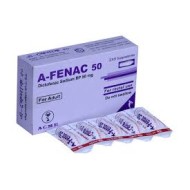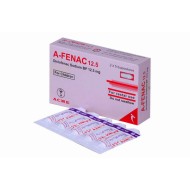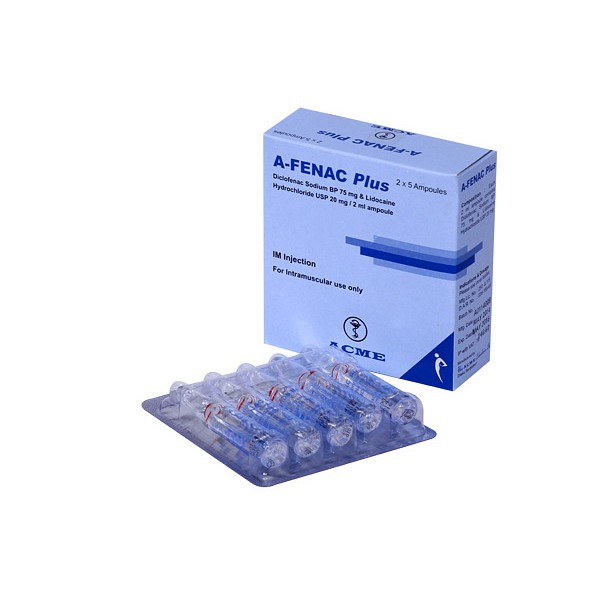
- Stock: Out Of Stock
- Brand: Acme Laboratories Limited
- Product ID: Diclofenac Sodium + Lidocaine Hydrochloride
🔒 100% Secure Payment | bKash | Nagad | SSLCommerz | COD
⭐ Become a FREE Member: 7% Extra Savings • Free Delivery • Refill Reminders • Priority Support
This Item is for pre order
A-Fenac Plus (Diclofenac 75mg + Lidocaine 20mg) IM Injection — Product Overview
| Quick Reference | |
|---|---|
| Brand Name | A-Fenac Plus Injection (75 mg + 20 mg)/2 ml |
| Generic Names | Diclofenac Sodium 75 mg + Lidocaine Hydrochloride 20 mg per 2 ml |
| Drug Class | NSAID (Diclofenac) + Local Anaesthetic (Lidocaine) — IM Injection |
| Manufacturer | ACI Limited, Bangladesh |
| Dosage Form | Solution for Injection — Intramuscular (IM) only |
| Strength per Ampoule | Diclofenac Na 75 mg + Lidocaine HCl 20 mg in 2 ml |
| Why Lidocaine Added? | Reduces injection site pain — diclofenac IM is notoriously painful without local anaesthetic |
| Route | Deep intramuscular injection ONLY — never IV |
| Prescription Status | Prescription Required |
What is A-Fenac Plus Injection?
A-Fenac Plus is a combination IM injection containing Diclofenac Sodium 75 mg (an NSAID for pain and inflammation) plus Lidocaine Hydrochloride 20 mg (a local anaesthetic). The lidocaine component serves a practical purpose: diclofenac IM injections are notoriously painful, and adding lidocaine to the formulation significantly reduces injection site pain, improving patient tolerability. A-Fenac Plus delivers rapid systemic diclofenac for acute moderate-to-severe pain — onset of action within 15–30 minutes IM — making it suitable for emergency pain management in clinical settings when oral therapy is not appropriate.
Why Use IM Diclofenac Instead of Oral?
IM diclofenac achieves faster and higher peak plasma concentrations than oral tablets, particularly useful when:
- Rapid pain relief is required (renal colic, acute musculoskeletal injury, post-operative pain, acute migraine)
- The patient cannot take oral medication (nausea, vomiting, nil by mouth, post-surgery)
- Absorption via oral route is uncertain (severe GI upset)
- Reliable drug delivery is needed regardless of patient compliance
After the acute period, patients are typically stepped down to oral diclofenac tablets or SR capsules.
Indications
- Renal colic — IM diclofenac is a first-line analgesic for acute ureteric/kidney stone pain
- Acute musculoskeletal pain — sprains, strains, sports injuries, back pain
- Post-operative pain — as part of multimodal analgesia
- Acute gout attack — rapid onset important for early treatment
- Acute migraine — when oral therapy fails or is vomited
- Biliary/intestinal colic — spasmodic abdominal pain
- Diabetic neuropathic pain exacerbation — acute severe episodes where oral NSAIDs are insufficient
- Dental pain — post-extraction or post-procedure
Dosage and Administration
Standard adult dose: 75 mg (1 ampoule) by deep IM injection once or twice daily.
Maximum dose: 150 mg/day (2 ampoules). Do not exceed 2 days of IM therapy — step down to oral after.
Injection technique:
- Site: Upper outer quadrant of the buttock (gluteus maximus). Never inject into the arm or thigh for diclofenac — deltoid too small, thigh causes sciatic nerve risk.
- Depth: Deep IM into muscle belly — not subcutaneous (causes tissue necrosis)
- Aspiration: Aspirate before injection to confirm not in a blood vessel
- Never IV: IV administration of diclofenac causes serious adverse events including haemolysis
Elderly/renal impairment: Use lowest effective dose, shortest duration. Avoid if eGFR <30.
Mechanism of Action
Diclofenac Sodium: Non-selective COX-1 and COX-2 inhibitor. Blocks prostaglandin synthesis — reducing inflammation, pain sensitisation, and fever. Also inhibits arachidonic acid release and lipoxygenase pathway, contributing to its anti-inflammatory potency.
Lidocaine HCl: Voltage-gated sodium channel blocker — prevents action potential generation in sensory nerve fibres at the injection site, reducing pain from the injection itself. Systemic lidocaine at this dose is absorbed slowly from IM and does not produce significant anaesthetic effects beyond the local site.
Contraindications
- NSAID hypersensitivity / aspirin-sensitive asthma
- Active peptic ulcer disease or GI bleeding
- Severe heart failure, significant renal or hepatic impairment
- Lidocaine allergy (amide local anaesthetic sensitivity)
- Hypovolaemia / dehydration (NSAID-induced renal failure risk)
- Third trimester of pregnancy
- Established ischaemic heart disease, peripheral arterial disease, or cerebrovascular disease (increased cardiovascular risk)
Side Effects
Local (injection site): Despite the lidocaine, some discomfort remains — tenderness, induration. Never massage the site (increases absorption rate and risk of tissue reaction).
GI: Nausea, dyspepsia — less prominent than with oral diclofenac but still possible with IM route.
Renal: Reduced prostaglandin-mediated renal blood flow — risk of acute kidney injury in dehydrated, elderly, or renally compromised patients. Ensure adequate hydration before giving IM diclofenac.
Cardiovascular: Increased risk of MI and stroke with regular NSAID use — keep IM course as short as possible (<2 days).
Lidocaine-related (rare at 20mg dose): Dizziness, perioral numbness — unlikely at this dose unless inadvertent IV injection.
Important: NSAIDs and Diabetic Kidney Disease
Diclofenac and all NSAIDs reduce prostaglandin-mediated renal vasodilation and can precipitate acute kidney injury, particularly in patients who are dehydrated, on ACE inhibitors/ARBs, on diuretics, or who have pre-existing chronic kidney disease (including diabetic nephropathy). Before administering A-Fenac Plus to a diabetic patient, assess renal function and hydration status. Avoid in CKD stages 4–5 (eGFR <30). If pain control is needed in renal-compromised diabetic patients, paracetamol (acetaminophen) is the safer analgesic alternative.
Frequently Asked Questions (FAQ)
Q: Why does A-Fenac Plus contain lidocaine?
A: Diclofenac IM injections are painful because of the drug's chemical properties. Adding lidocaine (a local anaesthetic) to the same ampoule reduces injection site pain significantly, improving patient comfort and compliance with treatment. The lidocaine dose (20 mg) is purely for local pain reduction.
Q: Can A-Fenac Plus be given intravenously?
A: No — never. IV diclofenac (without special preparation) can cause serious haemolytic reactions. A-Fenac Plus is for deep IM injection only, into the upper outer buttock quadrant.
Q: Is it safe to use A-Fenac Plus in diabetic patients?
A: With caution. NSAIDs impair renal prostaglandins and can worsen kidney function. In diabetic patients with nephropathy or those on ACE inhibitors/ARBs, assess renal function before use and ensure hydration. Short-term IM diclofenac for acute severe pain is generally acceptable in diabetic patients with normal or mildly reduced renal function.
Q: How quickly does A-Fenac Plus IM work?
A: Pain relief onset is typically within 15–30 minutes of IM injection. Peak plasma levels are reached in about 1 hour. Effects last 6–8 hours.
Medical Disclaimer
For educational purposes only. A-Fenac Plus IM injection must be administered by trained healthcare professionals using correct technique. Not for self-injection. Use the minimum effective dose for the shortest duration. NSAIDs carry cardiovascular and renal risks — assess patient risk factors before use. Not for use in third trimester of pregnancy.