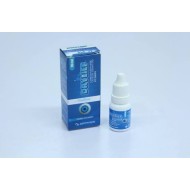
- Stock: Out Of Stock
- Brand: Acme Laboratories Limited
- Product ID: Chloramphenicol
🔒 100% Secure Payment | bKash | Nagad | SSLCommerz | COD
⭐ Become a FREE Member: 7% Extra Savings • Free Delivery • Refill Reminders • Priority Support
This Item is for pre order
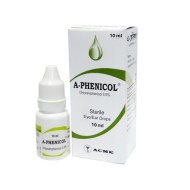
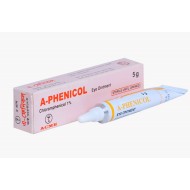
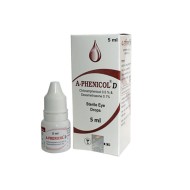
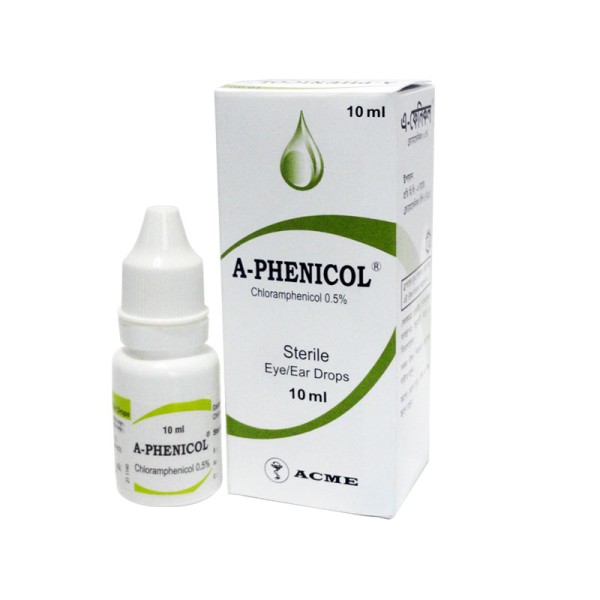
A-Phenicol Eye/Ear Drop 10ml — Chloramphenicol 0.5% | Beximco Pharmaceuticals
| Generic Name | Chloramphenicol 0.5% w/v Eye/Ear Drops |
| Drug Class | Broad-Spectrum Antibiotic — Topical Ophthalmic/Otic |
| Manufacturer | Beximco Pharmaceuticals Ltd. |
| Route | Topical — Ophthalmic (eye) / Otic (ear) |
| Pack Size | 10ml Drop Bottle |
Overview
A-Phenicol Drop contains Chloramphenicol 0.5% — a broad-spectrum topical antibiotic in drop form for the treatment of bacterial eye and ear infections. Chloramphenicol eye drops are one of the most widely used ophthalmic antibiotics globally due to their broad-spectrum coverage, good corneal penetration, and low cost. They are particularly valuable for bacterial conjunctivitis, blepharitis, and superficial eye infections. For diabetic patients, who have elevated susceptibility to ocular infections due to immune dysfunction and altered tear film, chloramphenicol drops are an important first-line therapy.
Mechanism of Action
Chloramphenicol binds to the 50S ribosomal subunit of bacterial ribosomes, inhibiting peptidyl transferase activity and blocking protein elongation. This is bacteriostatic against most organisms but bactericidal against highly susceptible organisms (H. influenzae, N. meningitidis, S. pneumoniae at higher concentrations). At 0.5% topical concentration, local ocular drug levels far exceed MIC for most conjunctival pathogens while systemic absorption is negligible.
Indications (Ophthalmic)
- Bacterial conjunctivitis — acute and subacute
- Blepharitis (bacterial)
- Blepharoconjunctivitis
- Superficial corneal infection (bacterial keratitis — mild)
- Prevention of infection post-minor ophthalmic procedures
- Diabetic patients — secondary bacterial infection overlying diabetic eye disease
How to Use (Eye Drops)
| Step | Instructions |
|---|---|
| 1. Wash hands | Thoroughly wash and dry hands before each use |
| 2. Tilt head back | Tilt head back or lie down; look upward |
| 3. Pull lower lid down | Gently pull down the lower eyelid to form a small pocket |
| 4. Instil drop | Hold bottle above eye; instil 1–2 drops into the lower conjunctival sac |
| 5. Close eye | Close eye gently for 1–2 minutes. Blot excess with clean tissue |
| 6. Frequency | 1–2 drops every 2 hours initially; reduce to every 4 hours as infection improves |
| 7. Duration | Continue for 48 hours after eye appears normal — typically 5–7 days total |
Do not touch the dropper tip to the eye or any surface — this contaminates the bottle. Remove contact lenses before instilling and wait 15 minutes before reinserting.
Critical Diabetic Patient Information
- Elevated ocular infection risk in diabetes: Diabetic patients are more susceptible to bacterial conjunctivitis, blepharitis, and hordeolum (stye) due to immune dysfunction and altered ocular surface. Prompt antibiotic treatment is essential — do not delay
- Distinguishing bacterial from diabetic eye disease: Bacterial conjunctivitis (red, sticky, purulent discharge) is different from diabetic retinopathy or glaucoma. If visual acuity is reduced, or the problem appears to be inside the eye (floaters, blurring, pain) — this is NOT conjunctivitis and requires urgent ophthalmologist referral
- Do not use steroids without confirming diagnosis: Do not use steroid-antibiotic combination drops without ophthalmologist guidance — steroids can worsen viral or fungal eye infections (more common in diabetics)
- Regular diabetic eye screening: All diabetics should have annual dilated fundus examination for diabetic retinopathy — separate from management of acute bacterial eye infections
- No systemic glucose effect: Chloramphenicol 0.5% topical drops have negligible systemic absorption and do not affect blood glucose levels
Side Effects
| System | Side Effect | Severity |
|---|---|---|
| Local ocular | Transient stinging/burning on instillation | Common — Mild, resolves quickly |
| Local ocular | Mild blurring immediately after instillation | Common — Transient (seconds) |
| Hypersensitivity | Ocular allergic reaction — itching, redness, swelling | Uncommon — discontinue and consult |
| Systemic (rare) | Aplastic anaemia (systemic chloramphenicol — extremely rare with topical drops at standard use) | Theoretical — extremely rare with topical use |
Contraindications
- Known hypersensitivity to chloramphenicol
- Personal or family history of aplastic anaemia
- Neonates (avoid prolonged use — reduced metabolic capacity)
- Viral eye infections (herpes simplex keratitis) — topical antibiotics are ineffective and may delay antiviral treatment
- Contact lens wear during treatment (remove lenses; avoid wearing until infection resolves)
Storage
Store between 2–8°C (refrigerate) or as directed on label. Protect from light. Discard 28 days after opening. Keep out of reach of children. Do not freeze.
Frequently Asked Questions
Q: How quickly should my eye improve?
A: Bacterial conjunctivitis typically begins to improve within 48 hours of starting drops. If no improvement after 48–72 hours, or if the eye becomes more painful or vision deteriorates, see an ophthalmologist immediately.
Q: Can I use A-Phenicol drops for both eyes?
A: Use separate drop bottles for each eye if both are infected to prevent cross-contamination. If only one eye is infected, using drops in both eyes may prevent spread — discuss with your physician.
Q: As a diabetic, should I see a specialist for eye infections?
A: For straightforward acute bacterial conjunctivitis (red, sticky eye, normal vision), you can start A-Phenicol drops. However, if you have any reduction in vision, eye pain, or if the infection doesn't respond within 48–72 hours, see an ophthalmologist — diabetics are at higher risk of more serious eye conditions.
Medical Disclaimer: A-Phenicol Drop (Chloramphenicol 0.5%) is for topical ophthalmic/otic use only. Do not inject or swallow. Discard 28 days after opening. If visual acuity is affected or eye pain develops, seek urgent ophthalmological assessment — this may not be a simple conjunctivitis. This information is for educational purposes only. Always follow your physician's instructions.