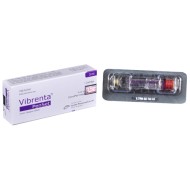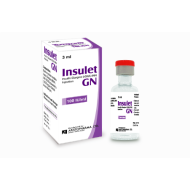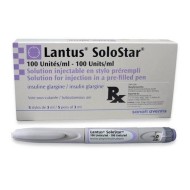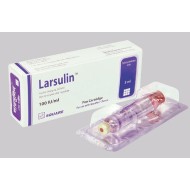

- Stock: Pre-Order
- Brand: Healthcare Pharmaceuticals Limited
- Product ID: Insulin Glargine
🔒 100% Secure Payment | bKash | Nagad | SSLCommerz | COD
⭐ Become a FREE Member: 7% Extra Savings • Free Delivery • Refill Reminders • Priority Support
This Item is for pre order
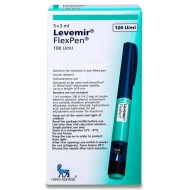
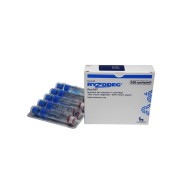
Abasaglar 100U/ml Injection 3ml — Insulin Glargine | Beximco Pharmaceuticals
| Generic Name | Insulin Glargine 100 Units/ml |
| Pack | 3ml vial (300 units) |
| Drug Class | Long-Acting Basal Insulin Analogue (Biosimilar) |
| Manufacturer | Beximco Pharmaceuticals Ltd. |
| Route | Subcutaneous Injection Only |
| Prescription Status | Prescription Required |
Overview
Abasaglar is a biosimilar insulin glargine 100 units/ml — a long-acting basal insulin analogue. Produced by Beximco Pharmaceuticals, it provides a stable, peakless blood glucose-lowering effect for approximately 24 hours, allowing once-daily dosing. It is indicated for adults with Type 1 or Type 2 diabetes who require basal insulin coverage. Insulin Glargine forms microprecipitates at physiological pH after subcutaneous injection, providing slow, sustained absorption.
Mechanism of Action
Insulin Glargine is modified to be soluble at acidic pH (formulation) and precipitate at physiological pH (subcutaneous tissue). This forms a depot that slowly releases monomeric insulin glargine over 24 hours. It activates insulin receptors on hepatocytes, adipocytes, and muscle cells, promoting glucose uptake, suppressing hepatic glucose production, and reducing ketogenesis. The flat, peakless pharmacokinetic profile closely mimics physiological basal insulin secretion.
Indications
- Type 1 Diabetes Mellitus — basal insulin component of a basal-bolus regimen
- Type 2 Diabetes Mellitus — when oral antidiabetics and/or GLP-1 agonists are insufficient
- Initiated when HbA1c targets are not met with oral therapy alone
Dosage
| Patient | Starting Dose | Timing | Titration |
|---|---|---|---|
| Type 2 diabetes (insulin-naive) | 0.2 units/kg or 10 units | Once daily (fixed time) | Increase by 2 units every 3 days if fasting glucose >5.5 mmol/L |
| Type 1 diabetes | ~30–50% of total daily insulin requirement | Once daily | Endocrinologist-guided titration |
| Switching from NPH insulin | Same unit-for-unit dose initially | Once daily | Monitor closely — dose adjustment usually needed |
Inject subcutaneously into abdomen, thigh, or upper arm. Rotate injection sites. Never inject intravenously or intramuscularly. Never mix with other insulins.
Critical Diabetic Patient Instructions
- Hypoglycaemia: Most important risk — inject at the same time each day. Never skip a meal after injecting. Always carry fast-acting glucose (glucose tablets, juice)
- Never mix: Do NOT mix Abasaglar with any other insulin or solution — it will precipitate and become inactive
- Injection site rotation: Rotate sites within the same region each day to prevent lipohypertrophy, which impairs absorption
- Storage after opening: Once opened (first use), store at room temperature (below 30°C) for up to 28 days. Do not refrigerate opened vial — cold insulin increases injection pain and slows absorption
- Sick day rules: Never stop insulin during illness. Illness raises blood glucose — dose may need to increase. Monitor every 4 hours when unwell
- HbA1c monitoring: Check every 3 months. Target HbA1c is typically <7% (53 mmol/mol) for most adults, adjusted by physician
- Renal/hepatic impairment: Both reduce insulin clearance — more frequent monitoring and possible dose reduction required
Side Effects
| System | Side Effect | Severity |
|---|---|---|
| Metabolic | Hypoglycaemia — most common; can be severe | Common — Serious |
| Local | Injection site reactions (pain, redness, swelling, lipohypertrophy) | Common — Mild |
| Metabolic | Weight gain (dose-dependent) | Common — Moderate |
| Skin | Lipoatrophy (rare) or lipohypertrophy at injection sites | Uncommon |
| Systemic | Allergic reactions including anaphylaxis (rare) | Rare — Serious |
| Eyes | Transient worsening of diabetic retinopathy on initiating insulin (due to rapid glucose normalisation) | Moderate — transient |
Drug Interactions
| Drug/Class | Effect on Insulin |
|---|---|
| Oral antidiabetics (metformin, sulfonylureas, GLP-1 agonists) | Additive glucose-lowering effect — monitor for hypoglycaemia |
| Beta-blockers | Mask tachycardia warning sign of hypoglycaemia; may prolong hypoglycaemia |
| Corticosteroids, thiazides | Antagonise insulin — may require dose increase |
| ACE inhibitors | May enhance insulin sensitivity — monitor glucose |
| Alcohol | Enhanced and prolonged hypoglycaemic effect — avoid excessive alcohol |
| Salicylates (aspirin) | Enhanced glucose-lowering at high doses |
Contraindications
- Hypoglycaemia (do not inject during a hypoglycaemic episode)
- Known hypersensitivity to insulin glargine or any excipient
- Intravenous or intramuscular use (subcutaneous only)
Storage
Unopened: Refrigerate at 2–8°C. Do not freeze. Discard if frozen. Protect from light.
After first use: Store below 30°C, away from direct heat and light. Use within 28 days. Do not refrigerate after opening.
Frequently Asked Questions
Q: What is the difference between Abasaglar and Lantus?
A: Abasaglar is a biosimilar to Lantus (originator insulin glargine). Both contain insulin glargine 100U/ml with the same active ingredient, pharmacokinetics, and clinical effects. Abasaglar offers a more affordable alternative.
Q: Can Abasaglar be mixed with fast-acting insulin?
A: No. Insulin glargine must NEVER be mixed with other insulins. It must be injected separately in a different syringe and different injection site from mealtime insulin.
Q: When is the best time to inject Abasaglar?
A: Once daily at the same time each day — most commonly at bedtime or in the morning, as prescribed. Consistency of timing is important for stable blood glucose control.
Q: How do I know if my dose needs to be increased?
A: Your physician will use your fasting blood glucose readings to guide titration. A typical approach: if fasting glucose is consistently >5.5–7 mmol/L, increase the dose by 2 units every 3 days until target is achieved.
Medical Disclaimer: Abasaglar (Insulin Glargine 100U/ml) is a prescription-only medicine for the management of diabetes mellitus. Dose must be individualised under physician supervision. Hypoglycaemia is a serious risk — patients must be educated on recognition and treatment of low blood sugar. Never mix with other insulins. Never inject intravenously. Store correctly to maintain potency. This information is for educational purposes only and does not constitute medical advice. Always follow your endocrinologist's or physician's instructions.