- Stock: In Stock
- Brand: Opsonin Pharma Limited
- Product ID: Dicycloverine Hydrochloride
100% Secure Payment
bKash | Nagad | Cards via SSLCommerz | COD
Monthly Medicines Available | Free Delivery on Eligible Orders
This Item is for pre order
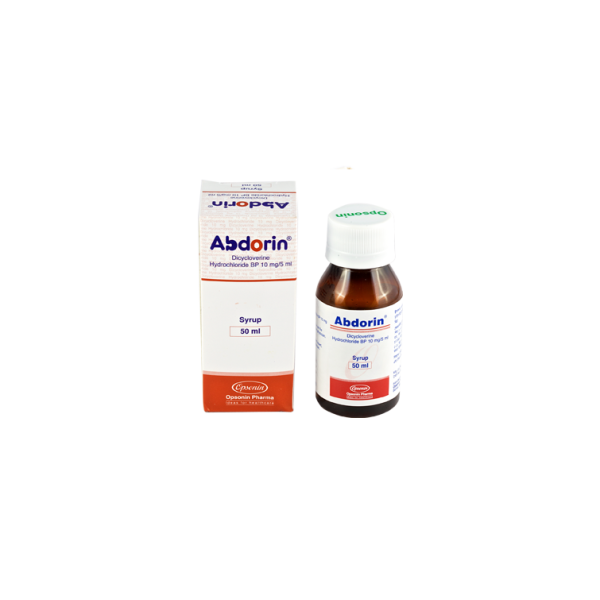
Abdorin Syrup — Dicycloverine Hydrochloride | Beximco Pharmaceuticals
| Generic Name | Dicycloverine Hydrochloride |
| Drug Class | Anticholinergic / Antispasmodic (Muscarinic Receptor Antagonist) |
| Formulation | Oral Syrup |
| Manufacturer | Beximco Pharmaceuticals Ltd. |
| Prescription Status | Prescription Required |
Overview
Abdorin Syrup is the oral liquid formulation of Dicycloverine Hydrochloride — an anticholinergic antispasmodic with dual mechanisms (muscarinic receptor blockade + direct smooth muscle relaxation). The syrup formulation is particularly useful for paediatric patients, elderly patients with swallowing difficulties, and situations requiring dose flexibility. It provides the same antispasmodic relief as the tablet, with the convenience of liquid dosing for IBS, abdominal colic, and dysmenorrhoea.
Mechanism of Action
Dicycloverine acts by two complementary pathways: (1) Antimuscarinic — blocks M3 muscarinic receptors on intestinal smooth muscle, reducing acetylcholine-mediated contraction and spasm; (2) Direct musculotropic — directly relaxes smooth muscle independently of receptor blockade. This dual action provides effective GI antispasmodic relief with fewer systemic anticholinergic adverse effects than purely antimuscarinic agents at equivalent doses.
Indications
- Irritable Bowel Syndrome (IBS) — abdominal pain and cramping in adults and older children
- Functional intestinal colic
- Abdominal spasm and cramping of smooth muscle origin
- Dysmenorrhoea (uterine smooth muscle spasm)
- Infantile colic — syrup formulation enables precise paediatric dosing (check specific paediatric suitability with physician)
Dosage
| Age Group | Dose | Frequency | Notes |
|---|---|---|---|
| Adults | 10–20mg (as directed per syrup concentration) | 3–4 times daily before meals | Maximum 80mg/day |
| Children 2–12 years | 5–10mg | 3 times daily | Under physician guidance |
| Elderly | 10mg | 3 times daily | Start low — enhanced anticholinergic sensitivity |
Shake well before use if suspension. Measure dose with provided measuring spoon or syringe. Take 30 minutes before meals for best effect on post-meal cramping. Check the specific concentration (mg/5mL) on the product label for accurate dosing.
Important Notes for Diabetic Patients
- Gastroparesis risk: Diabetic patients with autonomic neuropathy may already have delayed gastric emptying. Dicycloverine can further slow GI motility — use only under physician guidance if gastroparesis is present or suspected
- Autonomic neuropathy and orthostatic hypotension: Anticholinergic effects may worsen orthostatic symptoms in diabetics with autonomic neuropathy — monitor for dizziness on standing
- Urinary symptoms: Diabetic patients (especially older men) with bladder dysfunction should be aware of urinary retention risk from anticholinergic activity
- Syrup sugar content: Diabetic patients should check with the pharmacist whether the syrup contains sucrose or glucose as an excipient. If so, account for sugar load in glycaemic management, or discuss sugar-free alternatives with your physician
Side Effects
| System | Side Effect | Severity |
|---|---|---|
| Anticholinergic | Dry mouth, blurred vision, urinary hesitancy, constipation | Common — dose-dependent |
| CNS | Dizziness, drowsiness, nervousness | Common — Mild |
| Cardiovascular | Tachycardia (at higher doses) | Uncommon |
| GI | Nausea, vomiting (less common than tablets due to flexible dosing) | Uncommon |
| Serious (rare) | Acute angle-closure glaucoma, severe urinary retention | Rare — Serious |
Drug Interactions
| Drug | Interaction |
|---|---|
| Other anticholinergics (antihistamines, TCAs, antipsychotics) | Additive anticholinergic toxicity |
| Metoclopramide / domperidone | Antagonistic — dicycloverine opposes prokinetic effect on stomach |
| Amantadine | Increased anticholinergic effect |
| Antacids | May reduce absorption — separate by 1–2 hours |
Contraindications
- Hypersensitivity to dicycloverine
- Myasthenia gravis
- Narrow-angle glaucoma
- Obstructive uropathy
- Paralytic ileus or bowel obstruction
- Severe ulcerative colitis
- Infants under 6 months (neonatal apnoea risk with oral dicycloverine)
Storage
Store below 25°C. Protect from light. Keep upright. Keep out of reach of children. Do not freeze. Check expiry before use.
Frequently Asked Questions
Q: Why syrup instead of tablet?
A: The syrup is useful when precise lower doses are needed (children, elderly), when patients cannot swallow tablets, or when faster onset from liquid absorption is desired.
Q: Does Abdorin Syrup contain sugar?
A: Check the product label or ask your pharmacist. Diabetic patients should clarify the excipient list — sugar-free formulations may be available or your physician can recommend an alternative.
Q: Can I give Abdorin Syrup to my child for stomach cramps?
A: For children over 2 years, it can be used under physician guidance. Do NOT give to infants under 6 months. Always confirm age-appropriate dosing with your physician or pharmacist.
Medical Disclaimer: Abdorin Syrup (Dicycloverine HCl) is a prescription antispasmodic. Contraindicated in infants under 6 months, narrow-angle glaucoma, myasthenia gravis, and obstructive uropathy. Diabetic patients with gastroparesis should use with caution. Check sugar content if diabetic. This information is for educational purposes only. Always follow your physician's instructions.