- Stock: Out Of Stock
- Brand: ACI Pharmaceuticals
- Product ID: Oral Rehydration Salt [Powder]
🔒 100% Secure Payment | bKash | Nagad | SSLCommerz | COD
⭐ Become a FREE Member: 7% Extra Savings • Free Delivery • Refill Reminders • Priority Support
This Item is for pre order
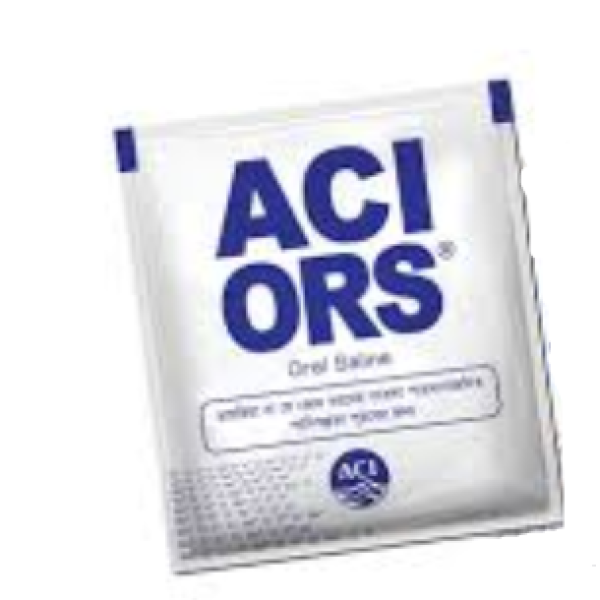
ACI ORS — Oral Rehydration Salt
| Product Overview | |
|---|---|
| Brand Name | ACI ORS |
| Generic Name | Oral Rehydration Salt (WHO Reduced-Osmolarity Formula) |
| Manufacturer | ACI Pharmaceuticals Ltd., Bangladesh |
| Drug Class | Electrolyte Replenisher / Rehydration Solution |
| Dosage Form | Oral Powder (Sachet) |
| Composition per Sachet (1L) | Glucose 13.5 g · Sodium Chloride 2.6 g · Trisodium Citrate 2.9 g · Potassium Chloride 1.5 g |
| Osmolarity | 245 mOsm/L (Reduced-Osmolarity WHO Formula) |
| Storage | Store below 30°C, in a dry place, away from sunlight. Keep out of reach of children. |
| Pregnancy & Lactation | Safe to use during pregnancy and breastfeeding when clinically indicated |
1. Indications & Uses
ACI ORS is indicated for the prevention and treatment of dehydration due to diarrhoea, vomiting, excessive sweating, or any condition causing fluid and electrolyte loss. It is a first-line therapy recommended by the WHO and the Government of Bangladesh for management of acute watery diarrhoea in all age groups including infants, children, adults, and the elderly.
Specific indications include: acute secretory diarrhoea (e.g., cholera, rotavirus, traveller's diarrhoea); fluid and electrolyte replacement in febrile illness; post-surgical or post-vomiting rehydration; dehydration associated with heat exhaustion; and maintenance of hydration in diabetic patients during illness-induced gastroenteritis. In diabetes mellitus, diarrhoea and vomiting can precipitate dangerous dehydration, electrolyte imbalances, and hypoglycaemia — ORS is essential first-aid therapy.
2. Mechanism of Action
The reduced-osmolarity ORS formula works via the glucose–sodium co-transport mechanism in intestinal enterocytes. Glucose facilitates active transport of sodium (and water) across the intestinal mucosa via the SGLT-1 (sodium-glucose linked transporter-1) protein even during active secretory diarrhoea — a process that remains functional regardless of the causative agent. Each sodium molecule absorbed carries approximately 210 water molecules, restoring intravascular volume efficiently. Potassium replenishes intracellular losses, and citrate (as an alkalising agent) corrects metabolic acidosis common in severe diarrhoea. The 245 mOsm/L reduced-osmolarity formula (versus the earlier 311 mOsm/L formula) has been proven to reduce stool output by 20% and vomiting by 30%, and significantly reduces the need for IV fluid supplementation.
3. Dosage & Administration
Preparation: Dissolve the entire contents of one sachet in 1 litre (1000 ml) of clean, potable water. Stir until fully dissolved. Do not add more sachets to the same litre — this creates a hypertonic solution that worsens dehydration. Discard any unused solution after 24 hours.
Adults and children ≥10 years: 200–400 ml (1–2 glasses) after each loose stool or episode of vomiting. Continue until diarrhoea resolves. For mild-to-moderate dehydration, give 50–100 ml/kg body weight over 2–4 hours, then maintenance dosing.
Children 2–9 years: 100–200 ml after each loose stool. For dehydration: 75 ml/kg over 4 hours under medical supervision.
Infants <2 years: 50–100 ml after each loose stool. Administered slowly by spoon or syringe if needed. Breast-feeding should continue alongside ORS therapy.
Diabetic patients (special note): ACI ORS contains 13.5 g/L of glucose. In diabetic patients, blood glucose should be monitored during ORS use, especially in those with poorly controlled diabetes. However, the clinical benefits of rehydration almost always outweigh the modest glucose load. Consult a physician if blood glucose rises >14 mmol/L or if symptoms worsen.
4. Side Effects
ACI ORS is extremely well tolerated. Adverse effects are rare and generally related to incorrect preparation or excessive use. Possible adverse effects include: mild nausea if consumed too rapidly; hypernatraemia (elevated blood sodium) if prepared with too little water or given in excess without free water intake; hyperkalaemia (rare) in patients with renal impairment; and transient mild elevation of blood glucose in diabetic patients. If any of these occur, slow the rate of administration or seek medical advice.
5. Contraindications
ACI ORS is contraindicated in: persistent vomiting that prevents oral intake (IV rehydration required instead); signs of severe dehydration or hypovolaemic shock requiring hospitalisation and IV fluids; ileus (absence of bowel sounds or abdominal distension); glucose-galactose malabsorption syndrome; severe renal failure with oliguria or anuria. Severe dehydration should always be referred for medical assessment and IV therapy.
6. Warnings & Precautions
Always use safe, clean water for preparation. In areas with unsafe water, use boiled and cooled water. Do not add sugar, juice, or other substances to the prepared solution as this alters osmolarity. Discard unused solution after 24 hours to prevent microbial contamination. Children should be monitored for signs of overhydration (puffy eyelids). Patients with heart failure, renal disease, or severe liver disease should use ORS under medical supervision due to risk of sodium/fluid overload. The glucose content (≈3.4 g per 200 ml glass) should be factored into blood glucose management plans for diabetic patients.
7. Drug Interactions
No significant drug interactions are known with standard ORS. The sodium content may reduce the efficacy of antihypertensive medications. In patients on lithium therapy, ORS can affect lithium clearance and levels should be monitored. Patients on potassium-sparing diuretics (e.g., spironolactone) should use ORS cautiously as additional potassium may cause hyperkalaemia.
8. Pharmacokinetics
Glucose and electrolytes in ORS are absorbed by the small intestine. Sodium and glucose absorption occurs via SGLT-1 co-transport, which drives net water absorption of approximately 5–10 ml/min in the healthy gut. Potassium is absorbed across the entire intestine. Citrate is metabolised to bicarbonate by the liver, correcting acidosis. No accumulation occurs in normal renal function. Onset of clinical rehydration is typically within 1–2 hours of initiating ORS therapy.
9. Storage & Handling
Store sachets below 30°C in a dry place, away from direct sunlight and moisture. Do not use if the sachet is torn, damaged, or if the powder has clumped. Once dissolved in water, use within 24 hours and store in a clean, covered container — preferably refrigerated. Keep away from children.
10. Overdose
Overdose is unlikely with standard use. Excessive intake of ORS without adequate free water may lead to hypernatraemia (symptoms: thirst, dry mouth, irritability, confusion, muscle twitching). Treatment is to stop ORS and provide plain water orally. Severe hypernatraemia requires hospital management with hypotonic IV fluids. Contact Poison Control or seek emergency care if overdose is suspected.
11. Missed Dose
ORS is used on-demand rather than on a fixed schedule. If a dose is missed after a loose stool, resume ORS with the next episode of diarrhoea or vomiting. Do not double-dose.
12. Clinical Evidence
The WHO/UNICEF reduced-osmolarity ORS formula (245 mOsm/L) is supported by extensive clinical evidence. A landmark Lancet meta-analysis demonstrated 24% lower stool output and 33% reduction in supplemental IV therapy compared to the older high-osmolarity formula. ICDDR,B (Dhaka) research confirmed that oral rehydration therapy reduces childhood diarrhoea mortality by over 90% when administered correctly. The Cochrane Collaboration confirms ORS is as effective as IV rehydration for mild-to-moderate dehydration in children and adults.
13. Patient Counselling Points
• Always dissolve exactly one sachet in exactly one litre of clean water — not more, not less.
• Do not add salt, sugar, or juice to the prepared ORS.
• Continue breastfeeding babies while giving ORS.
• Continue eating a normal diet alongside ORS — do not fast.
• Seek medical attention if diarrhoea lasts more than 2 days, or if blood appears in stool, or if the patient appears severely dehydrated (sunken eyes, no tears, no urine for 6+ hours).
• Diabetic patients: check blood glucose more frequently during diarrhoea illness; contact your doctor if blood glucose is consistently >14 mmol/L or <4 mmol/L.
Frequently Asked Questions (FAQ)
Q1. Can ACI ORS be used by diabetic patients?
Yes, ACI ORS can be used by diabetic patients during diarrhoea or dehydration. The glucose content (13.5 g/L) provides a mild blood glucose rise — approximately 0.5–1.0 mmol/L per glass — which is usually well within manageable range. The clinical benefit of preventing dehydration-induced complications (hypoglycaemia, DKA, electrolyte imbalance) outweighs the modest glucose load. Monitor blood glucose regularly and consult your physician if needed.
Q2. How long can prepared ACI ORS solution be stored?
Prepared ORS solution should be used within 24 hours. After this time, discard any remaining solution and prepare a fresh batch. Store the prepared solution in a clean, covered container, preferably in a refrigerator, to minimise contamination risk.
Q3. Is ACI ORS safe for infants and newborns?
ACI ORS is safe for infants from birth. For newborns and very young infants, it should be given slowly by spoon or oral syringe — never by bottle under pressure. Breast-feeding should continue alongside ORS. In infants under 6 months with severe dehydration, medical supervision is essential.
Q4. What is the difference between ACI ORS and normal saline?
Normal saline (0.9% NaCl) provides only sodium and chloride — it does not contain glucose or potassium. ORS is specifically formulated with the WHO glucose-sodium co-transport ratio that maximises intestinal water absorption. ORS also contains potassium (to replace faecal losses) and citrate (to correct acidosis), making it far superior to plain saline for oral rehydration in diarrhoea.
⚕ Medical Disclaimer: The information provided here is for educational purposes only. ACI ORS should be used as directed by a qualified healthcare professional. Severe dehydration, persistent vomiting, or blood in stool requires immediate medical attention. This information does not substitute professional medical advice, diagnosis, or treatment. Always consult your physician or pharmacist before use.