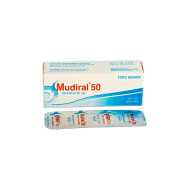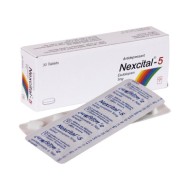

- Stock: In Stock
- Brand: Ibn-Sina Pharmaceuticals Ltd.
- Product ID: Escitalopram
🔒 100% Secure Payment | bKash | Nagad | SSLCommerz | COD
⭐ Become a FREE Member: 7% Extra Savings • Free Delivery • Refill Reminders • Priority Support
This Item is for pre order
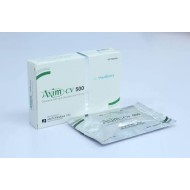
Acipam 10 mg Tablet — Escitalopram 10mg (SSRI Antidepressant)
| Product Overview | |
|---|---|
| Brand Name | Acipam 10 |
| Generic Name | Escitalopram 10 mg (as Escitalopram Oxalate) |
| Manufacturer | Ibn Sina Pharmaceuticals Ltd., Bangladesh |
| Drug Class | Selective Serotonin Reuptake Inhibitor (SSRI) |
| Dosage Form | Film-coated Tablet |
| Strength | 10 mg per tablet (standard maintenance dose) |
| Prescription Status | Prescription Required (Rx) |
| Pregnancy Category | Category C — Use only if clearly needed; taper before delivery |
| Storage | Store below 30°C, away from light and moisture. Keep out of reach of children. |
1. Indications & Clinical Uses
Acipam 10 contains escitalopram 10 mg — the standard maintenance dose and the most commonly prescribed tablet strength. Escitalopram is the S-enantiomer of citalopram and is consistently ranked as one of the most efficacious and best-tolerated antidepressants in head-to-head trials and network meta-analyses. The 10 mg tablet is the cornerstone of escitalopram therapy for most adult patients.
Approved indications: Major Depressive Disorder (MDD) — first-line treatment; Generalised Anxiety Disorder (GAD) — first-line treatment; Panic Disorder (with or without agoraphobia); Social Anxiety Disorder (Social Phobia); Obsessive-Compulsive Disorder (OCD).
Diabetes & mental health: Depression affects 15–25% of people with diabetes — approximately 3× the general population rate. Depression in diabetes leads to poorer glycaemic control, reduced medication adherence, worse cardiovascular outcomes, and increased mortality. Escitalopram is the preferred SSRI for diabetic patients with depression due to its minimal metabolic effects, no significant interactions with diabetic medications, and clinical trial evidence showing HbA1c improvement alongside antidepressant benefit.
2. Mechanism of Action
Escitalopram selectively inhibits the serotonin transporter (SERT), blocking reuptake of serotonin (5-HT) from the synaptic cleft. This increases synaptic serotonin concentration, gradually normalising serotonergic neurotransmission in limbic and prefrontal cortical circuits. Escitalopram's exceptional SERT selectivity (100× over next interaction) produces a clean pharmacological profile. Unlike citalopram (the racemate), removal of the inactive R-enantiomer reduces QT prolongation and side effects while maintaining full antidepressant efficacy at lower doses. Full antidepressant effect requires 2–4 weeks as receptor adaptation and neuroplasticity changes (including BDNF upregulation and hippocampal neurogenesis) develop.
3. Dosage & Administration
Major Depression / GAD (adults 18–65 years):
Standard dose: 10 mg once daily.
May increase to 20 mg/day after 2–4 weeks if insufficient response.
Maximum dose: 20 mg/day.
Take once daily — morning or evening, consistently. With or without food.
Elderly patients (≥65 years): 10 mg once daily maximum — do not increase to 20 mg in elderly. Start with 5 mg tablet if sensitive.
Hepatic impairment: 10 mg once daily maximum (do not exceed).
Renal impairment: No adjustment for mild-moderate renal impairment. Caution in severe renal impairment.
Treatment duration: Minimum 6 months after full remission. Longer for recurrent depression (2+ years). Never stop abruptly — taper over 4–8 weeks.
4. Side Effects
Common (≥10%): Nausea (especially weeks 1–2, typically resolves), headache, dry mouth, insomnia or somnolence, increased sweating, sexual dysfunction (decreased libido, delayed orgasm/ejaculation — 15–40% of patients; most common reason for discontinuation).
Common (1–10%): Diarrhoea, fatigue, dizziness, weight changes (modest), tremor. Paradoxical initial anxiety increase in first 1–2 weeks (transient).
Serious but uncommon: Serotonin syndrome (with other serotonergic agents); QT prolongation (dose-dependent — minimal at 10mg, more at 20mg); hyponatraemia/SIADH (especially elderly); increased suicidal ideation in patients <25 years (monitor in first 4 weeks); mania in undiagnosed bipolar disorder; increased bleeding risk (with NSAIDs/anticoagulants).
5. Contraindications
MAO inhibitors (14-day washout required); pimozide; congenital long QT syndrome; hypersensitivity to escitalopram or citalopram; linezolid or IV methylene blue (serotonin syndrome risk).
6. Warnings & Precautions
Suicidality: Increased risk in patients ≤25 years during early treatment — monitor closely in first 4 weeks. No increased risk in adults ≥25 years; reduced risk in adults ≥65 years.
Bipolar screening: Always screen for personal or family history of bipolar disorder before prescribing.
Discontinuation syndrome: Never stop abruptly. Taper over 4–8 weeks minimum.
QT monitoring: Baseline ECG for patients with cardiac risk factors, electrolyte abnormalities, or concurrent QT-prolonging medications.
Diabetic patients: Monitor blood glucose at initiation. Clinically meaningful glucose changes are rare; the antidepressant benefit typically improves overall diabetes management.
7. Drug Interactions
Contraindicated: MAO inhibitors (fatal serotonin syndrome), pimozide (QT), linezolid, methylene blue.
Significant: Other serotonergic drugs (tramadol, triptans, opioids, SNRIs, St John's Wort) — serotonin syndrome; NSAIDs/aspirin/warfarin — increased bleeding; QT-prolonging drugs; lithium; alcohol (CNS depression).
Minimal concern: Metformin, insulin, sulfonylureas, DPP-4 inhibitors, GLP-1 agonists — no clinically significant pharmacokinetic interactions. This is a key advantage of escitalopram for diabetic patients.
8. Pharmacokinetics
Oral bioavailability ~80%. Tmax 4h. Half-life 27–32h (once-daily dosing). Protein binding 56%. Steady state in ~7 days. Metabolism: CYP2C19, CYP3A4, CYP2D6 (weak inhibitor). Renal excretion ~8% unchanged. Linear pharmacokinetics across 10–20 mg dose range.
9. Storage
Store below 30°C, away from light and moisture, in original packaging. Keep out of reach of children.
10. Missed Dose & Discontinuation
Take missed dose within 12 hours; otherwise skip and continue normal schedule. Never double dose. Always taper when stopping — never discontinue abruptly.
11. Overdose
Seek emergency care immediately. Symptoms: nausea, agitation, tremor, QT prolongation, seizures, serotonin syndrome. Supportive care and cardiac monitoring. No specific antidote.
12. Clinical Evidence
Cipriani et al. (2018, The Lancet, 116,477 patients, 21 antidepressants) ranked escitalopram #1 for combined efficacy and acceptability. STAR*D trial: 36% remission at 14 weeks. For diabetic depression: Lustman (2006, Diabetes Care) demonstrated both antidepressant efficacy and improved medication adherence and glycaemic control with escitalopram in T2DM. Escitalopram is the preferred antidepressant in ADA Standards of Care for the Treatment of Diabetes and Depression.
13. Patient Counselling Points
• Antidepressant effect takes 2–4 weeks — do not stop prematurely.
• Continue for minimum 6–12 months after feeling well to prevent relapse.
• Never stop suddenly — always taper under doctor guidance.
• Report worsening depression, unusual agitation, or suicidal thoughts immediately.
• Avoid alcohol during treatment.
• Sexual side effects are manageable — discuss with doctor if troublesome.
• Diabetic patients: Safe with all common diabetes medications; escitalopram will not significantly affect your blood sugar.
Frequently Asked Questions (FAQ)
Q1. Is 10 mg or 20 mg of escitalopram better?
10 mg once daily is the standard effective dose for most patients with major depression and anxiety disorders — and many patients achieve full remission at this dose. Increasing to 20 mg provides additional benefit for some patients (roughly 10–20% of non-responders at 10 mg will improve with dose escalation), but also increases the risk of dose-dependent side effects including QT prolongation and sexual dysfunction. Current guidelines recommend staying at 10 mg for at least 4–6 weeks before considering dose escalation to 20 mg. The 10 mg dose also has a better cardiovascular safety profile — important for diabetic patients who may already have cardiac risk factors.
Q2. Can escitalopram be taken long-term?
Yes — escitalopram is safe and effective for long-term use (years or even indefinitely) when clinically indicated. Unlike benzodiazepines, escitalopram does not cause physical dependence or tolerance (the drug does not lose its effectiveness over time). For patients with recurrent depression or chronic anxiety disorders, long-term maintenance treatment significantly reduces relapse risk. Annual reviews with your doctor are recommended to assess continued need, but if you are well on escitalopram, remaining on it is often the clinically correct decision.
Q3. Does escitalopram cause weight gain?
Escitalopram has one of the lowest weight gain risks among antidepressants. Short-term studies show minimal weight change. Some patients experience modest weight gain (1–2 kg) with long-term use, but this is significantly less than with paroxetine, mirtazapine, or tricyclic antidepressants. For diabetic patients concerned about weight, escitalopram is preferable to these alternatives. If weight gain is a concern, discuss with your doctor — combining treatment with regular physical activity reduces the risk.
Q4. Can Acipam 10mg be taken with blood pressure or heart medications?
Generally yes, but with some important checks. Escitalopram weakly inhibits CYP2D6, which can slightly increase levels of metoprolol (a common blood pressure beta-blocker) — your doctor may monitor heart rate. More importantly, escitalopram mildly prolongs the QT interval at 10 mg (more at 20 mg) — this is usually clinically insignificant in patients without pre-existing cardiac disease, but an ECG baseline is advisable for patients already on other cardiac medications. Most patients with hypertension or mild cardiac disease take escitalopram 10 mg safely.
⚕ Medical Disclaimer: Acipam 10 is a prescription antidepressant — use only under the supervision of a registered physician or psychiatrist. If you or someone you know is experiencing thoughts of suicide or self-harm, seek immediate emergency help. This content is for educational purposes only and does not replace professional psychiatric assessment.