- Stock: Out Of Stock
- Brand: ACI Pharmaceuticals
- Product ID: Levocetirizine Dihydrochloride
Available Options
🔒 100% Secure Payment | bKash | Nagad | SSLCommerz | COD
⭐ Become a FREE Member: 7% Extra Savings • Free Delivery • Refill Reminders • Priority Support
This Item is for pre order
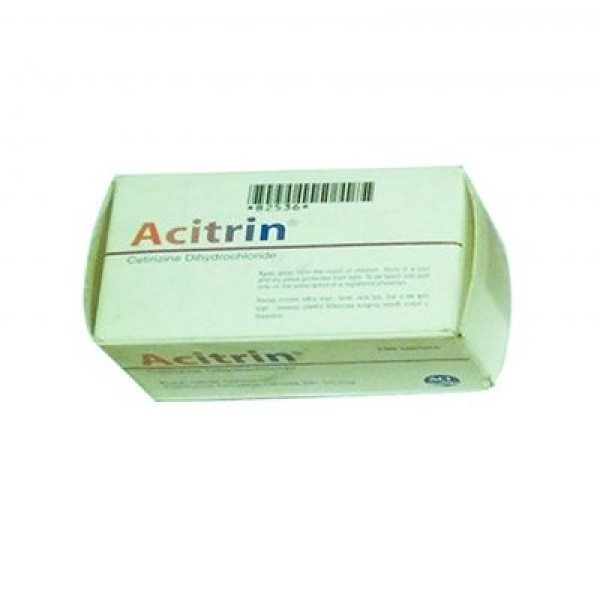
Acitrin-L Tablet — Levocetirizine 5mg Next-Generation Antihistamine
| Product Overview | |
|---|---|
| Brand Name | Acitrin-L® Tablet |
| Generic Name | Levocetirizine Hydrochloride 5 mg |
| Manufacturer | ACI Pharmaceuticals Ltd., Bangladesh |
| Drug Class | Third-Generation Antihistamine (R-enantiomer of Cetirizine) |
| Dosage Form | Film-coated Tablet |
| Pack Size | 10 tablets per strip |
| Strength | 5 mg per tablet (equivalent to 10mg cetirizine) |
| Prescription Status | Prescription Required (Rx) |
| Storage | Below 30°C, dry place, protected from light. |
1. Indications
Acitrin-L® Tablet (Levocetirizine 5mg) is a third-generation antihistamine — the pure R-enantiomer of cetirizine — offering enhanced H1 binding with twice the potency at half the molecular dose. Indicated for: seasonal allergic rhinitis (sneezing, nasal congestion, rhinorrhoea, pruritus, watery/itchy eyes); perennial allergic rhinitis (year-round dust mite, pet dander, mould allergy); chronic idiopathic urticaria (CIU) — once-daily control of recurrent hives and pruritus; allergic conjunctivitis; atopic dermatitis (pruritus management); drug-induced rash with allergic component; and insect bite reactions.
Diabetes relevance: Diabetic patients frequently experience pruritus (itching) from dry skin, peripheral neuropathy, or fungal infections. Levocetirizine's superior H1 receptor selectivity and minimal anticholinergic burden makes it ideal for long-term allergy management in diabetics. No blood glucose effects, safe with all diabetes medications.
2. Mechanism of Action
Levocetirizine is the pharmacologically active R-enantiomer of cetirizine, with approximately twice the affinity for H1 receptors compared to the racemate. It binds selectively and competitively to peripheral H1 receptors on smooth muscle, vascular endothelium, sensory nerves, and secretory cells — blocking histamine-mediated vasodilation, oedema, mucus secretion, and pruritus. As a "third-generation" antihistamine, levocetirizine demonstrates: highest H1 receptor selectivity; negligible CNS penetration; no anticholinergic effects; no cardiac sodium-channel effects (safer cardiac profile than terfenadine); and no CYP450 inhibition.
3. Dosage & Administration
Adults and children ≥12 years: 5mg (1 tablet) once daily in the evening. Children 6–11 years: 5mg once daily. Children 2–5 years: 2.5mg once daily (use oral solution). Renal impairment: CrCl 50–79 ml/min: 5mg once daily. CrCl 30–49 ml/min: 5mg every other day. CrCl 10–29 ml/min: 5mg twice weekly. CrCl <10 ml/min: Contraindicated. Dialysis: Contraindicated.
Take with or without food. Evening dosing minimises any residual drowsiness. Swallow whole with water.
4. Side Effects
Somnolence (most common, 6% — still lower than first-generation antihistamines). Headache, fatigue. Dry mouth (uncommon — no anticholinergic mechanism). GI: nausea. Rarely: palpitation, urinary retention (elderly). No QT prolongation. No blood glucose effects. At approved doses, CNS effects are minimal.
5. Contraindications
Hypersensitivity to levocetirizine, cetirizine, hydroxyzine, or piperazine derivatives. Severe renal impairment (CrCl <10 ml/min) — renal dialysis patients. Children under 2 years (safety not established for tablet).
6. Warnings & Precautions
Dose interval adjustment mandatory in renal impairment (see dosage). Caution driving/machinery until response known. Avoid alcohol — additive CNS depression. Diabetic patients with nephropathy: use the renal impairment dosing schedule if CrCl <50 ml/min — this is important in advanced diabetic kidney disease. No blood glucose effect — safe with all diabetes medications.
7. Drug Interactions
CNS depressants: additive drowsiness. Ritonavir (HIV): increased levocetirizine exposure — dose reduction advised. No interactions with: theophylline, azithromycin, pseudoephedrine, ketoconazole, metformin, insulin, sulfonylureas, SGLT-2 inhibitors, DPP-4 inhibitors, or GLP-1 agonists. No CYP450 inhibition — very low interaction potential.
8. Pharmacokinetics
Oral bioavailability ~100% (higher than racemic cetirizine). Tmax 0.9h. Protein binding 90%. Half-life ~7–10h. Renal elimination >85% unchanged — dose reduction critical in renal impairment. Compared to cetirizine racemate: levocetirizine has higher receptor affinity (Ki = 3.2 nM vs 6 nM), lower volume of distribution, and longer receptor binding (accounts for once-daily efficacy). CNS penetration minimal.
9. Storage
Store below 30°C in a dry place, protected from light. Keep out of reach of children.
10. Course Duration
For seasonal rhinitis: throughout the allergy season. For chronic urticaria: regular daily dosing as prescribed — levocetirizine's consistent H1 blockade provides ongoing urticaria suppression. For acute urticaria: 3–7 days. Do not double dose if missed.
11. Overdose
Overdose: somnolence in adults, agitation in children possible. No specific antidote. Not significantly dialyzable. Supportive management.
12. Clinical Evidence
Levocetirizine 5mg is supported by multiple double-blind RCTs demonstrating superior efficacy over placebo and non-inferiority/superiority vs cetirizine and loratadine for allergic rhinitis (XPERT trial) and chronic urticaria. EAACI/WAO guidelines recommend levocetirizine as a preferred second-generation antihistamine for urticaria. In Bangladesh, increasingly prescribed as first-line for chronic urticaria given its strong H1 selectivity and tolerability profile.
13. Patient Counselling
Take once daily in the evening. Can be taken with food. Report excessive sleepiness, difficulty urinating, or irregular heartbeat. Do not double up missed doses. For diabetic patients with kidney disease: ensure your physician has adjusted the dosing frequency based on your renal function. Do not take with alcohol. Generally safe for long-term use as directed.
Frequently Asked Questions (FAQ)
Q1. Is levocetirizine (Acitrin-L) better than cetirizine (Acitrin)?
Levocetirizine is the pure active R-enantiomer of cetirizine, with approximately twice the H1 receptor binding affinity. Clinical studies show levocetirizine 5mg provides similar or slightly superior efficacy to cetirizine 10mg for allergic rhinitis and urticaria, with comparable or marginally fewer adverse effects. For most patients, both are effective once-daily antihistamines. Levocetirizine is preferred when a higher potency is needed, when patients experience side effects with cetirizine, or when the prescriber prefers a more receptor-selective agent for long-term use such as chronic urticaria management.
Q2. Why does levocetirizine 5mg require dose adjustment in kidney disease?
Over 85% of levocetirizine is eliminated by the kidneys unchanged. In renal impairment, drug accumulates — increasing sedation and side effect risk. Dose adjustments are: CrCl 50–79 ml/min: once daily (standard); CrCl 30–49 ml/min: every other day; CrCl 10–29 ml/min: twice weekly; CrCl <10 ml/min: contraindicated. Diabetic patients with nephropathy should have their renal function monitored before starting levocetirizine and dosing adjusted accordingly.
Q3. Can Acitrin-L be taken long-term for chronic urticaria?
Yes — levocetirizine is specifically indicated and well-studied for chronic idiopathic urticaria (CIU) requiring long-term daily antihistamine therapy. International guidelines (EAACI/WAO) recommend continuous daily antihistamine use for CIU — increasing to 4× the standard dose (up to 20mg cetirizine equivalent, or 20mg levocetirizine) in refractory cases under specialist supervision. At the standard 5mg daily dose, long-term safety is well established from post-marketing surveillance data across many years of use.
Q4. Is Acitrin-L safe for diabetic patients taking multiple medications?
Yes — levocetirizine has no pharmacokinetic interactions with common diabetes medications: metformin, glibenclamide, glimepiride, sitagliptin, vildagliptin, empagliflozin, dapagliflozin, insulin, liraglutide, or semaglutide. It does not affect blood glucose, insulin sensitivity, or HbA1c. The only diabetes-specific caution is dose adjustment in patients with diabetic nephropathy (reduced renal function), where the drug accumulates due to predominant renal elimination.
⚕ Medical Disclaimer: Acitrin-L® Tablet is a prescription antihistamine. Dose adjustment is mandatory in renal impairment — consult your physician. Information sourced from ACI Pharmaceuticals Ltd. official prescribing data. Educational purposes only.