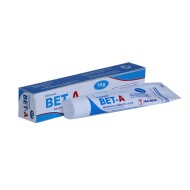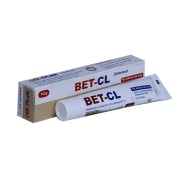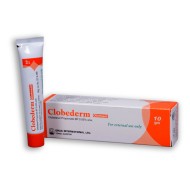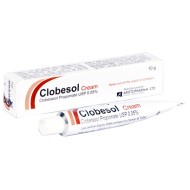
- Stock: Out Of Stock
- Brand: Acme Laboratories Limited
- Product ID: Clobetasol Propionate + Neomycin Sulphate + Nystatin
🔒 100% Secure Payment | bKash | Nagad | SSLCommerz | COD
⭐ Become a FREE Member: 7% Extra Savings • Free Delivery • Refill Reminders • Priority Support
This Item is for pre order
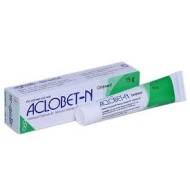
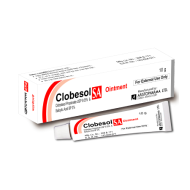
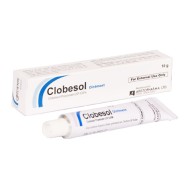
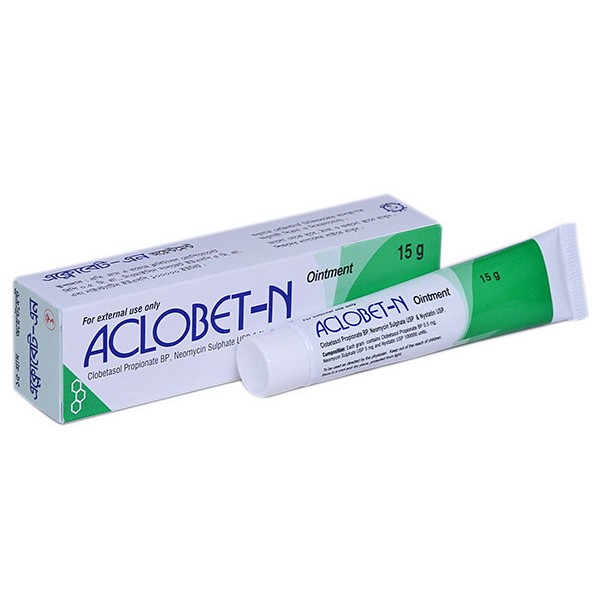
Aclobet-N 15 gm Ointment — Clobetasol + Neomycin + Nystatin Triple-Action Topical Ointment
| Attribute | Details |
|---|---|
| Brand Name | Aclobet-N |
| Generic Name | Clobetasol Propionate 0.05% + Neomycin Sulphate 0.5% + Nystatin BP 1,00,000 IU/g |
| Dosage Form | Ointment (Topical) |
| Pack Size | 15 gm tube |
| Manufacturer | The ACME Laboratories Ltd., Bangladesh |
| Therapeutic Class | Topical Corticosteroid + Antibacterial + Antifungal (Triple Combination) |
| Prescription Status | Prescription Only (℞) |
| Storage | Store below 30°C, away from direct sunlight. Keep tube tightly closed. |
Overview
Aclobet-N 15 gm Ointment is a triple-combination topical preparation in an occlusive petrolatum-based ointment vehicle, containing clobetasol propionate 0.05%, neomycin sulphate 0.5%, and nystatin BP 1,00,000 IU/g. The ointment formulation is preferred over the cream for dry, thickened, scaly, or chronic lesions that benefit from enhanced drug penetration and moisturisation. The occlusive white soft paraffin base softens hyperkeratotic plaques, improves penetration of all three active ingredients, and provides a barrier effect in compromised skin. Manufactured by The ACME Laboratories Ltd., Aclobet-N Ointment is particularly valuable for chronic infected dermatoses with lichenification and scaling, where the ointment vehicle confers a pharmacokinetic advantage over the cream formulation.
Composition
Each gram of Aclobet-N Ointment contains: Clobetasol Propionate BP 0.05% (0.5 mg), Neomycin Sulphate BP equivalent to Neomycin base 0.5% (5 mg), and Nystatin BP 1,00,000 IU in a petrolatum-based ointment vehicle consisting of white soft paraffin (Vaseline) and propylene glycol. The anhydrous ointment base is preservative-free and suitable for patients sensitive to chlorocresol (present in the cream formulation).
Mechanism of Action
Clobetasol Propionate (0.05%): Binds glucocorticoid receptors in dermal cells, translocates to the nucleus, and suppresses the transcription of inflammatory cytokines (IL-1β, IL-2, IL-6, TNF-α), prostaglandins, and leukotrienes. Group I super-potent classification (~18× relative potency versus hydrocortisone) provides powerful anti-inflammatory, antipruritic, and vasoconstricting effects. Ointment vehicle enhances percutaneous absorption by approximately 10-fold compared to non-occluded cream application.
Neomycin Sulphate (0.5%): Aminoglycoside antibiotic that binds the 30S ribosomal subunit, causing mRNA misreading and inhibiting bacterial protein synthesis. Bactericidal against Gram-positive cocci (particularly Staphylococcus aureus) and Gram-negative organisms commonly implicated in secondarily infected dermatoses.
Nystatin BP 1,00,000 IU/g: Polyene antifungal that binds ergosterol in fungal cell membranes, creating membrane pores and causing lethal osmotic imbalance. Effective against Candida albicans and other Candida species causing cutaneous candidiasis. Not systemically absorbed through intact skin.
Indications
Aclobet-N Ointment is indicated for chronic, thickened, or scaly inflammatory skin disorders with confirmed or suspected secondary bacterial and fungal infection, including: lichenified infected eczema (particularly atopic and nummular eczema); infected plaque psoriasis with superimposed bacterial colonisation; thick infected lichen simplex chronicus; chronic infected palmoplantar dermatitis; secondarily infected lichen planus; intertriginous and flexural dermatoses with Candida and bacterial superinfection in diabetic patients. The ointment base is specifically appropriate for dry, hyperkeratotic, and chronic lichenified lesions where the cream vehicle would be insufficient.
Dosage and Administration
Apply a thin film of Aclobet-N Ointment to the affected skin area 2–3 times daily or as directed by the physician. Rub gently until absorbed. Maximum treatment duration is 4 consecutive weeks. Weekly application should not exceed 50 grams. Do not apply under occlusive dressings — the ointment base already provides significant occlusion. Avoid application to the face, groin, axillae, or intertriginous areas unless under specialist supervision. Wash hands after application. After infection control, consider stepping down to plain clobetasol ointment or a lower-potency preparation.
Contraindications
Contraindicated in: hypersensitivity to clobetasol propionate, neomycin sulphate, nystatin, or any ointment excipient; untreated bacterial skin infections (beyond the neomycin coverage spectrum); viral skin infections including herpes simplex, herpes zoster, and varicella; tuberculous skin lesions; neonates and infants; application on the face, eyelids, groin, or mucous membranes without specialist instruction. Not for ophthalmic use. Not for use in or around a perforated eardrum.
Side Effects
The ointment vehicle increases percutaneous absorption relative to cream, heightening the risk of systemic effects with extensive application. Local effects include: skin atrophy, striae, telangiectasia, acneiform eruptions, hypertrichosis, perioral dermatitis, and miliaria. Neomycin contact sensitisation (5–15% prevalence) may cause paradoxical worsening of dermatitis — suspect if the condition deteriorates instead of improving. Prolonged neomycin use promotes emergence of resistant Staphylococcus aureus strains. Systemic absorption may cause HPA axis suppression, hyperglycaemia, and rarely Cushing's syndrome. The anhydrous ointment base may cause folliculitis in hairy areas.
Warnings and Precautions
Diabetic patients: The occlusive ointment base significantly enhances clobetasol absorption — diabetic patients applying Aclobet-N Ointment over large body surface areas are at greater risk of clinically significant hyperglycaemia compared to the cream formulation. Blood glucose monitoring is strongly recommended during treatment. Infected skin lesions in diabetes — particularly on the feet, legs, or intertriginous areas — require physician assessment before initiating any potent topical steroid. The risk of skin atrophy in diabetic skin (which is often compromised) is higher with the ointment vs. cream preparation. Monitor closely and switch to cream or lower potency steroid once infection is controlled.
Drug Interactions
The occlusive ointment vehicle substantially increases systemic absorption of clobetasol, amplifying all steroid-related interactions. CYP3A4 inhibitors (ritonavir, itraconazole, ketoconazole) may further increase systemic clobetasol levels. Systemic aminoglycosides combined with topical neomycin over large broken-skin areas may increase nephrotoxic and ototoxic risk. Antidiabetic medications may require dose adjustment if hyperglycaemia occurs. Systemic antifungals reduce the need for topical nystatin coverage and should be coordinated.
Ointment vs. Cream — When to Choose Aclobet-N Ointment
The ointment formulation is preferred when: lesions are dry, scaling, or lichenified (psoriatic plaques, lichenified eczema); the skin requires both enhanced drug delivery and emollient barrier repair; patients have chlorocresol sensitivity (cream contains chlorocresol preservative, ointment does not); or treatment of thick-skinned areas (palms, soles, elbows, knees) is required. The cream is preferred for weeping, moist, or intertriginous lesions and for cosmetically sensitive patients (daytime use). Both contain identical active ingredients at identical concentrations.
How Supplied
Aclobet-N Ointment is available in a 15 gm collapsible aluminium tube, manufactured by The ACME Laboratories Ltd., Bangladesh. Store below 30°C, away from heat and direct sunlight. Keep the tube tightly closed after each use. Store out of reach of children. Do not use beyond the expiry date printed on the tube and outer carton.
Frequently Asked Questions (FAQ)
Q1: What is the difference between Aclobet-N Ointment and Aclobet-N Cream?
Both contain the same three active ingredients at identical concentrations. The difference is the vehicle: the ointment uses white soft paraffin (Vaseline base) which is occlusive, enhances drug absorption, and is ideal for dry, thickened, or scaly lesions. The cream uses an oil-in-water emulsion base which is less greasy, better tolerated in moist areas, and preferred for acute or intertriginous conditions. Ointment also lacks the chlorocresol preservative found in the cream, making it preferable for patients with preservative sensitivity.
Q2: Can Aclobet-N Ointment be used on the feet for a diabetic patient with infected cracked heels?
Infected cracked heels in a diabetic patient require careful assessment — clobetasol is a very potent steroid and should not be applied to open, cracked, or ulcerated skin as it delays healing and masks infection progression. The correct approach is: debridement of devitalised tissue, systemic antibiotics for significant bacterial infection, antifungal therapy for tinea pedis, and emollient therapy. Consult a podiatrist or physician before applying any topical corticosteroid to diabetic foot lesions.
Q3: Is Aclobet-N Ointment safe to use under clothing?
Normal clothing does not constitute occlusion. However, avoid tight bandaging, plastic wraps, or waterproof dressings over the ointment as this creates a true occlusive environment that dramatically increases systemic absorption — up to 10-fold. This significantly increases the risk of adrenal suppression and hyperglycaemia. Apply a thin film and allow it to be partially absorbed before dressing.
Q4: How do I know if Aclobet-N Ointment is working?
Improvement should be visible within 3–7 days of consistent twice-daily application: reduced redness, less itching, softening of hard plaques, and improvement of any weeping or crusting from secondary infection. If no improvement is seen within 7 days, or if the condition worsens, discontinue and consult your dermatologist — this may indicate neomycin sensitisation, drug-resistant organisms, incorrect diagnosis, or a condition requiring systemic therapy.