- Stock: Out Of Stock
- Brand: ACI Pharmaceuticals
- Product ID: Flupentixol + Melitracen
🔒 100% Secure Payment | bKash | Nagad | SSLCommerz | COD
⭐ Become a FREE Member: 7% Extra Savings • Free Delivery • Refill Reminders • Priority Support
This Item is for pre order
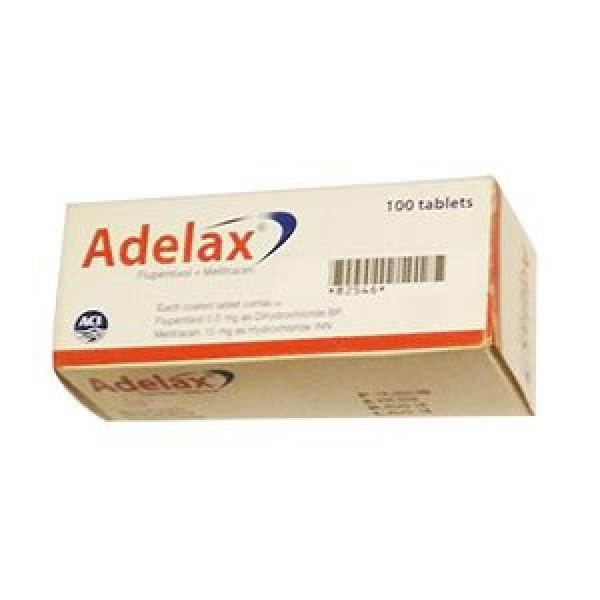
Adelax 0.5 mg Tablet (Flupentixol + Melitracen) – ACI Limited
| Brand Name | Adelax Tablet |
|---|---|
| Generic Name | Flupentixol 0.5 mg + Melitracen 10 mg |
| Strength | Flupentixol 0.5 mg / Melitracen 10 mg per tablet |
| Dosage Form | Tablet (film-coated) |
| Manufacturer | ACI Limited, Bangladesh |
| Drug Class | Antidepressant / Anxiolytic Combination (Thioxanthene + Tricyclic Antidepressant) |
| Pack Size | 10 Tablets per Strip |
| Prescription Required | Yes (Rx) |
| Storage | Store below 30°C, away from light and moisture |
1. About Adelax (Flupentixol + Melitracen)
Adelax Tablet is a fixed-dose combination of Flupentixol 0.5 mg and Melitracen 10 mg, manufactured by ACI Limited, Bangladesh. This well-established combination is designed to provide simultaneous relief from both depression and anxiety — two conditions that frequently co-exist in clinical practice, particularly in patients with chronic diseases such as diabetes mellitus, hypertension, and cardiovascular disease.
Flupentixol (a thioxanthene derivative) at low doses acts as a mood-elevating and activating agent, while Melitracen (a tricyclic antidepressant) provides anxiolytic and antidepressant effects. Together, they produce a balanced psychotropic effect that addresses the full spectrum of mixed anxiety-depressive disorders. This combination has been used in clinical practice across South and Southeast Asia, Europe, and many other regions for decades.
2. Mechanism of Action
Flupentixol 0.5 mg: At the low doses used in Adelax, flupentixol acts as a dopamine D1/D2 receptor antagonist with presynaptic dopamine-releasing properties. At sub-neuroleptic doses, it enhances dopaminergic transmission in mesolimbic pathways, producing mood-elevating, activating, and anti-anxiety effects without sedation. It also has moderate antagonism at serotonin (5-HT2) receptors, contributing to its antidepressant activity.
Melitracen 10 mg: Melitracen is a tricyclic antidepressant that primarily inhibits the reuptake of serotonin and noradrenaline (norepinephrine) at presynaptic nerve terminals, increasing the availability of these monoamine neurotransmitters in the synaptic cleft. It also has mild sedative and anxiolytic properties mediated by histamine H1 and muscarinic receptor blockade at therapeutic doses.
The combination provides complementary and synergistic antidepressant-anxiolytic activity: flupentixol's rapid mood activation (onset 1–2 days) with melitracen's sustained antidepressant and anxiolytic effect, resulting in comprehensive management of mixed anxiety-depressive states.
3. Indications
Adelax (Flupentixol + Melitracen) is indicated for:
- Mixed anxiety-depressive disorder: The most common indication — patients presenting with a combination of depressive symptoms and anxiety/tension that do not meet full criteria for either disorder alone
- Mild to moderate depression with concomitant anxiety: Including reactive depression, neurotic depression, and adjustment disorder with depressive features
- Anxiety states: Generalized anxiety, psychosomatic anxiety, anticipatory anxiety
- Psychosomatic disorders: Somatic complaints (headache, GI upset, chest tightness, palpitations) with underlying anxiety-depressive basis
- Depressive disorder in diabetes: Comorbid depression is extremely common in diabetic patients (25–30% prevalence); Adelax may be used as part of a holistic management approach under specialist supervision
- Fatigue and low mood: States of apathy, lack of motivation, and emotional blunting associated with anxiety and depression
Adelax is not indicated for severe depression, psychotic disorders, bipolar disorder, or conditions requiring high-dose antipsychotic therapy.
4. Dosage and Administration
Usual adult dose:
- Starting dose: 1 tablet twice daily (morning and midday/early afternoon)
- Maintenance dose: 1 tablet twice daily (morning and noon) — typically long-term as directed by the physician
- Maximum dose: 2 tablets twice daily in severe cases (as per physician's decision)
Timing is important: Due to the activating properties of flupentixol, Adelax should NOT be taken in the evening or at night as it may cause insomnia. Take the last dose no later than early afternoon (before 3 PM).
Administration: Swallow whole with water. Can be taken with or without food. Onset of therapeutic effect: typically within 3–7 days for anxiolytic effect; full antidepressant effect may take 2–4 weeks.
Duration: Treatment should continue for the physician-recommended duration (typically 2–6 months minimum). Do not stop abruptly — gradual tapering is recommended to avoid discontinuation symptoms.
Elderly patients: Use with caution; start at the lowest effective dose. Monitor for extrapyramidal effects and orthostatic hypotension.
Renal/hepatic impairment: Use with caution; no specific dose adjustment guidelines are established — clinical judgment required.
5. Contraindications
- Concurrent use of MAO inhibitors (MAOIs) or within 14 days of stopping a MAOI — risk of severe serotonin syndrome or hypertensive crisis
- Acute alcohol intoxication or central nervous system (CNS) depression
- Comatose states or significantly impaired consciousness
- Congenital long QT syndrome or known prolonged QTc interval
- Hypersensitivity to flupentixol, melitracen, or tricyclic/thioxanthene compounds
- Pheochromocytoma (risk of hypertensive crisis)
- Severe cardiac conduction disorders
- Acute angle-closure glaucoma — anticholinergic effects may precipitate crisis
- Urinary retention — anticholinergic effects of melitracen may worsen this
- Children below 18 years — safety not established
6. Warnings and Precautions
Suicide Risk: Antidepressants may increase suicidal ideation in young adults (18–24 years) during initial weeks of treatment. Close monitoring is essential, especially during dose adjustment. Patients and caregivers should be counseled to report any worsening mood, agitation, or suicidal thoughts immediately.
Tardive Dyskinesia: Long-term use of any antipsychotic/neuroleptic carries a small risk of tardive dyskinesia (involuntary repetitive movements). The low dose of flupentixol in Adelax greatly reduces this risk, but patients on long-term therapy should be reviewed periodically.
Extrapyramidal Effects: May rarely occur, especially at higher doses or in susceptible individuals. Report any unusual muscle movements, tremor, or restlessness to your physician.
Seizure Threshold: Tricyclic antidepressants lower the seizure threshold. Use with caution in epileptic patients.
Cardiovascular Effects: Both components can prolong the QT interval and cause orthostatic hypotension. Use with caution in patients with cardiac disease or taking other QT-prolonging medications.
Diabetes and Antidepressants: Depression is common in diabetes and significantly worsens glycemic control. Treating depression in diabetic patients can improve blood glucose management, medication adherence, and quality of life. However, some antidepressants may affect blood glucose levels — monitor glycemic control when starting or changing Adelax.
Driving and Machinery: May cause sedation or dizziness, particularly in the first few weeks of treatment or at higher doses. Caution required when driving or operating machinery.
Anticholinergic effects: Dry mouth, blurred vision, constipation, and urinary hesitancy may occur due to melitracen's anticholinergic properties.
Abrupt Discontinuation: Do not stop suddenly — gradual tapering is recommended to avoid withdrawal symptoms (insomnia, GI disturbance, headache, irritability).
7. Side Effects
Common (may improve with time):
- Dry mouth, constipation, difficulty urinating — anticholinergic effects
- Mild tremor or restlessness (akathisia)
- Dizziness, particularly on standing (orthostatic hypotension)
- Headache (especially in first week)
- Insomnia if taken in the evening — avoid late doses
- Increased sweating
- Weight change
Less common:
- Blurred vision
- Mild extrapyramidal symptoms (muscle stiffness, tremor)
- Palpitations
- Mild sedation at higher doses
Rare but serious (seek immediate medical attention):
- Tardive dyskinesia (long-term use)
- Neuroleptic malignant syndrome (very rare — fever, muscle rigidity, altered consciousness)
- Severe cardiac arrhythmia (QT prolongation)
- Allergic reactions (rash, urticaria, angioedema)
- Worsening depression or suicidal ideation (especially in early treatment)
8. Drug Interactions
Contraindicated: MAO inhibitors (phenelzine, tranylcypromine, isocarboxazid, moclobemide) — serious risk of serotonin syndrome or hypertensive crisis; do not use within 14 days of each other
Significant interactions:
- Serotonergic drugs (SSRIs, SNRIs, tramadol, triptans, lithium) — increased serotonin syndrome risk
- Other QT-prolonging drugs (clarithromycin, haloperidol, amiodarone, ondansetron) — additive QT prolongation
- CNS depressants (benzodiazepines, opioids, alcohol, antihistamines) — enhanced sedation
- Antihypertensives — potentiation of blood pressure lowering
- Anticholinergic drugs — additive anticholinergic side effects
- Levodopa — flupentixol may reduce levodopa efficacy (dopamine antagonism)
- Adrenaline (epinephrine) — tricyclics may potentiate cardiovascular effects of adrenaline
9. Pharmacokinetics
Flupentixol 0.5 mg: Well absorbed orally. Tmax ~3–8 hours. Hepatic metabolism (N-dealkylation, sulphoxidation). Primarily excreted in feces. Long half-life ~35 hours allowing twice-daily dosing.
Melitracen 10 mg: Rapidly absorbed. Tmax ~2–4 hours. Hepatic metabolism (demethylation, hydroxylation). Half-life ~19 hours. Excreted as glucuronide metabolites in urine and feces.
Both components are highly lipophilic and protein-bound. The combination allows complementary pharmacodynamic actions with compatible pharmacokinetic profiles.
10. Depression and Diabetes — Clinical Significance
Depression is twice as common in people with diabetes compared to the general population. The bidirectional relationship is well-established:
- Depression worsens glycemic control through hormonal dysregulation (HPA axis activation increases cortisol, which raises blood glucose), reduced medication adherence, and lifestyle deterioration
- Poorly controlled diabetes causes brain microvascular damage, increasing depression and anxiety risk
- Anxiety and depression reduce HbA1c compliance in T2DM patients by up to 30%
- Treating comorbid depression can improve HbA1c by 0.5–1% in some studies
For diabetic patients, treating depression is not just a mental health intervention — it directly improves metabolic outcomes. Physicians managing diabetic patients should routinely screen for depression and anxiety and consider appropriate pharmacological treatment when indicated.
11. Clinical Evidence
The Flupentixol + Melitracen combination has been studied in numerous clinical trials demonstrating superiority over placebo and comparable efficacy to other antidepressants in mixed anxiety-depressive states. Key observations:
- Rapid onset of anxiolytic effect (within 3–7 days) — important for patient adherence
- Favorable tolerability profile compared to higher-dose antidepressants or benzodiazepines
- Non-sedating at recommended doses (in contrast to many tricyclics and benzodiazepines)
- Low risk of dependence compared to benzodiazepines
- Effective in psychosomatic presentations common in primary care settings in Bangladesh
12. ACI Limited — Manufacturer
Adelax is manufactured by ACI Limited, a WHO-GMP certified, publicly listed pharmaceutical company in Bangladesh. ACI is one of the country's leading manufacturers with comprehensive quality assurance systems and widespread distribution across Bangladesh. Their manufacturing facilities comply with international standards, ensuring consistent product quality and safety.
13. Storage and Handling
- Store below 30°C in a cool, dry place
- Protect from light and moisture
- Keep out of reach of children
- Do not use after the expiry date on the strip/box
- Keep in original blister packaging until use
Frequently Asked Questions (FAQ)
Q1: What is Adelax tablet used for?
Adelax tablet contains Flupentixol 0.5 mg and Melitracen 10 mg — a combination used to treat mixed anxiety and depression, particularly in patients who experience both depressive symptoms (low mood, fatigue, loss of interest) and anxiety symptoms (worry, tension, nervousness) simultaneously. It is also used for anxiety-related physical complaints (psychosomatic symptoms) such as unexplained headaches, palpitations, and stomach upsets. It is a commonly prescribed medicine in Bangladesh for outpatient management of mild-to-moderate depression with anxiety.
Q2: When should I take Adelax and why not at night?
Adelax should be taken in the morning and early afternoon (e.g., 8 AM and 12–1 PM) — never in the late afternoon or evening. This is because flupentixol has activating and mood-elevating properties that can cause insomnia if taken close to bedtime. The last dose should be taken no later than early afternoon (before 3 PM). If you are taking only one tablet daily, take it in the morning. Consistent timing helps maintain stable blood levels and maximize therapeutic effect.
Q3: How long does Adelax take to work?
The anxiolytic (anti-anxiety) effect of Adelax typically begins within 3 to 7 days of starting treatment — patients often notice reduced anxiety and improved mood within the first week. The full antidepressant effect takes longer — usually 2 to 4 weeks of regular use. Do not stop the medication because you feel better after a few days; continue for the full duration your doctor prescribed (typically 2–6 months). Stopping too early greatly increases the risk of relapse.
Q4: Can diabetic patients take Adelax for depression?
Yes — Adelax (Flupentixol + Melitracen) can be used in diabetic patients with comorbid depression and anxiety under a physician's supervision. Depression affects up to 30% of people with diabetes and significantly worsens blood glucose control and quality of life. Treating depression appropriately can improve medication adherence and glycemic management. However, diabetic patients should monitor blood glucose when starting or changing antidepressant therapy, as some medications can subtly affect glucose levels. Always inform your diabetologist or physician before starting any psychiatric medication.