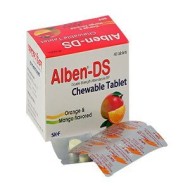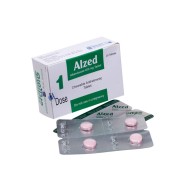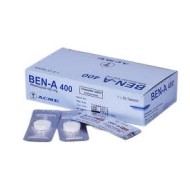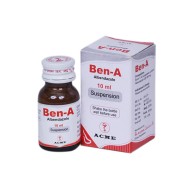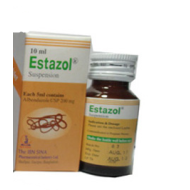
- Stock: In Stock
- Brand: Beximco Pharmaceutical
- Product ID: Albendazole 400 mg
Available Options
🔒 100% Secure Payment | bKash | Nagad | SSLCommerz | COD
⭐ Become a FREE Member: 7% Extra Savings • Free Delivery • Refill Reminders • Priority Support
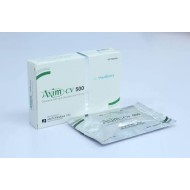
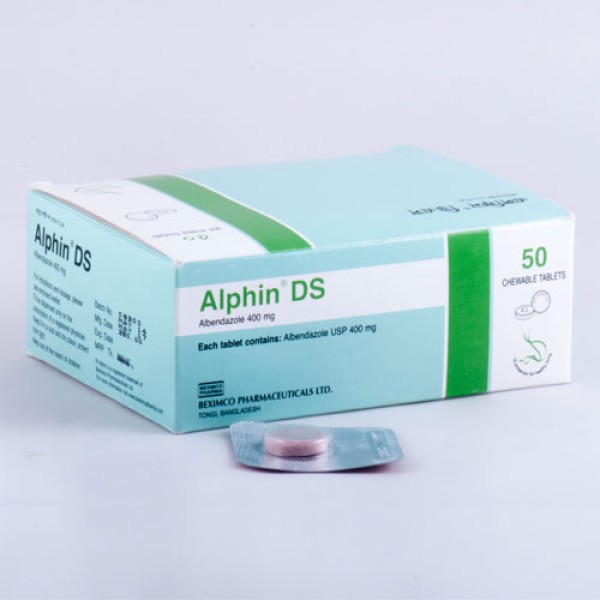
Alphin DS 400mg Tablet — Albendazole 400mg | Beximco Pharmaceuticals
| Generic Name | Albendazole 400 mg |
| Dosage Form | Tablet (standard, swallowable) |
| Drug Class | Benzimidazole Anthelmintic — Broad-Spectrum Antiparasitic |
| Manufacturer | Beximco Pharmaceuticals Ltd. |
| Prescription Status | OTC for standard deworming; Rx recommended for systemic infections |
Overview
Alphin DS 400mg contains Albendazole — the most widely used broad-spectrum anthelmintic (deworming medicine) globally, recommended by the WHO for mass drug administration (MDA) programs. Albendazole kills intestinal and tissue helminths by inhibiting tubulin polymerisation, disrupting the worm's microtubule structure — this blocks glucose uptake, impairs energy metabolism, and causes worm paralysis and death. Its broad spectrum covers most common intestinal nematodes (roundworm, hookworm, whipworm, pinworm) and many cestodes (tapeworms). It is safe, well-tolerated, and effective as a single dose for most intestinal nematode infections.
Spectrum of Activity
| Parasite | Common Name | Dose / Regimen |
|---|---|---|
| Ascaris lumbricoides | Roundworm | 400mg single dose |
| Ancylostoma duodenale / Necator americanus | Hookworm | 400mg single dose |
| Trichuris trichiura | Whipworm | 400mg single dose (or 3-day course for heavy infection) |
| Enterobius vermicularis | Pinworm / Threadworm | 400mg single dose; repeat at 2 weeks |
| Strongyloides stercoralis | Threadworm (Strongyloides) | 400mg BD × 3 days |
| Taenia saginata / T. solium | Beef/Pork Tapeworm | 400mg BD × 3 days |
| Echinococcus (hydatid cysts) | Dog tapeworm / Hydatid disease | 400mg BD × 28-day cycles; specialist only |
| Toxocara (visceral larva migrans) | Dog/Cat roundworm in humans | 400mg BD × 5 days |
Indications
- Routine deworming — WHO recommends mass albendazole administration to all children and adults in endemic areas every 6–12 months
- Soil-transmitted helminthiasis (STH) — roundworm, hookworm, whipworm (most common intestinal worm infections in Bangladesh)
- Pinworm infection — including treatment of household contacts
- Strongyloidiasis — though ivermectin is preferred where available
- Tapeworm infections — intestinal taeniasis
- Systemic helminthiasis — hydatid disease, neurocysticercosis, toxocariasis (prolonged courses; specialist only)
Dosage & Administration
| Indication | Dose | Duration | Notes |
|---|---|---|---|
| Routine deworming / Roundworm / Hookworm / Whipworm | 400 mg (1 tablet) | Single dose | Chew or swallow with water |
| Pinworm | 400 mg | Single dose; repeat after 2 weeks | Treat all household members simultaneously |
| Strongyloides / Tapeworm | 400 mg twice daily | 3 days | Take with fatty meal for better absorption |
| Hydatid disease / NCC | 400 mg twice daily | 28-day cycles with 14-day breaks | Specialist supervision; liver function monitoring |
| Children 2–12 years (all intestinal worms) | 400 mg | Single dose | Same adult dose; safe for children ≥2 years |
| Children 1–2 years | 200 mg | Single dose | Use dispersible tablet (Alphin DT) or half-tablet |
For intestinal nematode infections, albendazole can be taken with or without food. For systemic infections (hydatid, NCC), take with a fatty meal to maximise absorption (albendazole absorption increases 5-fold when taken with fat). Tablets can be chewed, swallowed whole, or crushed and mixed with food.
Special Note for Diabetic Patients
Intestinal parasites are common in Bangladesh across all socioeconomic groups. Diabetic patients may be at slightly higher risk of helminth infections due to immune modulation. Key points: (1) No glucose effect: Albendazole does not raise or lower blood glucose; (2) No interaction with diabetes medications: Albendazole does not interact with metformin, insulin, sulfonylureas, or newer diabetes drugs; (3) Worm-diabetes interaction: Heavy hookworm infection causes iron-deficiency anaemia and protein malnutrition which can worsen glycaemic control and impair wound healing — deworming improves nutritional status; (4) Hepatic monitoring for prolonged courses: Diabetics with fatty liver or hepatic impairment should monitor LFTs during prolonged albendazole courses (systemic infections). Single-dose deworming requires no special monitoring.
Side Effects
- Single-dose (routine deworming): Virtually free of significant side effects — may cause mild transient nausea, abdominal discomfort
- Prolonged courses (systemic infections): Elevated liver enzymes (common; monitor LFTs); leukopenia (rare — monitor CBC); alopecia (reversible hair loss with prolonged therapy); bone marrow suppression (rare)
- Worm-expulsion discomfort: Abdominal cramping as worms are expelled — normal and transient
Contraindications
- Pregnancy — albendazole is teratogenic; use only if clearly needed after first trimester; avoid in first trimester entirely. Use contraception during and for 1 month after treatment.
- Hypersensitivity to albendazole or other benzimidazoles
- Cirrhosis / severe hepatic impairment — for prolonged courses
Storage
Store below 30°C in a dry place, away from direct sunlight. Keep out of reach of children.
FAQ
Q1: How often should I deworm with Alphin DS?
WHO recommends deworming every 6 months for adults and children living in areas with high prevalence of soil-transmitted helminths — which includes most of Bangladesh. A single 400mg dose of albendazole twice yearly provides effective protection for most intestinal worm infections. If you have confirmed worm infection, a single dose is usually curative for most nematodes.
Q2: Should all family members take albendazole at the same time?
For pinworm (Enterobius) infections — yes, all household members should be treated simultaneously (pinworm spreads easily through the home). For routine deworming, family members can be treated together for convenience and to prevent reinfection. It is particularly important to deworm children who are more heavily exposed to soil-transmitted helminths.
Q3: Can pregnant women take Alphin DS for deworming?
No — albendazole should be avoided in the first trimester of pregnancy (teratogenic in animal studies; safety data in first trimester insufficient). For symptomatic infections in second or third trimester, the risk-benefit must be assessed by a physician. Routine deworming in pregnancy should use physician-approved alternatives or be deferred until after delivery. WHO advises that in the second and third trimester, benefits of treatment in endemic areas may outweigh risks — discuss with your doctor.
Q4: Does Alphin DS kill all types of worms?
Alphin DS covers most common intestinal worms: roundworm, hookworm, whipworm, pinworm, and tapeworms. It does not cover malaria, schistosomiasis, or Strongyloides as effectively as dedicated treatments (ivermectin for strongyloides is more effective). For unusual or systemic parasitic infections, specialist evaluation and specific treatment are required.
Medical Disclaimer: Educational information only. Albendazole is teratogenic — avoid in pregnancy (especially first trimester). For systemic parasitic infections, medical supervision and laboratory monitoring are required.