- Stock: Out Of Stock
- Brand: Incepta Pharmaceuticals
- Product ID: Allopurinol
🔒 100% Secure Payment | bKash | Nagad | SSLCommerz | COD
⭐ Become a FREE Member: 7% Extra Savings • Free Delivery • Refill Reminders • Priority Support
This Item is for pre order
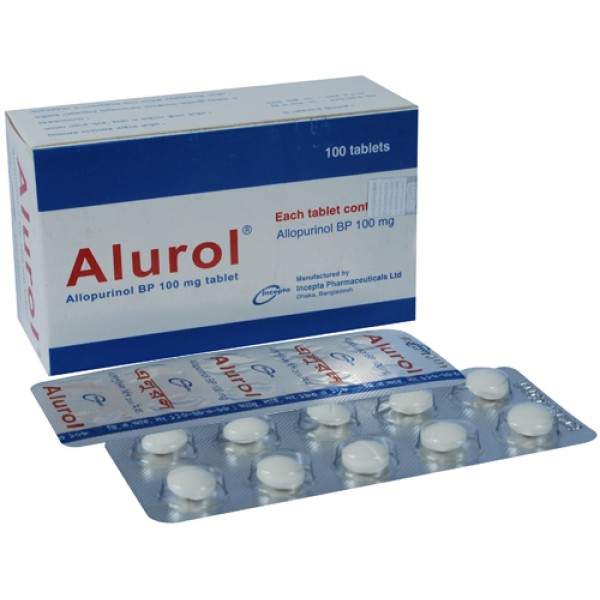
Alurol 100mg Tablet — Allopurinol 100mg | Beximco Pharmaceuticals
| Generic Name | Allopurinol 100 mg |
| Dosage Form | Tablet |
| Drug Class | Xanthine Oxidase Inhibitor — Uricosuric / Antigout Agent |
| Manufacturer | Beximco Pharmaceuticals Ltd. |
| Available Strengths | 100 mg (this — starting / maintenance low dose), 300 mg (higher maintenance) |
| Prescription Status | Prescription required |
Overview
Alurol 100mg contains Allopurinol — the gold-standard drug for long-term prevention of gout and management of hyperuricaemia (elevated serum uric acid). Allopurinol inhibits xanthine oxidase, the enzyme responsible for converting hypoxanthine → xanthine → uric acid. By blocking this final step of purine catabolism, allopurinol dramatically reduces uric acid production, lowering serum uric acid levels, dissolving existing urate crystals over time, and preventing new tophi and gouty arthritis attacks. It is taken daily as a long-term preventive — not used to treat acute gout flares (NSAIDs or colchicine are used acutely; allopurinol should not be started during an acute flare).
Mechanism — Uric Acid Pathway
| Without Allopurinol | With Allopurinol (Alurol) |
|---|---|
| Purines (from diet/cell turnover) → Hypoxanthine → Xanthine → Uric Acid ↑↑ (via xanthine oxidase) | Purines → Hypoxanthine → Xanthine (xanthine oxidase BLOCKED) → Uric Acid production greatly reduced ↓↓ |
| Excess uric acid → crystalises in joints → Gout attack | Uric acid drops below saturation threshold → No new crystal formation; existing crystals slowly dissolve |
Indications
- Chronic Gout (primary indication) — long-term prophylaxis; target serum urate below 360 µmol/L (6 mg/dL), or below 300 µmol/L in tophaceous gout
- Hyperuricaemia — asymtomatic elevation of serum uric acid (especially with renal impairment or urate nephropathy)
- Uric Acid Kidney Stones (Urolithiasis) — prevention of recurrent urate nephrolithiasis
- Tumour Lysis Syndrome — prophylaxis before chemotherapy for haematological malignancies (prevents massive uric acid release)
- Xanthinuria — rare enzyme deficiency
Dosage & Administration
| Indication | Starting Dose | Maintenance | Notes |
|---|---|---|---|
| Gout / Hyperuricaemia | 100 mg once daily | 100–300 mg/day (titrate to serum urate target) | Start low; increase by 100mg every 2–4 weeks; monitor urate levels |
| Severe Gout / Tophaceous Gout | 100 mg daily | Up to 600–900 mg/day (divided doses) | Doses over 300mg/day in divided doses; specialist supervision |
| Uric Acid Kidney Stones | 100–200 mg daily | 200–300 mg/day | Combine with high fluid intake (2–3 L/day) |
| Renal Impairment (CrCl 10–50) | 50–100 mg daily | Do not exceed 100 mg/day | Accumulation risk; dose carefully |
| Tumour Lysis Prophylaxis | 300 mg/day | Adjust per specialist protocol | Start 24–48h before chemotherapy |
Take after meals to reduce GI irritation. Drink plenty of water (aim for 2–3 litres/day) to help flush uric acid through the kidneys. Take at the same time each day. Do not start during an acute gout flare — starting allopurinol during an attack can prolong or worsen it (mobilisation of urate crystals). Co-prescribe colchicine or low-dose NSAID for the first 3–6 months of allopurinol therapy to prevent flares triggered by urate mobilisation.
Special Note for Diabetic Patients
Gout and hyperuricaemia are significantly more common in diabetic patients — particularly in those with type 2 diabetes, metabolic syndrome, obesity, and CKD. Key considerations for diabetics on Alurol: (1) Renal dose adjustment is critical: Diabetic nephropathy reduces renal clearance of allopurinol and its active metabolite oxipurinol — doses exceeding 100mg/day in moderate CKD risk severe toxicity (including life-threatening hypersensitivity syndrome); (2) SGLT-2 inhibitors and gout: Empagliflozin, dapagliflozin, and canagliflozin actually lower uric acid levels as a secondary effect — if a diabetic patient starts an SGLT-2 inhibitor, allopurinol dose may need review; (3) Interaction with azathioprine: Diabetics on immunosuppression (transplant patients) who take azathioprine must NEVER take allopurinol without extreme specialist caution — allopurinol blocks azathioprine metabolism causing life-threatening toxicity; (4) No direct glucose effect: Allopurinol does not raise or lower blood glucose and does not interact with metformin, insulin, sulfonylureas, or DPP-4 inhibitors.
Side Effects
- Acute Gout Flare (paradoxical, first 3–6 months): Mobilisation of urate crystals during serum urate reduction — co-prescribe colchicine prophylaxis
- GI: Nausea, diarrhoea, abdominal discomfort — take with food
- Skin Rash: Common (5–10%); mild maculopapular rash — stop and seek medical review; can escalate to severe hypersensitivity
- Allopurinol Hypersensitivity Syndrome (AHS): Rare but potentially life-threatening — severe skin reactions (SJS, TEN), hepatitis, renal failure, eosinophilia. Risk is highest in: HLA-B*5801 carriers (common in South/Southeast Asian populations including Bangladesh), renal impairment, diuretic use. Genetic screening for HLA-B*5801 before starting is recommended in high-risk populations.
- Hepatic: Elevated liver enzymes — rare
Contraindications
- Acute gout attack (do not initiate during acute flare)
- Known hypersensitivity to allopurinol
- Concurrent azathioprine or 6-mercaptopurine without dose reduction (severe toxicity)
Drug Interactions
| Drug | Interaction | Action |
|---|---|---|
| Azathioprine / 6-Mercaptopurine | Allopurinol blocks their metabolism → life-threatening bone marrow toxicity | CONTRAINDICATED together; if essential, reduce azathioprine to 25% of dose with intensive monitoring |
| Warfarin | Allopurinol may increase warfarin effect | Monitor INR closely |
| Ampicillin / Amoxicillin | Increased risk of skin rash with combination | Prefer alternative antibiotics where possible |
| Thiazide Diuretics | Increase uric acid levels; increase AHS risk | Monitor urate and renal function; avoid combination if possible |
| Ciclosporin | Allopurinol increases ciclosporin levels | Monitor ciclosporin levels |
Monitoring
- Serum uric acid: Target below 360 µmol/L (6 mg/dL) for gout; below 300 µmol/L in tophaceous gout. Check every 4 weeks during dose titration, then 6-monthly.
- Renal function (creatinine, eGFR): Before starting and every 6–12 months; dose adjustment required for CKD.
- Liver enzymes (LFTs): Baseline and periodically during therapy.
- Skin monitoring: Stop immediately if any rash develops — do not restart without specialist review.
Storage
Store below 25°C in a dry place, away from light and moisture. Keep out of reach of children.
FAQ
Q1: Why shouldn't I start Alurol during a gout attack?
Starting allopurinol during an acute gout attack can paradoxically worsen or prolong it. As serum uric acid levels fall, existing urate crystals in joints become less stable and break off, triggering new inflammatory episodes. Start allopurinol at least 2–4 weeks after an acute attack has fully resolved. Co-prescribe colchicine 0.5mg once or twice daily for the first 3–6 months of allopurinol to prevent mobilisation flares.
Q2: Is allopurinol safe for long-term use?
Yes — allopurinol is taken lifelong for chronic gout and is safe with appropriate monitoring. Gout is a chronic metabolic disease requiring indefinite treatment, similar to hypertension or diabetes. Stopping allopurinol causes uric acid to rise again within weeks and gout attacks to recur. The main long-term concerns are skin reactions (most occur within the first 3 months) and renal function monitoring.
Q3: My doctor wants me to check HLA-B*5801 before starting. Why?
HLA-B*5801 is a genetic marker strongly associated with severe allopurinol hypersensitivity syndrome (SJS/TEN) — particularly common in South and Southeast Asian populations (including Bangladeshis — prevalence ~6–8% in some South Asian groups vs ~0.1% in Europeans). Testing before starting identifies high-risk individuals who should avoid allopurinol or use it only with extreme caution and specialist supervision. This is now a recommended test in many Asian countries before prescribing allopurinol.
Q4: What should I eat and drink while taking Alurol?
Drink 2–3 litres of water daily to keep uric acid diluted in urine and prevent kidney stone formation. Reduce purine-rich foods: red meat, organ meats (liver, kidney), shellfish, anchovies, sardines, beer (fructose in beer and soft drinks also raises uric acid). Avoid beer and spirits (raise uric acid); moderate wine is less problematic. A low-purine diet complements allopurinol's uric acid-lowering effect but cannot replace medication in established gout.
Medical Disclaimer: Educational information only. Do not start allopurinol during an acute gout attack. Stop immediately if any skin rash develops and seek urgent medical review. Prescription required.