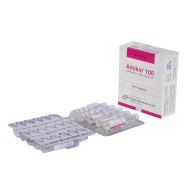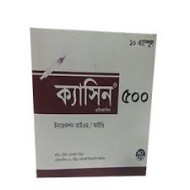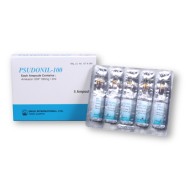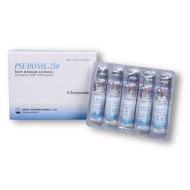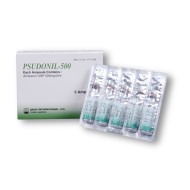
- Stock: Out Of Stock
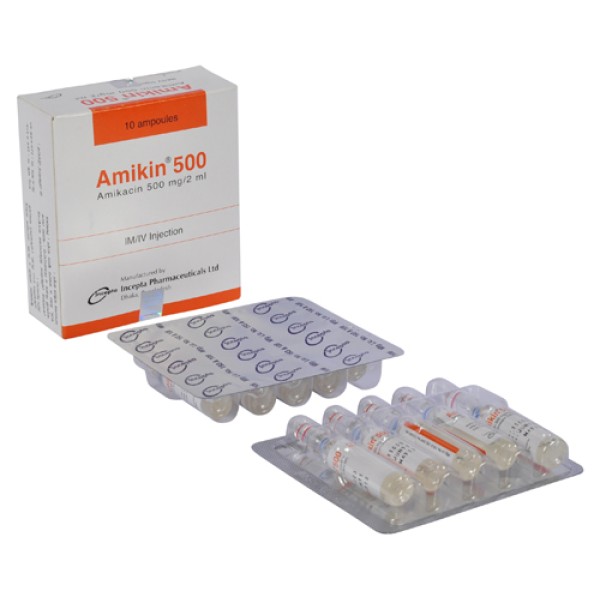
- Brand: Incepta Pharmaceuticals
- Product ID: Amikacin 500 mg/2 ml Injection
🔒 100% Secure Payment | bKash | Nagad | SSLCommerz | COD
⭐ Become a FREE Member: 7% Extra Savings • Free Delivery • Refill Reminders • Priority Support
This Item is for pre order
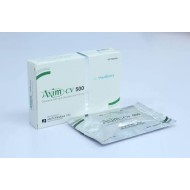
Amikin 500mg Injection — Amikacin 500mg/2mL | Beximco Pharmaceuticals
| Generic Name | Amikacin Sulfate 500 mg / 2 mL Injection |
| Dosage Form | Solution for IV / IM Injection |
| Drug Class | Aminoglycoside Antibiotic |
| Manufacturer | Beximco Pharmaceuticals Ltd. |
| Spectrum | Aerobic Gram-negative bacteria including MDR strains |
| Standard Adult Dose | 15 mg/kg/day once daily (typically 1g for a 70kg adult) |
| Prescription Status | Prescription Required — Hospital Use |
Overview
Amikin 500mg Injection provides Amikacin Sulfate 500mg per 2mL — the standard adult treatment vial. For a typical 70kg adult receiving 15mg/kg/day, two 500mg vials constitute the standard once-daily dose (1g total). Amikacin is the most enzymatically stable aminoglycoside and remains active against many MDR Gram-negative organisms resistant to gentamicin, tobramycin, and other antibiotics. It is reserved for serious infections caused by confirmed or suspected resistant organisms and is critical in ICU management of VAP (ventilator-associated pneumonia), urosepsis, and bacteraemia from Gram-negative pathogens including carbapenem-resistant strains (in combination). Amikacin is also a WHO Group C drug for MDR-TB. Therapeutic drug monitoring (TDM) is mandatory for all patients.
Mechanism of Action
Binds irreversibly to the 30S ribosomal subunit, causing mRNA misreading and bacterial cell death. Once-daily dosing exploits the concentration-dependent killing and post-antibiotic effect of aminoglycosides while reducing nephrotoxicity compared to divided doses. Requires active oxygen-dependent uptake — inactive against anaerobes.
Key Indications
- MDR Pseudomonas aeruginosa — HAP, VAP, bacteraemia (combination with beta-lactam)
- Carbapenem-resistant Enterobacteriaceae (CRE) — combination regimens
- MDR Acinetobacter baumannii — ICU pneumonia
- Severe complicated UTI / urosepsis — Klebsiella, E. coli (ESBL-producing)
- Diabetic foot infection with Gram-negative involvement (combination therapy)
- MDR-TB / XDR-TB — injectable phase of WHO regimen
- Neonatal sepsis (dose per weight — 100mg vial preferred)
Dosage and TDM Targets
| Parameter | Target | Significance |
|---|---|---|
| Dose (normal renal function) | 15 mg/kg OD (max 1.5 g/day) | Two 500mg vials for 70kg adult |
| Peak level (Cmax) — 30 min post-infusion | 56–64 mg/L | Ensures bactericidal efficacy (Cmax:MIC ≥8–10) |
| Trough level — pre-dose | <5 mg/L (ideally <1 mg/L) | Accumulation → nephrotoxicity if elevated |
| Infusion duration | 30–60 minutes IV | Bolus causes higher peak toxicity |
Critical Diabetic Patient Warnings
- Nephrotoxicity — major risk in diabetic kidney disease: Any degree of diabetic nephropathy (microalbuminuria to established CKD) multiplies amikacin nephrotoxicity risk. The tubular cells that amikacin damages are already compromised in diabetic nephropathy. eGFR must be checked before starting — significant dose reduction required for eGFR <60, and amikacin is contraindicated without specialist guidance at eGFR <30.
- Dose adjustment in CKD: Extended interval dosing based on eGFR — at eGFR 40–60: give every 36 hours; eGFR 20–40: every 48 hours; eGFR <20: avoid or use only with TDM and dialysis support.
- Ototoxicity (irreversible): Sensorineural hearing loss is permanent — baseline audiometry and monitoring during courses >7 days. Diabetic patients with peripheral neuropathy may have impaired symptom perception.
- Hydration protocol: IV hydration (500mL–1L saline) pre-amikacin significantly reduces nephrotoxicity. Ensure urine output >0.5 mL/kg/hour during treatment.
- Avoid concurrent nephrotoxins: NSAIDs, IV contrast, vancomycin, ACE inhibitors — all increase nephrotoxicity risk when combined with amikacin.
- Monitor daily: Serum creatinine, eGFR, urea, electrolytes (K⁺, Mg²⁺) every 24–48 hours during therapy. Stop if creatinine rises >50% from baseline.
Drug Interactions
| Drug | Risk | Action |
|---|---|---|
| Vancomycin | Synergistic nephrotoxicity | TDM both; daily renal monitoring |
| Loop diuretics (furosemide) | Additive ototoxicity + nephrotoxicity | Avoid if possible; if needed, use lowest diuretic dose |
| Colistin / Polymyxin B | Additive nephrotoxicity | Combination reserved for highly resistant organisms; intensive monitoring |
| NSAIDs / COX-2 inhibitors | Reduce renal perfusion → ↑ amikacin accumulation | Withhold NSAIDs during amikacin course |
| IV contrast media | Additive nephrotoxicity (CIN risk) | Withhold amikacin 48h around contrast procedure if possible |
Side Effects
Nephrotoxicity (tubular necrosis — rising creatinine, reduced urine output), irreversible sensorineural hearing loss, vestibular toxicity (vertigo, ataxia), neuromuscular blockade (rare, post-operative). All toxicities are concentration and duration-dependent — TDM-guided dosing is the primary prevention strategy.
Storage
Store at 15–25°C. Do not freeze. Protect from light. Single use — discard after withdrawal.
Medical Disclaimer: Amikacin 500mg requires mandatory TDM and daily renal function monitoring. Diabetic patients with any CKD stage have significantly elevated risk of nephrotoxicity and ototoxicity. Hospital and specialist prescription use only. Never self-administer.