- Stock: Out Of Stock
- Brand: ACI Pharmaceuticals
- Product ID: Naproxen Sodium + Esomeprazole
🔒 100% Secure Payment | bKash | Nagad | SSLCommerz | COD
⭐ Become a FREE Member: 7% Extra Savings • Free Delivery • Refill Reminders • Priority Support
This Item is for pre order
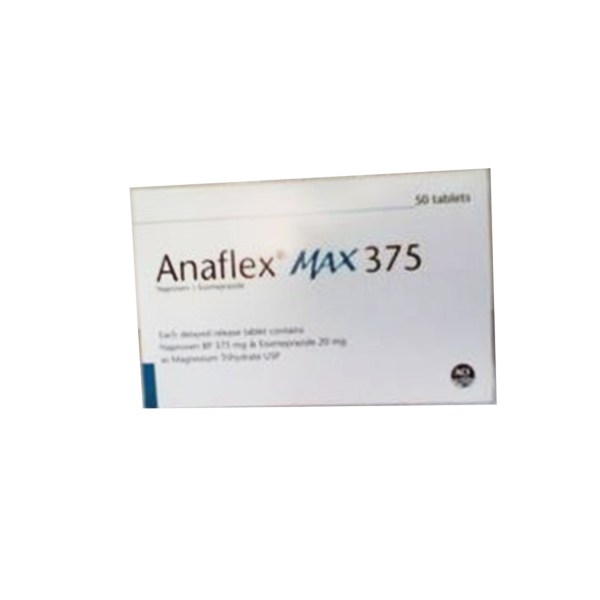
Anaflex Max 375 mg Tablet (Naproxen + Esomeprazole) – ACI Limited
| Brand Name | Anaflex Max 375 mg Tablet |
|---|---|
| Generic Name | Naproxen Sodium 375 mg + Esomeprazole 20 mg |
| Strength | Naproxen 375 mg / Esomeprazole 20 mg |
| Dosage Form | Delayed-Release Tablet |
| Manufacturer | ACI Limited, Bangladesh |
| Drug Class | NSAID + Proton Pump Inhibitor (Fixed-Dose Combination) |
| Pack Size | 10 Tablets per Strip |
| Prescription Required | Yes (Rx) |
| Storage | Store below 30°C in a cool, dry place away from sunlight |
1. About Anaflex Max 375 (Naproxen + Esomeprazole)
Anaflex Max 375 mg is a fixed-dose combination tablet containing Naproxen Sodium 375 mg and Esomeprazole 20 mg, manufactured by ACI Limited, Bangladesh. It delivers the anti-inflammatory and analgesic benefits of naproxen while simultaneously protecting the gastric mucosa with esomeprazole — addressing the fundamental limitation of long-term NSAID therapy: GI toxicity.
The combination delivers NSAID therapy and built-in gastroprotection in a single tablet — improving adherence and ensuring PPI coverage is always present when the NSAID is active. Recommended for patients with arthritis or chronic pain who have moderate-to-high GI risk.
2. Mechanism of Action
Naproxen Sodium 375 mg (NSAID): Inhibits COX-1 and COX-2 enzymes, reducing prostaglandin synthesis — providing analgesic, anti-inflammatory, and antipyretic effects. Long half-life (12–17 hours) enables twice-daily dosing.
Esomeprazole 20 mg (PPI): Irreversibly blocks gastric H⁺/K⁺-ATPase (proton pump), reducing gastric acid secretion by 90–95%. Raises gastric pH, protecting the mucosa against NSAID-induced damage — both COX-1-mediated prostaglandin depletion and acid-mediated erosion. Delayed-release ensures esomeprazole absorbs in the small intestine, avoiding acid degradation.
3. Indications
- Arthritis with GI Risk: RA, OA, ankylosing spondylitis in patients with GI risk factors (age >60, prior peptic ulcer, concurrent corticosteroids or anticoagulants)
- Long-term NSAID therapy where gastroprotection is clinically indicated
- Chronic Musculoskeletal Pain requiring ongoing NSAID treatment
- Primary Dysmenorrhoea with GI sensitivity
- Reduces risk of NSAID-induced peptic ulcer, upper GI bleeding, and gastropathy
4. Dosage and Administration
Standard adult dose: One tablet twice daily. Take with water — do not crush or chew (delayed-release formulation). May be taken with or without food.
Elderly: Prefer the 375 mg strength over 500 mg. Monitor renal function and BP regularly.
Renal impairment: Avoid if CrCl <30 ml/min. Use caution in mild-moderate impairment.
5. Contraindications
- Active peptic ulcer, upper GI bleeding, or GI perforation
- Hypersensitivity to naproxen, esomeprazole, other NSAIDs, aspirin, or any benzimidazole
- Aspirin-exacerbated respiratory disease (NSAID-sensitive asthma)
- Severe renal impairment (CrCl <30 ml/min); Severe hepatic impairment; Severe heart failure
- Third trimester of pregnancy
6. Warnings and Precautions
Cardiovascular risk: NSAIDs increase serious CV thrombotic event risk (MI, stroke) — use at lowest effective dose for shortest duration, especially in patients with CV disease.
GI monitoring: Esomeprazole 20 mg significantly reduces but does not eliminate NSAID GI risk. Monitor for GI bleeding symptoms.
Renal risk: NSAIDs reduce renal prostaglandin activity — risk of AKI in dehydrated patients, heart failure, or existing renal impairment. Maintain hydration.
Diabetic patients: Anaflex Max is preferred over plain naproxen in diabetics needing long-term NSAID therapy — the esomeprazole component minimises GI ulceration risk, important given impaired healing in diabetic GI disease. Renal and CV cautions of oral NSAIDs still apply. Monitor eGFR and BP. For localised joint pain, topical Anaflex Gel remains safer.
Hypomagnesaemia: Long-term PPI use may rarely reduce magnesium — relevant in diabetics on metformin who are already at risk of mineral depletion.
7. Side Effects
Common: Headache, nausea, diarrhoea, flatulence, abdominal discomfort, peripheral oedema.
Uncommon: Peptic ulcer (significantly reduced vs. naproxen alone), raised liver enzymes, elevated BP, rash, dizziness.
Rare: GI bleeding (risk reduced but not eliminated), anaphylaxis, severe skin reactions, hypomagnesaemia with prolonged PPI use.
8. Drug Interactions
- Clopidogrel: Esomeprazole may reduce clopidogrel antiplatelet effect — consider alternative if possible
- Warfarin: Naproxen increases bleeding risk — monitor INR
- Other NSAIDs/Aspirin: Avoid — additive GI and renal toxicity
- ACE inhibitors/ARBs/diuretics: Reduced antihypertensive effect; AKI risk
- Methotrexate: Reduced clearance — increased toxicity
- Sulphonylureas: Enhanced hypoglycaemia possible — monitor glucose
9. Pharmacokinetics
Naproxen: Bioavailability ~95%, Tmax ~1–2 hours, t½ 12–17 hours, hepatic CYP2C9 metabolism, renal excretion. Esomeprazole: Delayed-release absorption in small intestine, Tmax ~1–2 hours, hepatic CYP2C19/3A4 metabolism, t½ ~1–1.5 hours. Onset of acid suppression within 1 hour; maximum after several days of regular dosing.
10. Clinical Evidence: NSAID + PPI Combination
Multiple RCTs demonstrate that fixed-dose naproxen + esomeprazole reduces upper GI complications by 50–70% compared to naproxen alone. The VENUS trial and supporting studies confirmed significant reduction in NSAID-associated gastric/duodenal ulcers. ACR and EULAR guidelines recommend concomitant PPI use in all patients on long-term NSAIDs with ≥1 GI risk factor. Anaflex Max ensures guaranteed co-prescribing adherence in a single tablet — eliminating the ~35% PPI non-compliance observed when prescribed separately.
11. Anaflex Max in Diabetic Arthritis Patients
Diabetic patients requiring systemic NSAID therapy are at elevated GI risk — diabetic autonomic neuropathy impairs GI motility and mucosal blood flow, and hyperglycaemia impairs mucosal healing. NSAID-induced GI ulcers in diabetics are more likely to bleed and heal poorly. Anaflex Max is the preferred oral NSAID option for these patients — providing necessary anti-inflammatory therapy with built-in mucosal protection. For truly localised joint pain, topical Anaflex Gel should be considered first.
12. ACI Limited Anaflex Max Range
ACI Limited offers Anaflex Max in two strengths: Anaflex Max 375 mg (Naproxen 375 mg + Esomeprazole 20 mg — for moderate pain, elderly patients, or those initiating therapy) and Anaflex Max 500 mg (Naproxen 500 mg + Esomeprazole 20 mg — for full-dose arthritis management). The 375 mg strength is recommended for elderly patients, diabetics, and those with mild-moderate renal impairment where a lower naproxen dose is preferred.
13. Storage
- Store below 30°C, cool and dry, protected from sunlight
- Do not crush or split tablets. Keep in original blister pack until use.
- Keep out of reach of children. Do not use after expiry date.
Frequently Asked Questions (FAQ)
Q1: What is Anaflex Max 375 mg and how is it different from plain Anaflex?
Anaflex Max 375 mg contains two medicines in one tablet: Naproxen Sodium 375 mg (NSAID for pain and inflammation) and Esomeprazole 20 mg (PPI to protect the stomach lining). Plain Anaflex tablets contain only naproxen. The Max formulation is for patients needing ongoing NSAID therapy who are at risk of stomach ulcers — the esomeprazole component reduces this risk significantly while naproxen provides full anti-inflammatory benefit.
Q2: When should I choose Anaflex Max 375 over plain Anaflex 500?
Choose Anaflex Max 375 when: you have a history of gastric ulcer, acid reflux, or NSAID-related GI symptoms; you are elderly (age over 60); you are taking corticosteroids or anticoagulants alongside the NSAID; or you prefer a single tablet that combines pain relief with stomach protection. Choose plain Anaflex 500 for short-term use in younger patients without GI risk.
Q3: Is Anaflex Max safe for diabetic patients?
It is preferable to plain naproxen in diabetics who require oral NSAID therapy, because the esomeprazole protects against GI ulceration — to which diabetic patients are especially vulnerable. However, all oral NSAID cautions still apply: monitor kidney function and blood pressure, stay hydrated, use the lowest effective dose for the shortest time. For localised joint pain in diabetics with kidney disease, topical Anaflex Gel is a safer first choice.
Q4: Can I take Anaflex Max with other stomach medicines?
Avoid additional PPIs (omeprazole, pantoprazole, etc.) alongside Anaflex Max — the esomeprazole 20 mg already provides gastroprotection. If taking clopidogrel for heart disease, inform your doctor — PPIs may reduce clopidogrel effectiveness. Antacids may be used for breakthrough symptoms if needed.