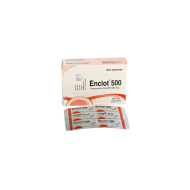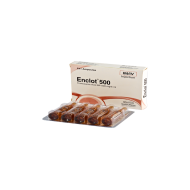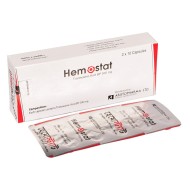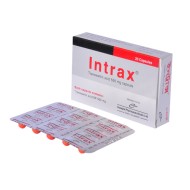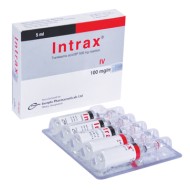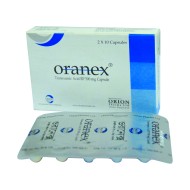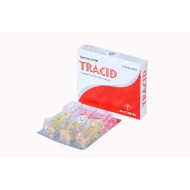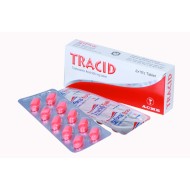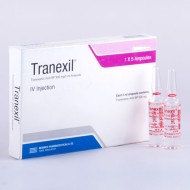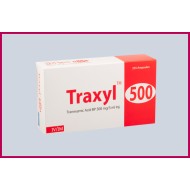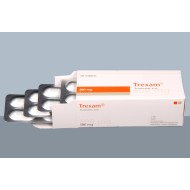

- Stock: Out Of Stock
- Brand: ACI Pharmaceuticals
- Product ID: Tranexamic Acid
🔒 100% Secure Payment | bKash | Nagad | SSLCommerz | COD
⭐ Become a FREE Member: 7% Extra Savings • Free Delivery • Refill Reminders • Priority Support
This Item is for pre order
Anaxyl 500 mg/5ml Injection (Tranexamic Acid) – ACI Limited
| Brand Name | Anaxyl 500 mg/5ml Injection |
|---|---|
| Generic Name | Tranexamic Acid 500 mg/5ml |
| Strength | 500 mg per 5 ml (100 mg/ml) |
| Dosage Form | Injection (IV/IM) |
| Manufacturer | ACI Limited, Bangladesh |
| Drug Class | Antifibrinolytic Agent |
| Pack Size | 5 ml Ampoule |
| Prescription Required | Yes (Rx) |
| Storage | Store below 30°C, protected from light. Do not freeze. |
1. About Anaxyl 500 mg/5ml Injection
Anaxyl 500 mg/5ml Injection contains Tranexamic Acid 500 mg (100 mg/ml), an antifibrinolytic agent manufactured by ACI Limited, Bangladesh. Tranexamic acid is a synthetic lysine analogue that inhibits fibrinolysis — the process by which blood clots are broken down — thereby promoting haemostasis and reducing blood loss in clinical settings where fibrinolytic bleeding occurs. The injectable formulation is used in hospital settings for acute haemorrhage control.
2. Mechanism of Action
Tranexamic acid competitively inhibits activation of plasminogen to plasmin by blocking lysine-binding sites on plasminogen and plasmin. Plasmin is the key enzyme that degrades fibrin clots (fibrinolysis). By preventing plasminogen activation, tranexamic acid stabilises formed clots, reduces fibrin degradation, and controls pathological bleeding driven by hyperfibrinolysis. At high concentrations it directly inhibits plasmin activity.
3. Indications
- Surgical haemorrhage: Prophylaxis and treatment of excessive bleeding in surgery (cardiac, orthopaedic, gynaecological)
- Trauma haemorrhage: Significant mortality reduction in major trauma when given within 3 hours (CRASH-2 trial evidence)
- Post-partum haemorrhage (PPH): Reduces maternal mortality from bleeding (WHO-endorsed, WOMAN trial)
- Heavy menstrual bleeding (menorrhagia)
- Haemoptysis
- Haemophilia and other coagulation disorders — adjunct therapy
- Dental extraction in anticoagulated patients
4. Dosage and Administration
IV infusion (standard adult): 1 g (10 ml of 100 mg/ml) IV over 10 minutes, then 1 g over 8 hours. Trauma/PPH: 1 g IV as early as possible (within 3 hours of injury/delivery), repeat 1 g if bleeding continues after 30 minutes.
Rate: Do not exceed 100 mg/min IV to avoid hypotension. Dilute in normal saline, glucose 5%, or Ringer’s lactate.
Renal impairment: Reduce dose — tranexamic acid is renally cleared. CrCl 10–50 ml/min: 50% dose reduction; CrCl <10 ml/min: 25% dose.
5. Contraindications
- Active thromboembolic disease (DVT, PE, arterial thrombosis)
- Subarachnoid haemorrhage (risk of cerebral vasospasm)
- Hypersensitivity to tranexamic acid
- History of convulsions (high-dose IV use)
6. Warnings and Precautions
Thrombosis risk: Tranexamic acid is prothrombotic — use with caution in patients at risk of thromboembolism (prolonged immobility, prior DVT/PE, hypercoagulable states, combined oral contraceptives). Diabetic patients with cardiovascular disease or peripheral vascular disease require careful assessment before use.
Renal impairment: Primarily renally eliminated — dose reduction essential in renal insufficiency. Important in diabetic nephropathy patients.
Seizures: High-dose IV tranexamic acid may cause seizures, particularly in cardiac surgery. Use lowest effective dose.
Colour vision changes: Long-term use may affect colour vision — ophthalmological monitoring recommended for prolonged courses.
7. Side Effects
Common: Nausea, vomiting, diarrhoea (especially with rapid IV infusion).
Uncommon: Hypotension (with rapid IV injection), visual disturbances, skin rash.
Rare/Serious: Thromboembolic events (DVT, PE), seizures (high-dose IV), allergic reactions.
8. Drug Interactions
- Hormonal contraceptives: Combined oral contraceptives increase thrombosis risk — use with caution
- Coagulation factor concentrates: Theoretical enhanced thrombotic risk
- Tretinoin (all-trans retinoic acid): Increased thrombotic risk in APL treatment
9. Pharmacokinetics
IV administration provides immediate availability. Protein binding minimal (~3%). Volume of distribution ~9–12 L. Renal elimination ∼90% unchanged. t½ ~2 hours IV. Widely distributed to tissues including uterus, aqueous humour, and CSF.
10. Evidence: CRASH-2 and WOMAN Trials
The CRASH-2 trial (20,000+ trauma patients, 40 countries) demonstrated that tranexamic acid given within 3 hours of major trauma reduced all-cause mortality by 9% and bleeding death by 15% — one of the most impactful haemostasis trials in emergency medicine. The WOMAN trial confirmed that early tranexamic acid in post-partum haemorrhage reduced maternal death from bleeding by 19%. These trials form the basis of WHO and national guidelines recommending tranexamic acid as essential medicine for haemorrhage control.
11. Tranexamic Acid in Diabetic Surgery Patients
Diabetic patients undergoing surgery — particularly foot/limb surgery, cataract surgery, or cardiac bypass — have impaired haemostasis and wound healing alongside elevated infection risk. Surgical blood loss management with tranexamic acid reduces transfusion requirements, which in turn reduces post-operative infection risk (each unit of transfused blood increases surgical site infection risk by ~25%). However, the prothrombotic effect of tranexamic acid requires careful risk-benefit assessment in diabetic patients with peripheral arterial disease, diabetic nephropathy (requires dose reduction), or prior thromboembolism.
12. ACI Limited Anaxyl Range
ACI Limited’s Anaxyl range covers both intravenous and oral routes: Anaxyl 500 mg/5ml Injection (for acute intravenous haemorrhage control in hospital settings) and Anaxyl 500 mg Tablet (for oral maintenance therapy in heavy menstrual bleeding and chronic haemorrhagic conditions). The injection provides rapid IV onset for emergency use; the tablet suits ongoing outpatient management.
13. Storage
- Store below 30°C, protected from light. Do not freeze.
- Single-use ampoule — discard unused portion. Inspect for particulates before use.
- Keep out of reach of children. Do not use after expiry date.
Frequently Asked Questions (FAQ)
Q1: What is Anaxyl Injection (Tranexamic Acid) used for?
Anaxyl 500 mg/5ml IV Injection is used to control and prevent excessive bleeding by inhibiting fibrinolysis (clot breakdown). Key uses include: major trauma haemorrhage (evidence-based within 3 hours of injury), post-partum haemorrhage, surgical bleeding (cardiac, orthopaedic, gynaecological surgery), and as adjunct therapy in haemophilia. It is one of the most evidence-based haemostatic drugs in emergency and surgical medicine.
Q2: How quickly does Tranexamic Acid injection work?
Intravenous tranexamic acid acts within minutes — peak plasma levels are achieved immediately after IV bolus/infusion completion. The antifibrinolytic effect begins promptly, stabilising clots that have already formed. Clinical effect on bleeding is typically seen within 15–30 minutes. This rapid onset makes IV tranexamic acid critical in acute haemorrhage management.
Q3: Is Tranexamic Acid safe in patients with kidney disease?
Tranexamic acid is primarily renally eliminated and accumulates in renal impairment. Dose reduction is mandatory: CrCl 10–50 ml/min — 50% of standard dose; CrCl <10 ml/min — 25% of standard dose. In diabetic patients with nephropathy, eGFR must be assessed before dosing. Without dose adjustment, tranexamic acid accumulation can cause seizures and increased thrombosis risk.
Q4: Can Tranexamic Acid cause blood clots?
Yes — tranexamic acid is prothrombotic: it prevents clot breakdown, which means it can promote thrombosis as a side effect. Risk is low at standard doses in patients without thrombotic risk factors. It is contraindicated in active DVT, PE, or arterial thrombosis. Use with caution in patients with prior thromboembolism, prolonged immobility, diabetic vascular disease, or those taking hormonal contraceptives. Risk-benefit assessment is essential before use.