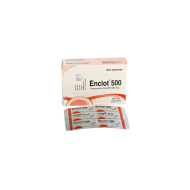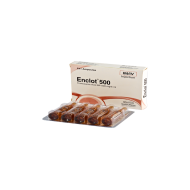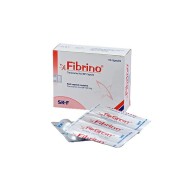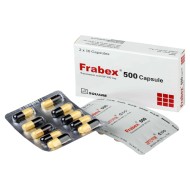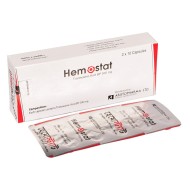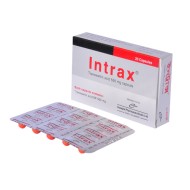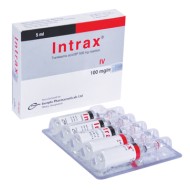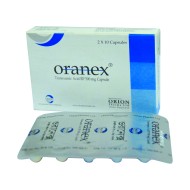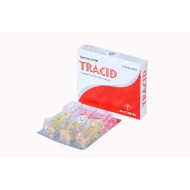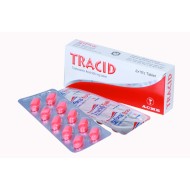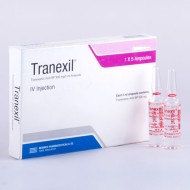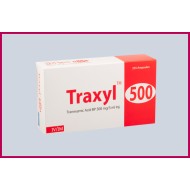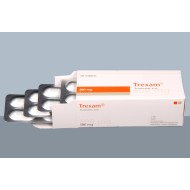

- Stock: Out Of Stock
- Brand: ACI Pharmaceuticals
- Product ID: Tranexamic Acid
🔒 100% Secure Payment | bKash | Nagad | SSLCommerz | COD
⭐ Become a FREE Member: 7% Extra Savings • Free Delivery • Refill Reminders • Priority Support
This Item is for pre order
Anaxyl 500 mg Tablet (Tranexamic Acid) – ACI Limited
| Brand Name | Anaxyl 500 mg Tablet |
|---|---|
| Generic Name | Tranexamic Acid 500 mg |
| Strength | 500 mg |
| Dosage Form | Film-Coated Tablet |
| Manufacturer | ACI Limited, Bangladesh |
| Drug Class | Antifibrinolytic Agent |
| Pack Size | 10 Tablets per Strip |
| Prescription Required | Yes (Rx) |
| Storage | Store below 30°C, cool and dry, protected from light |
1. About Anaxyl 500 mg Tablet (Tranexamic Acid)
Anaxyl 500 mg Tablet contains Tranexamic Acid 500 mg, an oral antifibrinolytic agent manufactured by ACI Limited, Bangladesh. It inhibits fibrinolysis (the breakdown of blood clots), reducing excessive bleeding in conditions where hyperfibrinolysis is a contributing factor — most commonly heavy menstrual bleeding (menorrhagia). Oral tranexamic acid is the first-line pharmacological treatment recommended by NICE, WHO, and international gynaecology guidelines for menorrhagia, offering significant reduction in menstrual blood loss without hormonal effects.
2. Mechanism of Action
Tranexamic acid is a synthetic lysine analogue that competitively inhibits plasminogen activation by blocking lysine-binding sites on plasminogen and plasmin. This prevents conversion of plasminogen to plasmin, the key fibrinolytic enzyme. By stabilising fibrin clots and reducing their premature breakdown, tranexamic acid reduces menstrual blood loss (by 40–60%) and controls bleeding in other fibrinolytic states. Unlike hormonal treatments, it acts purely on the coagulation system without affecting ovulation or hormone levels.
3. Indications
- Heavy Menstrual Bleeding (Menorrhagia): First-line non-hormonal treatment — reduces menstrual blood loss by 40–60%
- Haemoptysis (blood in sputum)
- Epistaxis (recurrent nosebleeds)
- Post-surgical bleeding prophylaxis (oral pre/post-operative)
- Haematuria (blood in urine from urological causes)
- Dental extraction in anticoagulated patients
- Hereditary angio-oedema (prevention)
4. Dosage and Administration
Menorrhagia: 1–1.5 g (2–3 tablets of 500 mg) 3–4 times daily for up to 4 days, starting at onset of heavy bleeding. Do not exceed 4 g/day. Treatment is short-course (during menstruation only).
General haemorrhage: 500 mg–1 g 2–3 times daily. Duration as directed by physician.
May be taken with or without food. Swallow with water.
Renal impairment: Dose reduction required — tranexamic acid is renally cleared. Consult physician for dose adjustment in CKD.
5. Contraindications
- Active thromboembolic disease (DVT, pulmonary embolism, arterial thrombosis)
- History of seizures
- Subarachnoid haemorrhage
- Hypersensitivity to tranexamic acid
- Severe renal impairment (without dose adjustment)
6. Warnings and Precautions
Thrombosis risk: Tranexamic acid is prothrombotic — prevents clot breakdown. Contraindicated in active thromboembolism. Use with caution in patients at elevated thrombosis risk (immobility, prior DVT/PE, combined oral contraceptive use, severe dehydration).
Renal impairment: Dose reduction required. In diabetic patients with CKD, eGFR should be checked before prescribing and dose adjusted accordingly. Accumulation without dose adjustment increases seizure and thrombosis risk.
Haematuria from upper urinary tract: Avoid tranexamic acid in haematuria from the upper urinary tract (renal pelvis/ureter) — risk of clot obstruction of ureters.
Colour vision: Prolonged use may cause colour vision disturbances. Ophthalmological monitoring recommended if used long-term.
7. Side Effects
Common: Nausea, vomiting, diarrhoea, abdominal discomfort. Usually dose-related and transient.
Uncommon: Headache, dizziness, visual disturbances, skin rash.
Rare/Serious: Thromboembolic events (DVT, PE), seizures (rare at oral doses), allergic reactions.
8. Drug Interactions
- Combined oral contraceptives: Increased thrombosis risk — assess risk-benefit carefully
- Coagulation factor concentrates: Theoretical enhanced clotting risk
- Tretinoin (in APL): Increased thrombotic events reported
9. Pharmacokinetics
Oral bioavailability ~30–50%. Tmax ~3 hours. Minimal protein binding (~3%). Renal elimination ~90% unchanged. t½ ~2 hours. Volume of distribution ~9–12 L.
10. Tranexamic Acid for Menorrhagia — Clinical Evidence
Multiple RCTs confirm oral tranexamic acid reduces menstrual blood loss by 40–60% compared to placebo — significantly better than NSAIDs (20–25% reduction) and comparable to progestogens for blood loss reduction. Crucially, it acts only during menstruation (3–4 days/month), has no hormonal effects, and does not affect fertility — making it ideal for women who want to preserve fertility while managing heavy periods. NICE guidelines (NG88) recommend tranexamic acid as first-line pharmacological treatment for heavy menstrual bleeding without underlying structural cause.
11. Use in Diabetic Women with Menorrhagia
Diabetes is associated with hormonal dysregulation that can affect menstrual patterns, and metformin use can alter androgen profiles. Some diabetic women on insulin or metformin experience irregular or heavy periods. Oral tranexamic acid for menorrhagia is generally safe in diabetic patients, with the important caveat that dose adjustment is required in diabetic nephropathy (CKD). It has no interaction with metformin, insulin, or most oral antidiabetic drugs. Unlike NSAIDs (which are also used for menorrhagia), tranexamic acid does not affect renal function or blood pressure — making it a safer choice for menorrhagia management in diabetic women.
12. ACI Limited Anaxyl Range
ACI Limited’s Anaxyl range includes Anaxyl 500 mg Tablet (oral, for outpatient menorrhagia management and chronic haemorrhagic conditions) and Anaxyl 500 mg/5ml Injection (IV, for acute hospital haemorrhage control in trauma, surgery, and post-partum haemorrhage). The oral tablet is used long-term cyclically; the injection provides rapid emergency haemostasis.
13. Storage
- Store below 30°C, cool and dry, protected from light
- Keep in original pack. Keep out of reach of children.
- Do not use after expiry date.
Frequently Asked Questions (FAQ)
Q1: What is Anaxyl Tablet (Tranexamic Acid) used for?
Anaxyl 500 mg Tablet is primarily used for heavy menstrual bleeding (menorrhagia) — reducing menstrual blood loss by 40–60% when taken for 3–4 days per cycle at onset of heavy flow. It is also used for haemoptysis (coughing blood), epistaxis (nosebleeds), haematuria, and pre/post-surgical bleeding prophylaxis. Unlike hormonal treatments, it has no effect on hormones, fertility, or ovulation.
Q2: Is Anaxyl (Tranexamic Acid) a contraceptive or hormonal medicine?
No — tranexamic acid is entirely non-hormonal. It works purely on the blood clotting system by preventing clot breakdown. It does not affect ovulation, menstrual cycle timing, hormone levels, or fertility. This makes it suitable for women seeking non-hormonal treatment for heavy periods, including those trying to conceive.
Q3: Can diabetic patients take Tranexamic Acid tablets?
Generally yes, with precautions. Tranexamic acid does not interact with metformin, insulin, or most oral antidiabetic drugs. Unlike NSAIDs, it does not affect renal function or blood pressure. However, dose reduction is required in diabetic kidney disease (CKD) — tranexamic acid is renally eliminated and accumulates without adjustment, increasing seizure and thrombosis risk. Assess eGFR before prescribing in diabetic patients with nephropathy.
Q4: How is Anaxyl Tablet different from Anaxyl Injection?
Both contain Tranexamic Acid but serve different clinical settings. Anaxyl Tablet (500 mg oral) is for outpatient, non-emergency use — primarily cyclical menorrhagia treatment or oral prophylaxis before planned procedures. Anaxyl Injection (500 mg/5ml IV) is for acute hospital haemorrhage control — trauma, post-partum haemorrhage, surgical bleeding — where rapid IV onset is needed. The injection should only be administered under medical supervision in clinical settings.