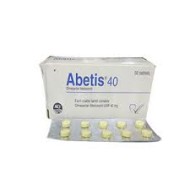
- Stock: Out Of Stock
- Brand: ACI Pharmaceuticals
- Product ID: Telmisartan
🔒 100% Secure Payment | bKash | Nagad | SSLCommerz | COD
⭐ Become a FREE Member: 7% Extra Savings • Free Delivery • Refill Reminders • Priority Support
This Item is for pre order
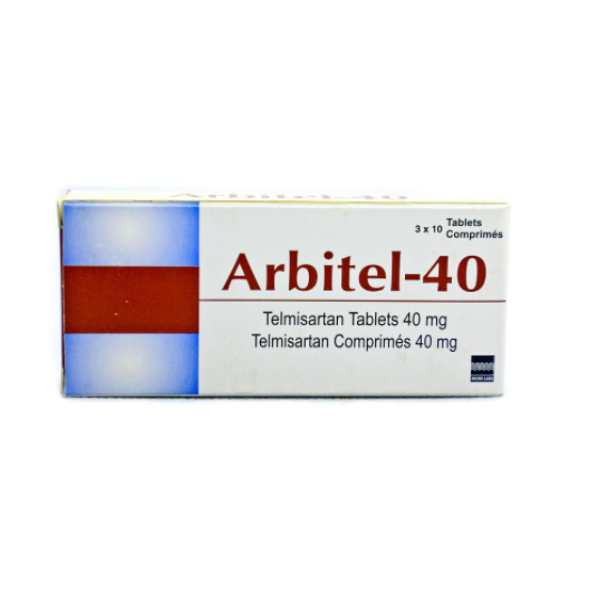
Arbitel 40 mg Tablet (Telmisartan 40 mg) – ACI Limited
| Brand Name | Arbitel 40 mg Tablet |
|---|---|
| Generic Name | Telmisartan 40 mg |
| Strength | 40 mg |
| Dosage Form | Tablet |
| Manufacturer | ACI Limited, Bangladesh |
| Drug Class | Angiotensin II Receptor Blocker (ARB) — Antihypertensive |
| Prescription Required | Yes (Rx) |
| Storage | Store below 30°C, dry place. Protect from moisture. |
1. About Arbitel 40 mg (Telmisartan)
Arbitel 40 mg Tablet contains Telmisartan 40 mg, an Angiotensin II Receptor Blocker (ARB) for hypertension treatment, cardiovascular risk reduction, and renal protection in diabetic patients, manufactured by ACI Limited, Bangladesh. At 40 mg, telmisartan represents the standard initial dosing for most adult patients with hypertension — providing effective blood pressure reduction while serving as the dose from which upward titration to 80 mg can be undertaken if needed.
Telmisartan 40 mg provides approximately 60–70% of the maximum blood pressure reduction achievable with this drug class, making it appropriate for mild-to-moderate hypertension as monotherapy, and as a component of combination therapy for more severe hypertension. It is well-tolerated, once-daily, and particularly suitable for diabetic patients, patients with CKD, and patients who developed cough on ACE inhibitors.
2. Mechanism of Action
Telmisartan selectively blocks AT1 receptors (Angiotensin II Receptor type 1) in vasculature, kidney, adrenal glands, and heart. Blocking AT1 prevents angiotensin II from causing: vasoconstriction (reduced peripheral resistance → lower BP), aldosterone release (reduced sodium/water retention → reduced blood volume), sympathetic activation, and vascular/cardiac remodelling. The net result is effective, smooth antihypertensive action lasting 24+ hours from once-daily dosing. Unlike ACE inhibitors, bradykinin levels are not raised (no cough). Telmisartan also partially activates PPAR-γ (peroxisome proliferator-activated receptor gamma), contributing to improved glucose metabolism and insulin sensitivity in metabolically active doses.
3. Indications
- Essential (Primary) Hypertension: Standard initial dose for most adults
- Cardiovascular Risk Reduction: Reduces MI and stroke risk in patients with established CAD, peripheral arterial disease, or high CV risk (ONTARGET trial, 80 mg target)
- Diabetic Nephropathy: Reduces proteinuria, slows progression of kidney disease in T2DM
- Post-ACE inhibitor switch: For patients intolerant to ACE inhibitors (dry cough, angioedema)
- Left Ventricular Hypertrophy (LVH) regression
4. Dosage and Administration
Hypertension — standard adult: 40 mg once daily initially. May increase to 80 mg once daily after 4–8 weeks if BP not at target. Minimum effective dose: 20 mg/day.
Cardiovascular risk reduction: Target dose 80 mg once daily based on evidence.
Elderly/volume-depleted: Start at 20 mg (Arbitel 20 mg) to avoid first-dose hypotension, then titrate.
Take at the same time every day, with or without food. Consistent daily timing is important for 24-hour coverage.
5. Contraindications
- Hypersensitivity to telmisartan or excipients
- Pregnancy (all trimesters — teratogenic/fetotoxic)
- Severe hepatic impairment or cholestasis
- Concurrent aliskiren use in patients with diabetes or eGFR <60 ml/min
6. Warnings and Precautions
Pregnancy: Strictly contraindicated. RAAS blockers cause foetal renal dysplasia, oligohydramnios, skull hypoplasia, and neonatal death. Stop immediately if pregnancy confirmed; switch to methyldopa, labetalol, or nifedipine.
Hypotension: Volume-depleted patients (diuretics, low-salt diet, diarrhoea) at risk of first-dose hypotension. Correct volume depletion before initiating or start at 20 mg.
Renal function/hyperkalaemia: ARBs reduce aldosterone → potassium retention. Monitor K+ and creatinine in CKD, diabetes, and elderly. Bilateral renal artery stenosis risk: acute kidney injury can occur.
Hepatic impairment: Primarily biliary elimination. Cap dose at 40 mg in hepatic impairment (mild-moderate). Contraindicated in severe.
7. Side Effects
Common: Dizziness, headache, fatigue, back pain, upper respiratory tract infections, diarrhoea.
Uncommon: Orthostatic hypotension, hyperkalaemia, raised creatinine, sinusitis, anaemia.
Rare: Angioedema (rare — much lower than ACE inhibitors), liver enzyme elevation, thrombocytopenia.
Note: Dry cough is NOT a side effect of telmisartan — a key advantage over ACE inhibitors in Asian/Bangladeshi patients with high cough rates.
8. Drug Interactions
- Antihypertensives/diuretics: Additive BP lowering — monitor for hypotension
- NSAIDs: Reduce antihypertensive efficacy; increase renal impairment risk
- K+-sparing diuretics (spironolactone, amiloride), K+ supplements: Hyperkalaemia risk
- Digoxin: Telmisartan raises digoxin Cmax ~50% — monitor digoxin levels closely
- Lithium: Lithium toxicity risk — monitor levels
- ACE inhibitors + aliskiren (dual RAAS): Avoid combination — excess renal/hypotension risk
9. Pharmacokinetics
Absolute bioavailability: ~58% at 80 mg, ~42% at 40 mg. Protein binding >99.5%. Hepatic glucuronidation; biliary/faecal excretion ~97%. t½ ~24 hours. Tmax ~0.5–1 h. No active metabolites. No renal dose adjustment needed. Slightly lower bioavailability in hepatic impairment — max 40 mg/day.
10. Telmisartan vs Losartan vs Valsartan: Why Choose Telmisartan?
Among the major ARBs used in Bangladesh: Losartan (6–9h t½) requires twice-daily dosing for optimal 24h coverage and has a relatively modest antihypertensive effect; its active metabolite (E-3174) is more potent but variable. Valsartan (9–13h) has good evidence in heart failure and post-MI but shorter duration than telmisartan. Telmisartan (24h) provides the most sustained BP control, is completely food-independent, has no renal dose adjustment, and uniquely covers the 6am–10am BP surge. For diabetic patients and those with CKD, telmisartan’s PPAR-γ activity and biliary elimination give it pharmacological advantages. The ONTARGET trial demonstrated telmisartan 80 mg was non-inferior to ramipril for CV event reduction — with fewer side effects (no cough, less angioedema).
11. Hypertension Control in Diabetic Patients (Bangladesh)
Hypertension co-exists with T2DM in 50–60% of Bangladeshi patients. RAAS blockade with ARBs is the cornerstone of antihypertensive treatment in diabetic patients with albuminuria or CKD per Bangladesh and international diabetes guidelines (BADAS, ADA, IDF). Target BP for diabetic patients with nephropathy is typically <130/80 mmHg. Telmisartan 40–80 mg once daily, with or without a thiazide diuretic or calcium channel blocker, is a standard regimen. Regular monitoring of BP, renal function, potassium, and proteinuria (spot urine ACR) is recommended in all diabetic hypertensive patients.
12. ACI Limited Arbitel Range
ACI’s Arbitel telmisartan range: 20 mg (initiation/elderly), 40 mg (standard starting dose), 80 mg (maximum monotherapy dose), Arbitel AM (+ Amlodipine 5 mg CCB), Arbitel Plus (+ Hydrochlorothiazide 12.5 mg diuretic). This allows a complete step-up treatment strategy within a single brand from initiation to combination therapy.
13. Storage
- Store below 30°C, cool, dry, protected from moisture
- Keep in original blister. Keep out of children’s reach.
- Do not use after expiry.
Frequently Asked Questions (FAQ)
Q1: What is Arbitel 40 mg (Telmisartan) used for?
Arbitel 40 mg is used to treat hypertension (high blood pressure) in adults. It is also prescribed to reduce cardiovascular risk (heart attack, stroke) in high-risk patients, and to protect the kidneys in diabetic patients with protein in the urine (microalbuminuria or proteinuria). Telmisartan works by blocking angiotensin II — a hormone that tightens blood vessels. Unlike ACE inhibitors, it does not cause dry cough, making it preferred in Bangladeshi patients who often experience this side effect.
Q2: How long does Telmisartan 40 mg take to work?
Blood pressure lowering begins within 1–2 hours of the first dose. Maximum antihypertensive effect is reached within 4–8 weeks of consistent daily dosing as the body equilibrates. Sustained 24-hour blood pressure control is established from the first dose — the long half-life (24h) means even a once-daily dose covers the entire day including early morning. Do not stop taking telmisartan if you feel well — hypertension is usually asymptomatic, and discontinuing will cause BP to rise again within days.
Q3: Can I take Arbitel 40 mg with other blood pressure medications?
Yes — telmisartan is often combined with other antihypertensives for better blood pressure control. Common combinations include: telmisartan + amlodipine (ACI’s Arbitel AM), telmisartan + hydrochlorothiazide (ACI’s Arbitel Plus), or telmisartan + a beta-blocker. However, do NOT combine telmisartan with another ARB, an ACE inhibitor, or aliskiren (dual RAAS blockade) — this increases the risk of hypotension, hyperkalaemia, and kidney failure. Always inform your doctor of all medications including OTC painkillers (NSAIDs), which reduce telmisartan’s efficacy.
Q4: What happens if I miss a dose of Telmisartan (Arbitel)?
Take the missed dose as soon as you remember, unless it is almost time for your next dose — in that case, skip the missed dose and continue with your regular schedule. Do not double the dose. Because telmisartan has a 24-hour half-life, missing one dose rarely causes a significant BP spike, but consistent daily adherence is important for sustained cardiovascular protection. Setting a daily alarm or tying it to a routine activity (e.g., morning tea) helps maintain adherence.