- Stock: Out Of Stock
- Brand: ACI Pharmaceuticals
- Product ID: Meropenem Trihydrate
🔒 100% Secure Payment | bKash | Nagad | SSLCommerz | COD
⭐ Become a FREE Member: 7% Extra Savings • Free Delivery • Refill Reminders • Priority Support
This Item is for pre order
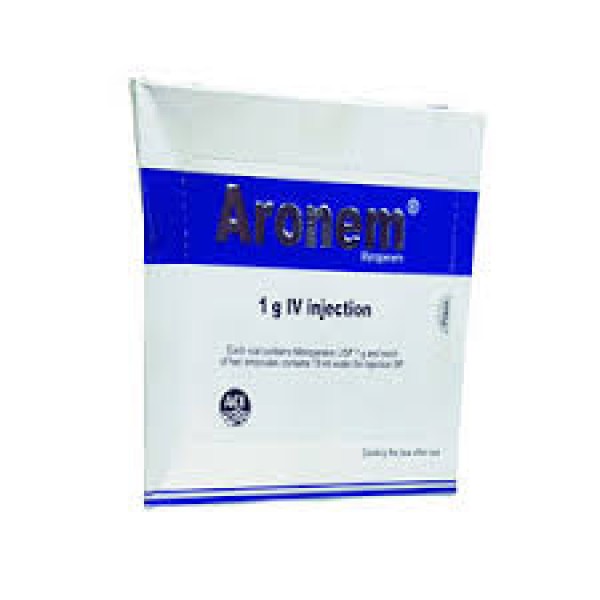
Aronem 1 gm IV Injection (Meropenem) – ACI Limited
| Brand Name | Aronem 1 gm Injection |
|---|---|
| Generic Name | Meropenem Trihydrate 1 gm |
| Strength | 1000 mg per vial (IV) |
| Dosage Form | Powder for IV injection / infusion (vial) |
| Manufacturer | ACI Limited, Bangladesh |
| Drug Class | Carbapenem Antibiotic (Beta-lactam) |
| Prescription Required | Yes (Hospital/Rx only) |
| Storage | Store below 30°C. Reconstituted solution: use within 1–8 hours (room temp) or 24 hours (refrigerated). |
1. About Aronem 1 gm (Meropenem)
Aronem 1 gm Injection contains Meropenem Trihydrate 1000 mg — a broad-spectrum carbapenem antibiotic for intravenous administration, manufactured by ACI Limited, Bangladesh. Meropenem is a last-line beta-lactam antibiotic reserved for serious, life-threatening, or multi-drug-resistant bacterial infections requiring hospitalisation and IV therapy.
The 1 gm dose (Aronem 1 gm) is the standard dose for most serious infections including septicaemia, hospital-acquired pneumonia, febrile neutropenia, complicated intra-abdominal infections, and meningitis (the 1 gm TDS dosing is standard for bacterial meningitis). It covers nearly all clinically relevant Gram-positive and Gram-negative organisms, including extended-spectrum beta-lactamase (ESBL)-producing Enterobacteriaceae, providing definitive therapy in the era of increasing antibiotic resistance.
2. Mechanism of Action
Meropenem inhibits bacterial cell wall synthesis by binding to penicillin-binding proteins (PBPs), particularly PBP-2 and PBP-3, blocking the final transpeptidation step of peptidoglycan synthesis. Unlike penicillins and cephalosporins, meropenem is resistant to most bacterial beta-lactamases — including ESBLs, AmpC beta-lactamases, and many plasmid-mediated cephalosporinases — due to its methyl group at C-1 and trans-1β-methyl side chain configuration. This beta-lactamase stability makes it effective against organisms resistant to third-generation cephalosporins, aztreonam, and ampicillin-sulbactam.
Meropenem is bactericidal and exhibits concentration-independent (time-dependent) killing — efficacy depends on the time above the MIC (T>MIC). Extended or continuous infusion strategies are used in critically ill patients with high-MIC organisms to optimise pharmacodynamic target attainment.
3. Spectrum of Activity
Gram-positive: Streptococcus pneumoniae, Streptococcus spp., Staphylococcus aureus (MSSA only — not MRSA), Enterococcus faecalis (limited).
Gram-negative (broad coverage): E. coli (including ESBL), Klebsiella pneumoniae (including ESBL), Pseudomonas aeruginosa, Acinetobacter baumannii (variable), Enterobacter spp., Haemophilus influenzae, Neisseria spp., Proteus mirabilis, Morganella, Citrobacter, Serratia.
Anaerobes: Bacteroides fragilis, Clostridium spp., Peptostreptococcus — important for mixed intra-abdominal infections.
Resistant organisms: MRSA, Enterococcus faecium, Stenotrophomonas maltophilia, carbapenemase-producing (KPC, MBL/NDM, OXA-48) organisms are NOT covered.
4. Indications
- Septicaemia/sepsis: Empirical therapy for severe sepsis or suspected Gram-negative bacteraemia
- Hospital-acquired and ventilator-associated pneumonia (HAP/VAP)
- Complicated intra-abdominal infections: Peritonitis, complicated appendicitis, bowel perforation
- Complicated urinary tract infections: Pyelonephritis with ESBL organisms, urosepsis
- Febrile neutropenia: Empirical therapy in haematology/oncology patients
- Bacterial meningitis (1 gm TDS — standard dose for CNS penetration)
- Skin and soft tissue infections: Complicated SSTI with Gram-negative or mixed organisms
5. Dosage and Administration
Standard dose (non-CNS, eGFR >50): Meropenem 1 gm IV every 8 hours (TDS) — total 3 gm/day.
Bacterial meningitis / CNS infections: 2 gm IV every 8 hours (TDS) — requires 2 × Aronem 1 gm vials per dose.
Febrile neutropenia: 1 gm IV every 8 hours.
Renal impairment: eGFR 26–50: 1 gm every 12h; eGFR 10–25: 500 mg every 12h; eGFR <10 / HD: 500 mg every 24h. Meropenem is dialysed — give supplemental dose after each HD session.
Reconstitution: Reconstitute 1 gm vial with 20 ml sterile water for injection; dilute further in 50–250 ml NS or D5W for IV infusion over 15–30 minutes (standard) or 3–4 hours (extended infusion for PD optimisation). Reconstituted solutions stable 1–8h at room temperature or up to 24h refrigerated.
6. Contraindications
- Hypersensitivity to meropenem, other carbapenems, or beta-lactam antibiotics
- Caution in patients with penicillin/cephalosporin allergy (cross-reactivity <1% but monitor)
7. Warnings and Precautions
Seizures: CNS adverse effects including seizures reported — higher risk at doses above 1 gm TDS or in patients with CNS lesions, renal impairment, or prior seizure history. Use with caution and adjust dose renally.
Clostridium difficile colitis: Broad-spectrum antibiotics including carbapenems can cause C. diff colitis. Consider in any patient developing diarrhoea during or after therapy.
Superinfection: Prolonged meropenem use may lead to overgrowth of resistant organisms (MRSA, Candida, Enterococcus faecium, Stenotrophomonas). Monitor clinically.
Renal impairment: Dose adjustment essential (see above). Failure to adjust doses in renal impairment increases seizure risk.
Carbapenems and antibiotic stewardship: Reserve for infections where no effective alternative exists. Carbapenem use drives selection of carbapenemase-producing organisms (CPO/NDM) — use should be guided by culture and sensitivity.
8. Side Effects
Common: Diarrhoea (most frequent), nausea, vomiting, headache, injection site reactions (phlebitis, inflammation).
Uncommon: Elevated LFTs (transaminases, ALP), rash, pruritus, constipation, oral candidiasis.
Rare but serious: Seizures, Stevens-Johnson syndrome/TEN, anaphylaxis, C. difficile colitis, agranulocytosis, thrombocytopenia, haemolytic anaemia.
9. Drug Interactions
- Valproic acid: Meropenem dramatically reduces valproate plasma levels (50–90% within 24–48h) — combination contraindicated in epilepsy patients. Switch to alternative antibiotic or alternative anticonvulsant.
- Probenecid: Inhibits meropenem renal tubular secretion, increasing plasma levels and half-life. Avoid concurrent use.
- Oral anticoagulants (warfarin): May alter INR — monitor coagulation in patients on warfarin
10. Meropenem in Diabetic and Immunocompromised Patients
Patients with diabetes mellitus are at increased risk for severe bacterial infections (foot infections, urinary tract infections with ESBL organisms, emphysematous pyelonephritis, mucormycosis). Meropenem is a critical antibiotic in managing Gram-negative sepsis in diabetic patients, particularly when ESBL-producing organisms are suspected (prior hospital exposure, recurrent UTI, recent antibiotic use). Diabetic foot infections with necrotising fasciitis or suspected polymicrobial etiology frequently require carbapenem therapy alongside surgical debridement.
11. Storage and Handling
- Store below 30°C. Do not freeze.
- Reconstituted solution: use within 1–8 hours at room temperature or 24 hours at 2–8°C.
- Hospital use only — IV administration by healthcare professionals.
Frequently Asked Questions (FAQ)
Q1: What is Aronem 1 gm (Meropenem) used for?
Aronem 1 gm (Meropenem 1000 mg IV) is a broad-spectrum carbapenem antibiotic manufactured by ACI Limited for hospital use. It treats severe, life-threatening bacterial infections including septicaemia, hospital-acquired pneumonia (HAP), ventilator-associated pneumonia (VAP), complicated intra-abdominal infections (peritonitis), febrile neutropenia, and bacterial meningitis. The 1 gm dose (TDS — three times daily) is the standard adult dose for most serious infections. For bacterial meningitis, 2 gm TDS is required.
Q2: Why can't meropenem and valproate (sodium valproate) be used together?
Meropenem dramatically reduces valproate plasma concentrations by 50–90% within 24–48 hours through inhibition of intestinal hydrolysis and interference with valproate's renal tubular transport. This is a clinically critical interaction — patients with epilepsy on valproate who receive meropenem may lose seizure control rapidly. The combination is generally contraindicated. Clinical options: switch to a non-carbapenem antibiotic if possible, or switch the anticonvulsant to levetiracetam or phenytoin (after specialist review) during meropenem therapy.
Q3: What is the difference between Aronem 500 mg and Aronem 1 gm?
Both contain meropenem; the difference is dose per vial. Aronem 500 mg (per vial) is used for moderate infections or in patients with renal impairment (eGFR 26–50: 1 gm Q12h = 2 × 500 mg vials per dose; eGFR 10–25: 500 mg Q12h). Aronem 1 gm is the standard dose vial for severe infections in patients with normal or mildly reduced renal function. Bacterial meningitis requires 2 gm per dose (2 × Aronem 1 gm vials TDS).
Q4: Can meropenem be used for MRSA infections?
No — meropenem has no activity against methicillin-resistant Staphylococcus aureus (MRSA). Carbapenems are not effective against MRSA because MRSA expresses PBP2a (encoded by mecA), which has very low affinity for all beta-lactam antibiotics including carbapenems. MRSA infections require glycopeptides (vancomycin, teicoplanin) or newer agents (linezolid, daptomycin, tigecycline). Meropenem covers MSSA (methicillin-sensitive S. aureus) and most Gram-negative organisms including ESBL producers.